




What is the story about?
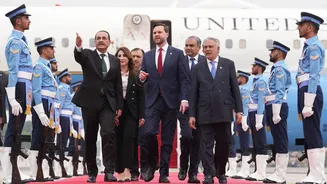
As many experts had anticipated, the Islamabad talks between Iran and the United States have ultimately failed. The discussions had been widely praised by Pakistan’s establishment and drew significant attention online. Prime Minister Shehbaz Sharif
remarked that from Tokyo to London, and from Casablanca to Kuala Lumpur, media outlets and institutions across the world were talking about Pakistan. Meanwhile, many netizens expressed pride, claiming—despite little evidence—that they were being “greeted” globally as a “peace-maker” nation.
Perhaps author Raja Muneeb, in his article “Pakistan’s role in West Asia: A web of competing dependencies", aptly observed: “A state that lacks the capacity to absorb the consequences of conflict cannot credibly position itself as a mediator of that conflict.”
Pakistan’s establishment, however, has often been in the habit of portraying reactive or defensive moves as geopolitical high ground—whether in attempting to deflect from setbacks such as Operation Sindoor, endorsing proposals like Trump’s Gaza peace plan, or now facilitating dialogue that arguably offers Washington either time or a face-saving exit from a
“Trumpian misadventure”.
Many experts argue that Pakistan was not an organically evolved state. Some view its creation as the outcome of a particular sequence of historical circumstances, others attribute it to the rigidity of certain leaders determined to impose their vision, and some even point to clashes of ego among key figures. The Pakistani narrative, however, continues to rest firmly on the “two-nation theory”.
However, why the need for a “two-nation” framework was felt only after more than a millennium of Muslim presence in South Asia remains difficult to explain. Moreover, it is equally hard for some to comprehend that India still has a larger Muslim population than Pakistan, with Indian Muslims seeing themselves as Indian, just as their Hindu brethrens do.
Some argue that this contributes to a persistent sense of insecurity in Pakistan, prompting recurring efforts to assert its relevance—and, by extension, that of the “two-nation theory”. This is often expressed through aspirations of leadership in the Islamic world, emphasis on its status as the only nuclear-armed Muslim state, or ideas such as an “Islamic NATO”. At the same time, this outlook is frequently linked to an enduring sense of rivalry with India, alongside efforts to match its diplomatic influence and economic growth in South Asia and in the world.
In his book Where Borders Bleed, former diplomat Rajiv Dogra shares an anecdote that vividly reflects this mindset. When a Pakistani foreign minister was once asked about his most fervent wish during office, he reportedly responded with striking bluntness: “If God were to grant me a wish, I would ask Him to place a nuclear bomb in each of my palms… One I would drop on Bombay, the other on Delhi.”
As author Utpal Kumar notes in his article “Islamabad talks were doomed to fail, but it's America's doublespeak where the trouble lies" , Pakistan emerged in 1947 from a complex blend of Islamist fervour and British-American geopolitical engineering. From its very inception, he argues, it has carried competing impulses—seeking to be both modernist and theocratic. Instead of reconciling these contradictions, the state has largely institutionalised them.
This also explains why a ‘Mullah General’, ‘Hafiz-e-Quran’, ‘Field Marshal’, ‘COAS’, 'Syed' Asim Munir, invoked the rhetoric of the ‘two-nation theory’ on April 16, 2025, just a week before the Pulwama attack on April 22, but was reportedly not happy with Pakistan’s Defence Minister Khawaja Asif calling Israel 'a curse for humanity' and has been supporting the Gaza peace plan under the so-called 'most Zionist' US president.
Many experts are of the opinion that, to gain global support and recognition, Pakistan has always allowed itself to be
a pawn in great-power games. The 78-year-old nation believes this gives it essential “global relevance”, while fuelling jihad in Kashmir and supporting cross-border terrorism provides relevance to a “state for the army”. Remember, getting involved in America’s ‘War on Terror’ while bombing one's own populace while double-playing Washington simultaneously.
Now also, the Iran war has brought the crisis to Pakistan’s doorstep amid soaring prices of fuel and food items and a chronic debt crisis. The Pakistani establishment is once again making desperate attempts to pull itself out of the crisis, while meanwhile taking the high ground. Amid all this, its “iron brother” China, as former diplomat Vivek Katju notes in his article
“Pakistan’s mediation in the Iran war is a fool rushing where the wise fear to tread”, is quietly watching.
Perhaps author Raja Muneeb, in his article “Pakistan’s role in West Asia: A web of competing dependencies", aptly observed: “A state that lacks the capacity to absorb the consequences of conflict cannot credibly position itself as a mediator of that conflict.”
Pakistan’s establishment, however, has often been in the habit of portraying reactive or defensive moves as geopolitical high ground—whether in attempting to deflect from setbacks such as Operation Sindoor, endorsing proposals like Trump’s Gaza peace plan, or now facilitating dialogue that arguably offers Washington either time or a face-saving exit from a
Many experts argue that Pakistan was not an organically evolved state. Some view its creation as the outcome of a particular sequence of historical circumstances, others attribute it to the rigidity of certain leaders determined to impose their vision, and some even point to clashes of ego among key figures. The Pakistani narrative, however, continues to rest firmly on the “two-nation theory”.
However, why the need for a “two-nation” framework was felt only after more than a millennium of Muslim presence in South Asia remains difficult to explain. Moreover, it is equally hard for some to comprehend that India still has a larger Muslim population than Pakistan, with Indian Muslims seeing themselves as Indian, just as their Hindu brethrens do.
Some argue that this contributes to a persistent sense of insecurity in Pakistan, prompting recurring efforts to assert its relevance—and, by extension, that of the “two-nation theory”. This is often expressed through aspirations of leadership in the Islamic world, emphasis on its status as the only nuclear-armed Muslim state, or ideas such as an “Islamic NATO”. At the same time, this outlook is frequently linked to an enduring sense of rivalry with India, alongside efforts to match its diplomatic influence and economic growth in South Asia and in the world.
In his book Where Borders Bleed, former diplomat Rajiv Dogra shares an anecdote that vividly reflects this mindset. When a Pakistani foreign minister was once asked about his most fervent wish during office, he reportedly responded with striking bluntness: “If God were to grant me a wish, I would ask Him to place a nuclear bomb in each of my palms… One I would drop on Bombay, the other on Delhi.”
As author Utpal Kumar notes in his article “Islamabad talks were doomed to fail, but it's America's doublespeak where the trouble lies" , Pakistan emerged in 1947 from a complex blend of Islamist fervour and British-American geopolitical engineering. From its very inception, he argues, it has carried competing impulses—seeking to be both modernist and theocratic. Instead of reconciling these contradictions, the state has largely institutionalised them.
This also explains why a ‘Mullah General’, ‘Hafiz-e-Quran’, ‘Field Marshal’, ‘COAS’, 'Syed' Asim Munir, invoked the rhetoric of the ‘two-nation theory’ on April 16, 2025, just a week before the Pulwama attack on April 22, but was reportedly not happy with Pakistan’s Defence Minister Khawaja Asif calling Israel 'a curse for humanity' and has been supporting the Gaza peace plan under the so-called 'most Zionist' US president.
Many experts are of the opinion that, to gain global support and recognition, Pakistan has always allowed itself to be
Now also, the Iran war has brought the crisis to Pakistan’s doorstep amid soaring prices of fuel and food items and a chronic debt crisis. The Pakistani establishment is once again making desperate attempts to pull itself out of the crisis, while meanwhile taking the high ground. Amid all this, its “iron brother” China, as former diplomat Vivek Katju notes in his article