


What is the story about?
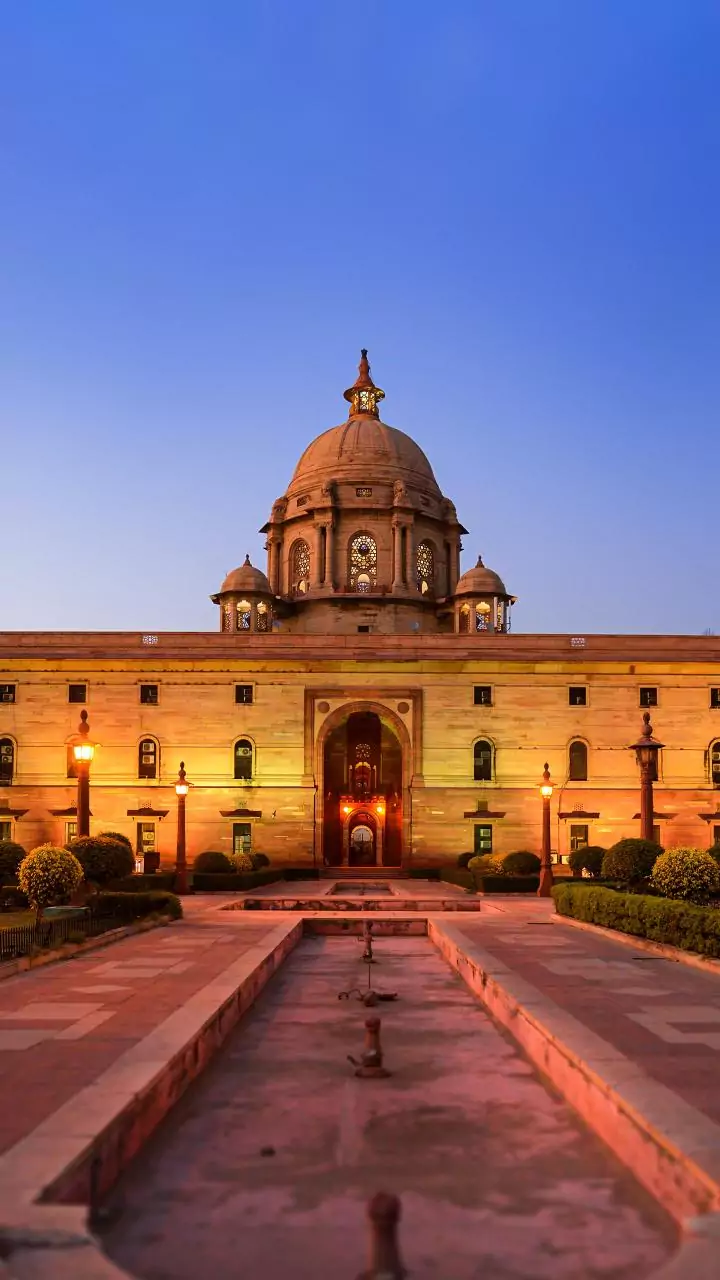
This week, all eyes turned to New Delhi as the country marked its 77th Republic Day. While the parade to mark the occasion struck the perfect balance of showcasing military might along with our rich culture, much of the attention was on the chief guests at the event — Antonio Luis Santos da Costa, the president of the European Council, and Ursula von der Leyen, president of the European Commission.
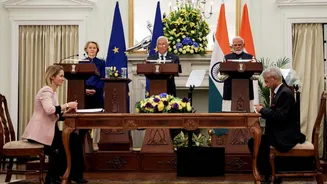
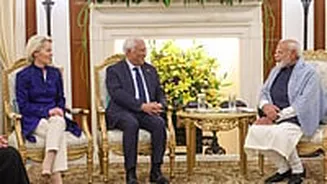
But the Republic Day parade wasn’t the sole purpose for the EU delegation’s visit to India. A day after the January 26 celebrations, Prime Minister Narendra Modi and the EU officials sat down for a crucial India-EU summit, following which it was announced that talks on the historic and ambitious free trade agreement, which had been in the pipeline for a while, had been finalised and that they had sealed the “mother of all trade deals”.
The trade deal, the largest for both sides, covers about two billion people and represents a combined market of nearly $27 trillion and about 25 per cent of the global gross domestic product (GDP).
As you sit back this weekend and relax, we discuss this trade deal in length and why we chose it as our pick for Word of the Week. Also, before you think it, yes, we know Free Trade Agreement isn’t one word :=)
A free trade agreement is an arrangement in which two or more countries commit to opening up their markets to one another by lowering or removing tariffs, quotas, and other trade barriers, making it easier for goods and services to move between them.
These deals help create an open and competitive international marketplace.
Unlike what many may think, free trade agreements, FTAs, don’t abandon all control of imports and exports. In many cases, an FTA would have policies in place that exempt specific products from tariff-free status to protect home producers from foreign competition in their industries.

Many believe that the Cobden-Chevalier treaty, concluded in 1860 between Britain and France, was the first ever free trade agreement signed, with many describing this deal as the priming of a “free trade epidemic” that infected the European continent and led to a “swift break with centuries of protection”.
As the World Trade Organisation notes in one report, over a period of 15 years since signing the Cobden-Chevalier treaty, this led to the conclusion of 56 similar PTAs in Europe, liberalising trade.
In an attempt to establish improve trade with countries, India has long been pursuing trade deals with other countries. It was in 1998 that India signed its first ever FTA Sri Lanka, followed by the South Asia Free Trade Agreement (SAFTA), which was signed in 2004. In 2005, it signed a Comprehensive Economic Cooperation Agreement with Singapore, and later, a wider FTA with the Association of Southeast Asian Nations (ASEAN) in 2010.
This was followed by a lull period from 2012 to 2021. From 2021 onwards, the country once again turned its focus on trade agreements and to date, it has finalised eight such pacts. It began with the Mauritius–India Comprehensive Economic Cooperation and Partnership in February of 2021. Next came the Comprehensive Economic Partnership Agreement with the UAE on February 18, 2022. Under this deal, which came into force in May, the UAE eliminated 97 per cent of tariff lines, covering 99 per cent of India’s exports. In turn, India removed tariffs on 80 per cent of goods.
Next came the FTA with Australia in April, making 85 per cent of Australian goods exports to India by value tariff-free.
In 2024, India signed an FTA with the European Free Trade Association, Iceland, Liechtenstein, Norway, and Switzerland under which $100 billion worth of investments were committed and one million direct jobs was promised.
Then in July 2025, PM Modi signed off on the Comprehensive Economic and Trade Agreement with the United Kingdom that provides duty-free access to 99 per cent of India’s exports to the UK, covering nearly 100 per cent of the trade value.
In the same year, India also signed an FTA with Oman and New Zealand. While Muscat agreed to duty-free access for 99.38 per cent of India’s exports, Wellington offered duty-free access for all Indian exports and pledged $20 billion in investments by 2040.
And following with this trend, on January 27, India finally sealed a FTA with the European Union, with von der Leyen saying, “We did it, we delivered the mother of all deals” along side PM Modi and European Council President Antonio Costa.
After years of negotiations, the two sides agreed on a pact which slashes or removes tariffs on the vast majority of goods. India will eliminate duties on 93 per cent of EU imports by value; the EU will do so for 99 per cent of Indian exports.
As PM Modi told Indian workers and industry leaders in sectors such as textiles, gems and jewellery that “the agreement will prove very helpful for you,” adding that it will not only boost manufacturing in India but will also expand India’s services sector. “This free trade agreement will strengthen confidence in India for every business and every investor in the world. India is working extensively on global partnerships in all sectors,” Modi said.
The agreement will make certain EU goods cheaper in India — European cars, chemicals and plastics, pearls and precious metals, chocolates and olive oil, wine, beer and spirits among others.
India will also provide improved access for EU firms in financial and maritime services, and both sides will simplify customs rules and provide stronger intellectual property protections.
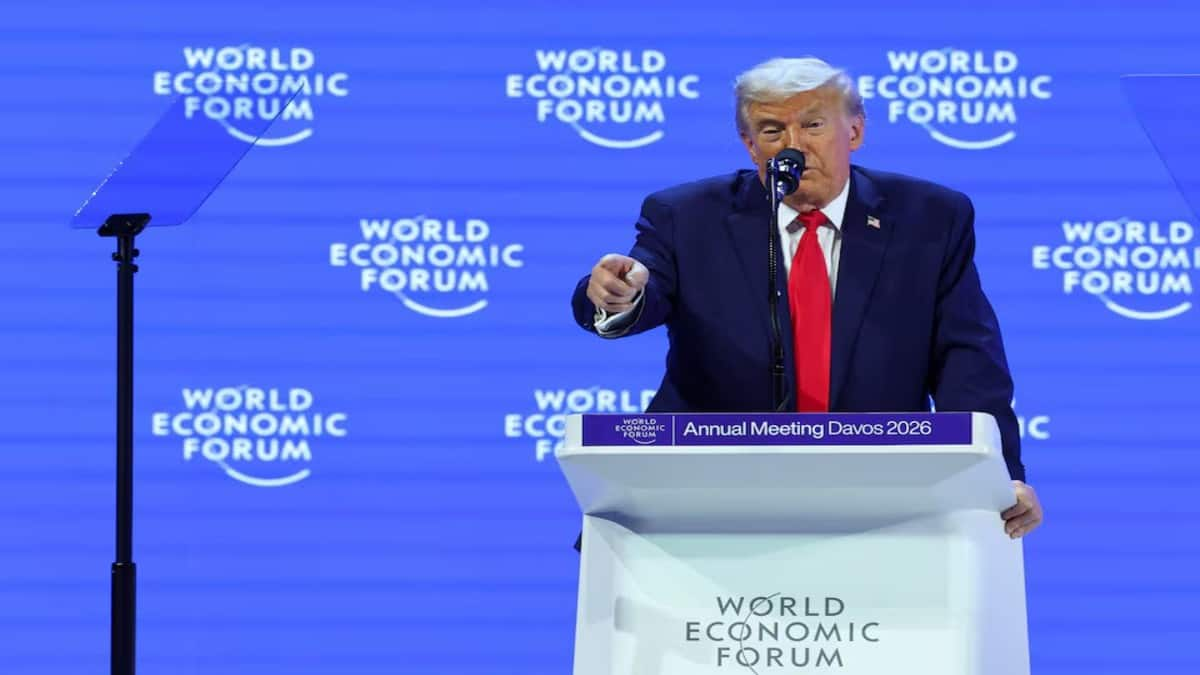
But this trade deal isn’t just about the India and the EU and the strengthening of their ties. The FTA is also an attempt by both sides to diversify further, especially at a time when US President Donald Trump is upending the world order with his tariff regime.
At 50 per cent, India is one of the most heavily tariffed nations by the US under Trump. Meanwhile, EU tensions with the Trump administration have been building as well, particularly over the US president’s insistence that the US be allowed to take over Greenland, which is a territory of EU member Denmark.
And buoyed by the FTA with the EU, India is looking to sign off on more such trade deals, with the International Institute for Strategic Studies, world-leading authority on global security, political risk and military conflict, noting that Delhi is in active negotiations for 11 trade agreements covering 24 countries.
But the Republic Day parade wasn’t the sole purpose for the EU delegation’s visit to India. A day after the January 26 celebrations, Prime Minister Narendra Modi and the EU officials sat down for a crucial India-EU summit, following which it was announced that talks on the historic and ambitious free trade agreement, which had been in the pipeline for a while, had been finalised and that they had sealed the “mother of all trade deals”.
The trade deal, the largest for both sides, covers about two billion people and represents a combined market of nearly $27 trillion and about 25 per cent of the global gross domestic product (GDP).
As you sit back this weekend and relax, we discuss this trade deal in length and why we chose it as our pick for Word of the Week. Also, before you think it, yes, we know Free Trade Agreement isn’t one word :=)
A Free Trade Agreement, explained
A free trade agreement is an arrangement in which two or more countries commit to opening up their markets to one another by lowering or removing tariffs, quotas, and other trade barriers, making it easier for goods and services to move between them.
These deals help create an open and competitive international marketplace.
Unlike what many may think, free trade agreements, FTAs, don’t abandon all control of imports and exports. In many cases, an FTA would have policies in place that exempt specific products from tariff-free status to protect home producers from foreign competition in their industries.
Many believe that the Cobden-Chevalier treaty, concluded in 1860 between Britain and France, was the first ever free trade agreement signed, with many describing this deal as the priming of a “free trade epidemic” that infected the European continent and led to a “swift break with centuries of protection”.
As the World Trade Organisation notes in one report, over a period of 15 years since signing the Cobden-Chevalier treaty, this led to the conclusion of 56 similar PTAs in Europe, liberalising trade.
India’s tryst with FTAs
In an attempt to establish improve trade with countries, India has long been pursuing trade deals with other countries. It was in 1998 that India signed its first ever FTA Sri Lanka, followed by the South Asia Free Trade Agreement (SAFTA), which was signed in 2004. In 2005, it signed a Comprehensive Economic Cooperation Agreement with Singapore, and later, a wider FTA with the Association of Southeast Asian Nations (ASEAN) in 2010.
This was followed by a lull period from 2012 to 2021. From 2021 onwards, the country once again turned its focus on trade agreements and to date, it has finalised eight such pacts. It began with the Mauritius–India Comprehensive Economic Cooperation and Partnership in February of 2021. Next came the Comprehensive Economic Partnership Agreement with the UAE on February 18, 2022. Under this deal, which came into force in May, the UAE eliminated 97 per cent of tariff lines, covering 99 per cent of India’s exports. In turn, India removed tariffs on 80 per cent of goods.
Next came the FTA with Australia in April, making 85 per cent of Australian goods exports to India by value tariff-free.
In 2024, India signed an FTA with the European Free Trade Association, Iceland, Liechtenstein, Norway, and Switzerland under which $100 billion worth of investments were committed and one million direct jobs was promised.
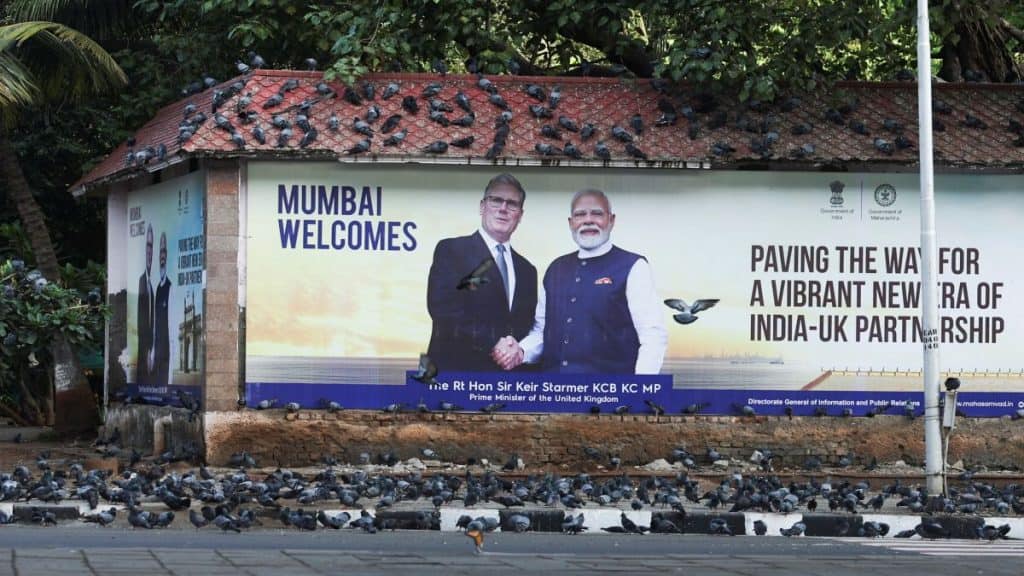
Pigeons sit near a poster of India's Prime Minister Narendra Modi welcoming British Prime Minister Keir Starmer in Mumbai. The FTA between India and the UK is expected to boost bilateral trade by $34 billion annually. File image/Reuters
Then in July 2025, PM Modi signed off on the Comprehensive Economic and Trade Agreement with the United Kingdom that provides duty-free access to 99 per cent of India’s exports to the UK, covering nearly 100 per cent of the trade value.
In the same year, India also signed an FTA with Oman and New Zealand. While Muscat agreed to duty-free access for 99.38 per cent of India’s exports, Wellington offered duty-free access for all Indian exports and pledged $20 billion in investments by 2040.
And now, the ‘mother of all trade deals’
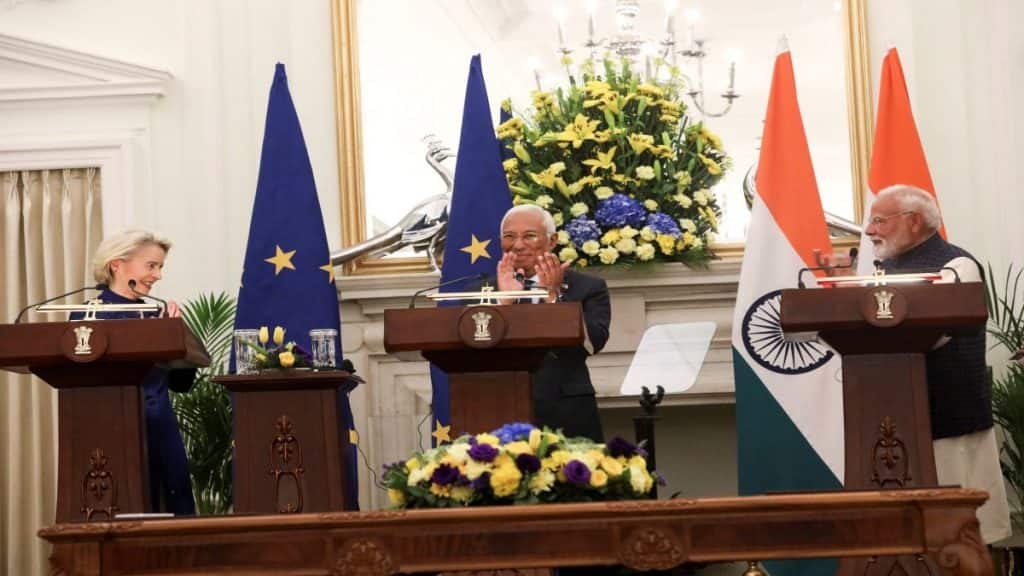
And following with this trend, on January 27, India finally sealed a FTA with the European Union, with von der Leyen saying, “We did it, we delivered the mother of all deals” along side PM Modi and European Council President Antonio Costa.
After years of negotiations, the two sides agreed on a pact which slashes or removes tariffs on the vast majority of goods. India will eliminate duties on 93 per cent of EU imports by value; the EU will do so for 99 per cent of Indian exports.
As PM Modi told Indian workers and industry leaders in sectors such as textiles, gems and jewellery that “the agreement will prove very helpful for you,” adding that it will not only boost manufacturing in India but will also expand India’s services sector. “This free trade agreement will strengthen confidence in India for every business and every investor in the world. India is working extensively on global partnerships in all sectors,” Modi said.
The agreement will make certain EU goods cheaper in India — European cars, chemicals and plastics, pearls and precious metals, chocolates and olive oil, wine, beer and spirits among others.
European Commission President Ursula von der Leyen, Prime Minister Narendra Modi and European Council President Antonio Costa attend a joint press statement at the Hyderabad House in New Delhi where they announced the sealing of the India-EU FTA. File image/Reuters
India will also provide improved access for EU firms in financial and maritime services, and both sides will simplify customs rules and provide stronger intellectual property protections.
But this trade deal isn’t just about the India and the EU and the strengthening of their ties. The FTA is also an attempt by both sides to diversify further, especially at a time when US President Donald Trump is upending the world order with his tariff regime.
At 50 per cent, India is one of the most heavily tariffed nations by the US under Trump. Meanwhile, EU tensions with the Trump administration have been building as well, particularly over the US president’s insistence that the US be allowed to take over Greenland, which is a territory of EU member Denmark.
And buoyed by the FTA with the EU, India is looking to sign off on more such trade deals, with the International Institute for Strategic Studies, world-leading authority on global security, political risk and military conflict, noting that Delhi is in active negotiations for 11 trade agreements covering 24 countries.