
The Jewish state has done so by recognising Somaliland as a sovereign nation, drawing criticism from other nations.
Israel has become the first country to recognise the breakaway state. This development occurred nearly three decades after the territory announced it was separating itself from Somalia.
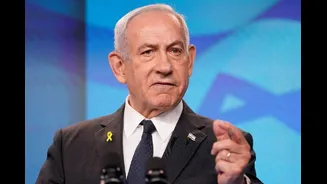
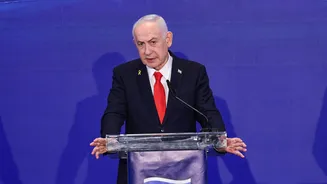
Israel’s Benjamin Netanyahu has said that he has spoken to Somaliland President Abdirahman Mohamed Abdullahi and invited him to visit Israel. While Abdullahi called the move a ‘historic moment’, Somalia has said the development is a “direct and grave threat to international peace and security”.
The move came as Somalia is set to assume the presidency of the United Nations Security Council (UNSC).
But what do we know about Somaliland? Why are other countries so upset?
All about Somaliland
Somaliland is a self-declared republic in the Horn of Africa. It declared its independence from Somalia in 1991 after military dictator Siad Barre was removed from power. This came after a civil war that saw Barre’s forces pitted against rebel guerrillas, in which tens of thousands of people were killed.
It is situated in north-western Somalia and has Djibouti and Ethiopia on its borders, as well as the Gulf of Aden along its coastline. Somaliland was originally a British protectorate called British Somaliland. In 1960, it combined with Italian Somaliland to establish the Somali Republic.
Somaliland has a population of approximately six million people. It has its own government, constitution, security forces, currency and electoral system. Compared to Somalia, which has witnessed multiple Islamist attacks over the years, Somaliland has seen peace and stability for much of its time in existence.
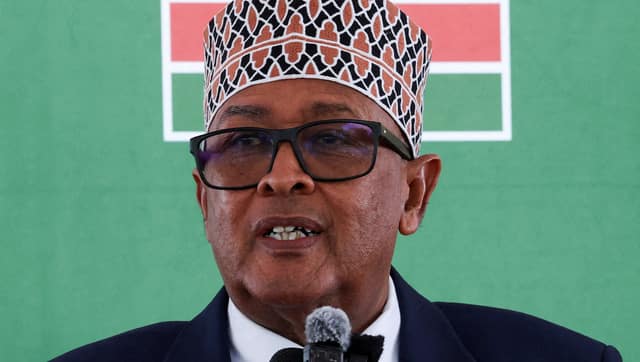
Somaliland President Abdirahman Mohamed Abdullahi described Israel's move as a 'historic development'. Reuters
However, until now, Somaliland has not been recognised by any nation. This has left it isolated on the international stage and unable to access grants or loans from other nations and bilateral and multilateral lenders.
What Israel did and why
Netanyahu has said Israel is recognising Somaliland’s right to “self-determination”. He has claimed that the decision was made “in the spirit of the Abraham Accords”, the United States-backed deal to get Arab nations to normalise ties with Israel.
According to Israel, Foreign Minister Gideon Saar and Abdullahi have signed a joint declaration of mutual recognition. Abdullahi said Somaliland will now join the Abraham Accords.
But experts say Israel has other, more strategic reasons for doing so, noting the territory’s proximity to the Red Sea and the Gulf of Aden.
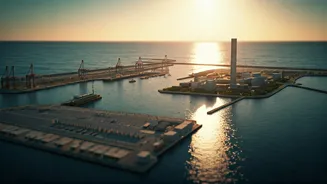
The United Arab Emirates, for example, has a military base in Somaliland in the port city of Berbera. The UAE, a signatory to the Abraham Accords, has used the base — which also contains an airstrip and a naval facility — to carry out strikes on the Houthis.
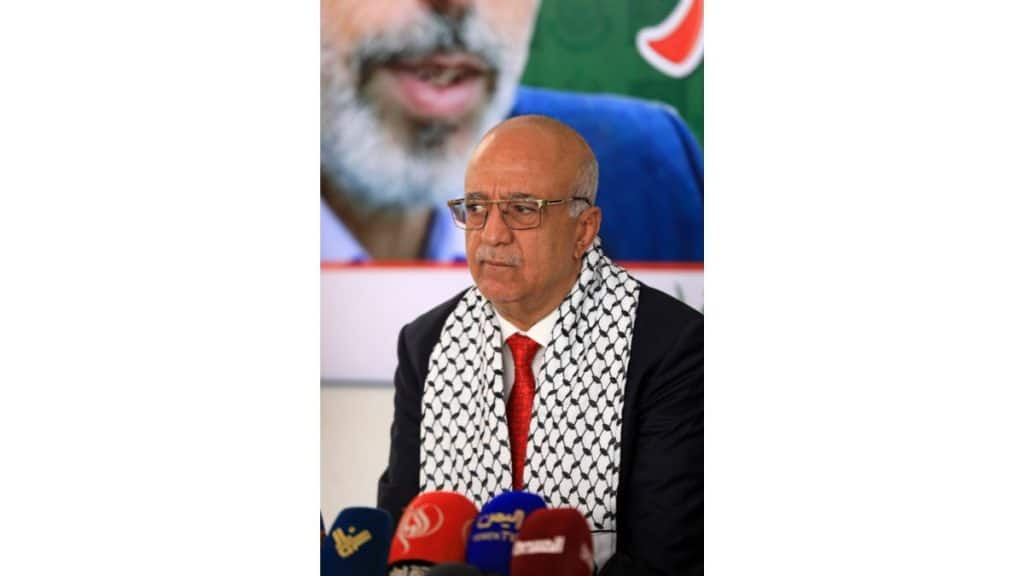
Ahmed al-Rahawi, the Prime Minister of Yemen's Houthis-run government. AFP
“Israel requires allies in the Red Sea region for many strategic reasons, among them the possibility of a future campaign against the Houthis,” Israeli think tank the Institute for National Security Studies was quoted as saying by the BBC. “Somaliland is an ideal candidate for such cooperation as it could offer Israel potential access to an operational area close to the conflict zone.”
Africa analyst Cameron Hudson added that Israel made the move with its arch-rival Iran, a supporter of the Houthis, in mind.
“The Red Sea is also a conduit for weapons and fighters to flow up the Red Sea into the Eastern Mediterranean. It has traditionally been a source of support and supply to fighters in Gaza. And so having a presence, having a security presence, having an intelligence presence at the mouth of the Red Sea only serves Israel's national security interests,” he said.
What countries are saying
China has slammed the move. Foreign Ministry spokesperson Lin Jian was quoted as telling the BBC, “No country should encourage or support other countries' internal separatist forces for its own selfish interests.”
Countries such as the UK, Turkey and Saudi Arabia, as well as blocs like the African Union, have also criticised Israel.
The Keir Starmer-led UK government called for Somalia and the breakaway territory to “address differences and work together to face common threats”.
South Africa’s Department of International Relations and Cooperation called on nations to “reject this external interference and support a united, stable Somalia”.
The African Union has warned that this would set a “dangerous precedent”. AU Commission Chair Mahamoud Ali Youssouf said Somaliland remains an “integral part” of Somalia, while Turkey slammed Israel’s “overt interference” in Somalia’s internal affairs.
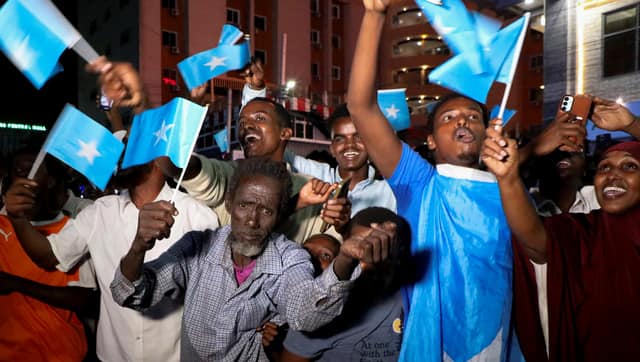
Somalis attend a demonstration after Israel became the first country to formally recognise the self-declared Republic of Somaliland as an independent and sovereign state, a decision that could reshape regional dynamics. Reuters
Somalia continues to insist that Somaliland is an integral part of its territory. Its President, Hassan Sheikh Mohamud, called Israel's move an “existential threat” to his country's unity. Somalia, in a letter to the United Nations Security Council (UNSC), called the move “morally indefensible”.
Somalia has also said Israel’s move could be a pretext to forcibly remove Palestinians from Gaza and the West Bank and send them to the territory.
“We further note with deep concern reports that this recognition may serve as a pretext for the forced relocation of Palestinians to north-western Somalia,” the letter read.
“Somalia will never accept the people of Palestine to be forcibly evicted from their rightful land to a faraway place,” Somalia's President Mohamud told his parliament on Sunday.
US defends Israel
The United States has defended the move. Deputy US Ambassador to the UN Tammy Bruce said, “Israel has the same right to conduct diplomatic relations as any other sovereign state.”
“Earlier this year, several countries, including members of this Council, made the unilateral decision to recognise a non-existent Palestinian state. And yet, no emergency meeting was called to express this Council’s outrage,” she added.
“This Council’s persistent double standards and misdirection of focus distract from its mission of maintaining international peace and security.
“On the matter of Somaliland, we have no announcement to make regarding US recognition of Somaliland. And there has been no change in American policy,” she added.
However, US President Donald Trump, an ally of Netanyahu, has said the United States will not follow in Israel's footsteps.
“No,” Trump said. “Does anyone know what Somaliland is, really?”
It seems the great geopolitical game will continue.
With inputs from agencies