





In the pursuit of integrating artificial intelligence into everyday work, Genpact is placing managers at the centre of its workforce transition strategy. The ambition is clear: every employee should operate as an AI practitioner by 2027. Achieving that goal, however, will depend on how effectively managers translate AI from a technology into everyday workplace behaviour.
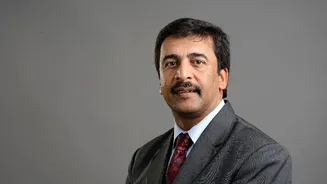
In a recent interaction with People Matters, Piyush Mehta, Chief Human Resources Officer at Genpact, shared how the role of managers is being reshaped by AI, why confidence has become a bigger barrier than capability, and why organisations need to rethink manager development for an AI-enabled future.
Managers are becoming enterprise leaders
During the interaction, Mehta spoke about the growing responsibilities of managers beyond their traditional role of delivering business performance, supporting career growth and leading effective teams. What has changed is the environment in which these responsibilities now exist.
As organisations undergo continuous disruption driven by AI and digital technologies, managers are increasingly expected to help employees adapt while embracing change themselves.
Coaching has become a core management capability
According to Mehta, coaching has evolved from being a desirable leadership quality into an operational necessity as organisations adopt AI.
Many managers recognise its importance but struggle to practise it consistently while balancing expanding responsibilities. One of the biggest lessons from Genpact's leadership development programmes is that self-awareness forms the foundation of effective leadership. Understanding personal strengths, blind spots and leadership mindset helps managers move beyond individual performance and create greater impact through their teams.
Two priorities also stand out: managers need greater confidence to coach rather than always provide answers, while organisations must redesign work so AI takes over repetitive tasks, creating more space for coaching, judgment and capability building.
Learning agility is now essential
Mehta identified three capabilities that will define successful managers: learning agility, technology fluency and enterprise thinking.
Managers who continue learning themselves are more likely to build resilient teams. At Genpact, employees logged more than 12.5 million learning hours during 2025, with around 40% focused on AI and technology through the Genome learning ecosystem.
Technology fluency does not require managers to become technical experts. Instead, they need enough understanding of AI to identify where it can improve work and make informed decisions. Enterprise thinking complements this by helping managers connect team priorities with broader business objectives while working across functions.
AI readiness depends on everyday adoption
AI readiness progresses through three stages: awareness, operating readiness and genuine adoption.
"The difference is whether people know how to apply AI in the flow of their work," Mehta said.
Managers play a critical role by using AI tools in their own decision-making and encouraging employees to integrate them into everyday work. Creating psychological safety is equally important, as employees are more willing to experiment when imperfect first attempts are treated as learning opportunities.
For Genpact, building a 100% AI Practitioner workforce by 2027 will depend less on formal training and more on managers embedding learning into daily work while taking responsibility for developing their teams.
Manager development needs to evolve
Mehta believes organisations should move beyond traditional classroom-based leadership programmes. Instead, manager development should be continuous, closely aligned with business priorities and embedded into day-to-day work.
He argued that practical experiences—such as sprint-based learning, simulations, cross-functional assignments and stretch roles—build stronger managers than training alone. As he put it, "Managers learn to lead change by leading change."
The manager's role will continue to evolve
Looking ahead, Mehta expects managers to spend more time deciding which work should remain human-led and which tasks are better handled by AI.
As routine work becomes increasingly automated, trust, empathy, judgment and the ability to guide teams through uncertainty will become even more valuable. He believes people management can no longer be viewed simply as the next step after promotion but as a specialised discipline requiring continuous investment, dedicated development and sustained organisational support.