







What is the story about?
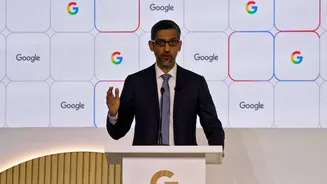
When Sundar Pichai appears on the cover of TIME’s 100 Most Influential Companies of 2026 issue, the spotlight falls on a leader who rarely seeks it. In his conversation with the magazine, Pichai recounts a moment from years ago while scuba diving in Hawaii, when turbulent waters gave way to stillness just a few feet below the surface. That experience, he suggests, mirrors how he navigates turbulence today.
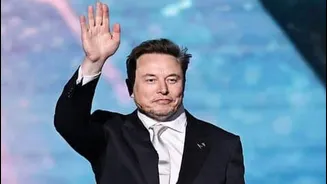
At the helm of Google and its parent Alphabet, Pichai oversees one of the world’s most valuable firms. Yet, unlike peers such as Elon Musk, Mark Zuckerberg, or Sam Altman, he remains understated, often letting products and strategy speak louder than personality.
Pichai’s leadership has long been defined by restraint rather than theatrics. Critics once mistook this for passivity, especially during moments when Google appeared slow to respond to seismic industry shifts. But internally, colleagues describe a leader with a clear sense of direction and a firm grip on execution.
His early life in Chennai, where access to technology arrived gradually, shaped his worldview. The memory of waiting years for a telephone instilled in him a belief that technology should reach people faster and more efficiently. That sense of urgency now underpins Google’s expansive AI push.
Within Silicon Valley, Pichai is often characterised as a “product leader” rather than a visionary showman. He played a key role in building products like Chrome and Drive, focusing on usability and scale. This instinct, allies say, allows him to anticipate how billions of users might interact with technology, often before trends fully emerge.
Pichai’s defining bet came in 2016, when he declared Google would become an AI-first company. At the time, the move raised eyebrows, even within the company. Artificial intelligence was still seen as experimental, far from mainstream adoption.
That perception changed dramatically with the rise of ChatGPT by OpenAI in late 2022. The chatbot’s viral success triggered a wave of criticism towards Google, with analysts questioning whether the company had lost its edge.
Yet, much of Google’s groundwork had already been laid. Investments in AI research, custom chips, and infrastructure began to pay off. The consolidation of its AI efforts under Google DeepMind, led by Demis Hassabis, accelerated progress.
The result has been the rapid rise of Gemini, which now ranks among the most advanced AI systems globally. Google has also embedded AI across its ecosystem, from Search and Gmail to Maps and YouTube, bringing the technology to billions without requiring users to actively seek it out.
Financially, the strategy has reassured investors. Fears that AI would erode Google’s core search business have so far proven unfounded, with continued revenue growth and a multi-trillion-dollar valuation reinforcing its dominance.
However, success has brought scrutiny. Critics warn that Google’s expanding influence in AI could deepen concerns around surveillance, data privacy, and the concentration of power. Partnerships with governments and the military have sparked internal protests, while publishers worry that AI-generated summaries could reduce traffic to original content.
Despite the challenges, Pichai remains focused on the long game. His vision extends beyond chatbots and search enhancements to a broader ecosystem built around a “universal AI assistant” that integrates seamlessly across devices.
Inside Google, teams are already experimenting with AI-powered tools spanning personalised research, creative content generation, and autonomous systems. Products like self-driving cars and advanced AI models hint at a future where technology becomes deeply embedded in everyday life.
Further ahead, Pichai is backing ambitious ideas, including quantum computing breakthroughs, AI-powered robotics, and even space-based data infrastructure. While some of these ambitions may sound futuristic, they align with a pattern that has defined his tenure: investing early, scaling quietly, and delivering at scale.
Still, the path forward is not without risk. Questions around safety, ethics, and accountability continue to grow louder as AI systems become more powerful. Pichai has argued that deploying technology responsibly requires real-world feedback, even if that approach invites criticism.
For now, his calm-under-pressure philosophy appears intact. Much like that moment beneath turbulent waters, Pichai seems content operating in the quieter depths, observing, adjusting, and waiting for the right moment to act.
As the AI race intensifies, that steadiness may prove to be his greatest advantage.
At the helm of Google and its parent Alphabet, Pichai oversees one of the world’s most valuable firms. Yet, unlike peers such as Elon Musk, Mark Zuckerberg, or Sam Altman, he remains understated, often letting products and strategy speak louder than personality.
Pichai’s calm leadership style
Pichai’s leadership has long been defined by restraint rather than theatrics. Critics once mistook this for passivity, especially during moments when Google appeared slow to respond to seismic industry shifts. But internally, colleagues describe a leader with a clear sense of direction and a firm grip on execution.
His early life in Chennai, where access to technology arrived gradually, shaped his worldview. The memory of waiting years for a telephone instilled in him a belief that technology should reach people faster and more efficiently. That sense of urgency now underpins Google’s expansive AI push.
Within Silicon Valley, Pichai is often characterised as a “product leader” rather than a visionary showman. He played a key role in building products like Chrome and Drive, focusing on usability and scale. This instinct, allies say, allows him to anticipate how billions of users might interact with technology, often before trends fully emerge.
Rise of AI and criticism
Pichai’s defining bet came in 2016, when he declared Google would become an AI-first company. At the time, the move raised eyebrows, even within the company. Artificial intelligence was still seen as experimental, far from mainstream adoption.
That perception changed dramatically with the rise of ChatGPT by OpenAI in late 2022. The chatbot’s viral success triggered a wave of criticism towards Google, with analysts questioning whether the company had lost its edge.
Yet, much of Google’s groundwork had already been laid. Investments in AI research, custom chips, and infrastructure began to pay off. The consolidation of its AI efforts under Google DeepMind, led by Demis Hassabis, accelerated progress.
The result has been the rapid rise of Gemini, which now ranks among the most advanced AI systems globally. Google has also embedded AI across its ecosystem, from Search and Gmail to Maps and YouTube, bringing the technology to billions without requiring users to actively seek it out.
Financially, the strategy has reassured investors. Fears that AI would erode Google’s core search business have so far proven unfounded, with continued revenue growth and a multi-trillion-dollar valuation reinforcing its dominance.
However, success has brought scrutiny. Critics warn that Google’s expanding influence in AI could deepen concerns around surveillance, data privacy, and the concentration of power. Partnerships with governments and the military have sparked internal protests, while publishers worry that AI-generated summaries could reduce traffic to original content.
What’s next for Pichai and Google
Despite the challenges, Pichai remains focused on the long game. His vision extends beyond chatbots and search enhancements to a broader ecosystem built around a “universal AI assistant” that integrates seamlessly across devices.
Inside Google, teams are already experimenting with AI-powered tools spanning personalised research, creative content generation, and autonomous systems. Products like self-driving cars and advanced AI models hint at a future where technology becomes deeply embedded in everyday life.
Further ahead, Pichai is backing ambitious ideas, including quantum computing breakthroughs, AI-powered robotics, and even space-based data infrastructure. While some of these ambitions may sound futuristic, they align with a pattern that has defined his tenure: investing early, scaling quietly, and delivering at scale.
Still, the path forward is not without risk. Questions around safety, ethics, and accountability continue to grow louder as AI systems become more powerful. Pichai has argued that deploying technology responsibly requires real-world feedback, even if that approach invites criticism.
For now, his calm-under-pressure philosophy appears intact. Much like that moment beneath turbulent waters, Pichai seems content operating in the quieter depths, observing, adjusting, and waiting for the right moment to act.
As the AI race intensifies, that steadiness may prove to be his greatest advantage.