








What is the story about?
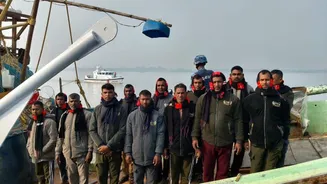
India and Bangladesh on Tuesday released fishermen whom they had apprehended for crossing into their territorial waters.
In a statement, the Ministry of External Affairs (MEA) said that India released 38 Bangladeshi fishermen and Bangladesh released 47 Indian fishermen along with their operable vessels who had mistakenly crossed the international maritime boundary.
Earlier this year, India had released 90 Bangladeshi fishermen in January and Bangladesh had released 95 Indian fishermen.
The MEA further said, "The mutual exchange of fishermen and their vessel has been worked out keeping in mind the humanitarian and livelihood concerns of fishing communities on both sides. The Government of India attaches the highest importance to the safety, security and welfare of Indian fishermen. To this end, it continues to work assiduously to secure the release of our fishermen from Bangladesh custody."
In July, the Bangladeshi navy apprehended at least 34 Indian fishermen on the night of July 14 along with two vessels, FB Jhor and FB Mangalchandi, for allegedly crossing the international maritime boundary line and fishing in Bangladeshi territorial waters, according to The Print.
In another such instance, the Bangladeshi authorities detained 95 Indian fishermen and six trawlers in October 2024. They were released in January.
In the Indian subcontinent, it is not uncommon for fishermen to occasionally cross into another country's waters and other countries apprehending them. But while India and Bangladesh have apparently resolved the matter at reciprocal basis with relative ease, such situations can escalate into a crisis at time, such as the tensions around fishing disputes between India and Sri Lanka.
In the India-Sri Lanka fishing dispute, Sri Lanka often arrests Indian fishermen and seizes their bots over accusations of crossing the international maritime boundary line and using trawlers objected to by Sri Lanka.
In a statement, the Ministry of External Affairs (MEA) said that India released 38 Bangladeshi fishermen and Bangladesh released 47 Indian fishermen along with their operable vessels who had mistakenly crossed the international maritime boundary.
Earlier this year, India had released 90 Bangladeshi fishermen in January and Bangladesh had released 95 Indian fishermen.
The MEA further said, "The mutual exchange of fishermen and their vessel has been worked out keeping in mind the humanitarian and livelihood concerns of fishing communities on both sides. The Government of India attaches the highest importance to the safety, security and welfare of Indian fishermen. To this end, it continues to work assiduously to secure the release of our fishermen from Bangladesh custody."
Committed to the safety, security and welfare of our fishermen.
India and Bangladesh today completed the release and repatriation of 47 Indian and 38 Bangladeshi fishermen underscoring our shared commitment to humanitarian and livelihood concerns of coastal communities.
🔗… pic.twitter.com/rnLE5w2G3x
— Randhir Jaiswal (@MEAIndia) December 9, 2025
In July, the Bangladeshi navy apprehended at least 34 Indian fishermen on the night of July 14 along with two vessels, FB Jhor and FB Mangalchandi, for allegedly crossing the international maritime boundary line and fishing in Bangladeshi territorial waters, according to The Print.
In another such instance, the Bangladeshi authorities detained 95 Indian fishermen and six trawlers in October 2024. They were released in January.
In the Indian subcontinent, it is not uncommon for fishermen to occasionally cross into another country's waters and other countries apprehending them. But while India and Bangladesh have apparently resolved the matter at reciprocal basis with relative ease, such situations can escalate into a crisis at time, such as the tensions around fishing disputes between India and Sri Lanka.
In the India-Sri Lanka fishing dispute, Sri Lanka often arrests Indian fishermen and seizes their bots over accusations of crossing the international maritime boundary line and using trawlers objected to by Sri Lanka.