








What is the story about?
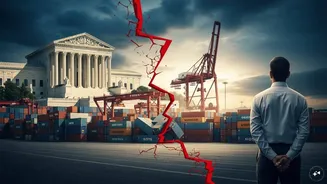
As the US Supreme Court prepares to issue a pivotal ruling this month on the legality of President Donald Trump’s sweeping trade tariffs, Indian exporters face heightened uncertainty and potential economic strain. The decision expected as early as this week could not only reshape US trade policy but also determine the fate of punitive duties that have already disrupted trade with key partners including India.
For Indian manufacturers and exporters, especially in labour-intensive and manufacturing sectors, the stakes could not be higher. Many are watching the court’s decision closely as legal clarity may influence whether a bilateral trade agreement can be finalised this month, a deadline exporters say is critical to securing contracts and stabilising shipments to the United States.
Supreme Court ruling tests presidential trade authority
The US Supreme Court is set to rule on the legality of emergency tariff powers invoked by President Trump, a move that critics argue oversteps presidential authority and bypasses congressional control over trade policy. Justices of varying ideological leanings voiced scepticism during November arguments about the administration’s use of the International Emergency Economic Powers Act (IEEPA) to impose wide-ranging tariffs on imports from multiple countries.
Tariffs imposed under Trump since February 2025 have targeted a broad spectrum of goods, with some levies reaching as high as 50% on imports from India, aimed at pressuring New Delhi over issues including energy purchases. These duties extend beyond reciprocal tariffs to include penalties tied to geopolitical concerns.
Reuters reported that more than $133.5 billion in tariffs are currently subject to potential legal reversal, with markets and global supply chains awaiting the Supreme Court’s final say.
A ruling against the administration could weaken Trump’s authority to unilaterally impose tariffs and open the door for lower courts or Congress to assert greater control over trade measures. However, even if the court strikes down the emergency tariff powers, it remains unclear whether it will require refunds for duties already collected or defer such decisions, prolonging uncertainty for exporters and importers alike.
Indian exporters in the eye of the storm
For Indian exporters, the risk is twofold: legal uncertainty from the Supreme Court case and the pressing need to finalise a bilateral trade pact with the United States. Local business leaders have emphasised that January is a decisive month for sealing a trade deal that would allow exporters to secure orders for the first half of 2026, especially as punitive tariffs are already affecting order books during the busy winter season.
The duties have particularly hit labour-intensive sectors such as textiles, gems and jewellery, leather and footwear, marine products and furniture. Analysts warn that sustained high tariffs could divert U.S. buyers towards competitors in Vietnam, Bangladesh and Mexico whose exports face lower duties, eroding India’s competitiveness.
One industry representative noted that under a 50% tariff regime, Indian textiles could lose significant market share as similar garments from countries with lower barriers become more attractive to American importers.
The uncertainty has also affected investor sentiment and pricing decisions. Firms face a dilemma: hold prices unchanged and absorb costs, potentially eroding margins and profits, or pass on the added tariff burden to customers, risking loss of demand. The outcome of the Supreme Court’s decision will play a major role in shaping these strategic calculations.
Trade talks and strategic choices
Against this backdrop, India is intensifying diplomatic and trade negotiations with the United States in an effort to finalise a comprehensive trade agreement that could mitigate tariff impacts. Exporters argue that a stable pact would not only offer immediate relief through lower duties but also provide longer-term certainty for planning and investment.
However, analysts caution that court rulings alone will not resolve the broader tensions. Even if the Supreme Court limits executive trade powers, Washington could pursue alternative legislative or policy routes to maintain leverage in trade relations.
For Indian exporters, the combination of legal, diplomatic and economic factors makes January a make-or-break period. Their ability to lock in trade agreements and adapt to evolving U.S. policy will determine how well they weather the storm of punitive tariffs and shifting global trade norms.