



What is the story about?
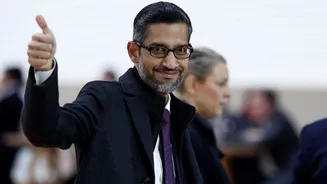
Google CEO Sundar Pichai on Wednesday said that it is "nice to be back" in India as he arrived in New Delhi for the AI Impact Summit.
"Nice to be back in India for the AI Impact Summit - a very warm welcome as always," Pichai wrote on X.
Day 1
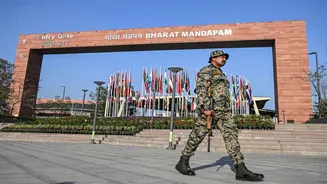
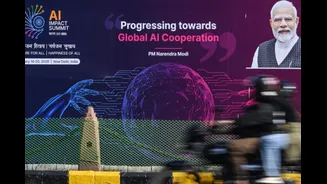
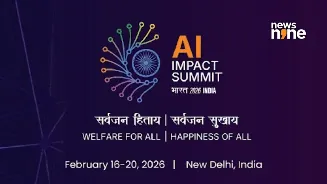
The summit opened on February 16 with Prime Minister Narendra Modi launching the event in New Delhi's Bharat Mandapam. He said that India stands at the forefront of the transformation of artificial intelligence.
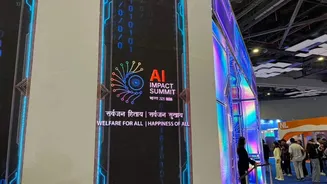
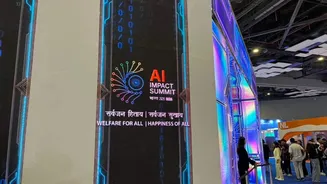
The first day of the summit attracted over thousands of participants from all over the world. The summit hosted more than 100 events, not counting sessions that were not livestreamed. Across the expansive exhibition hall complex, upwards of 400 booths were in operation, representing industry leaders, academic institutions, startups, and major global technology companies.
PM Modi also inaugurated the India AI Impact Expo at Bharat Mandapam, where he interacted with startups and companies by visiting stalls and talking to representatives.
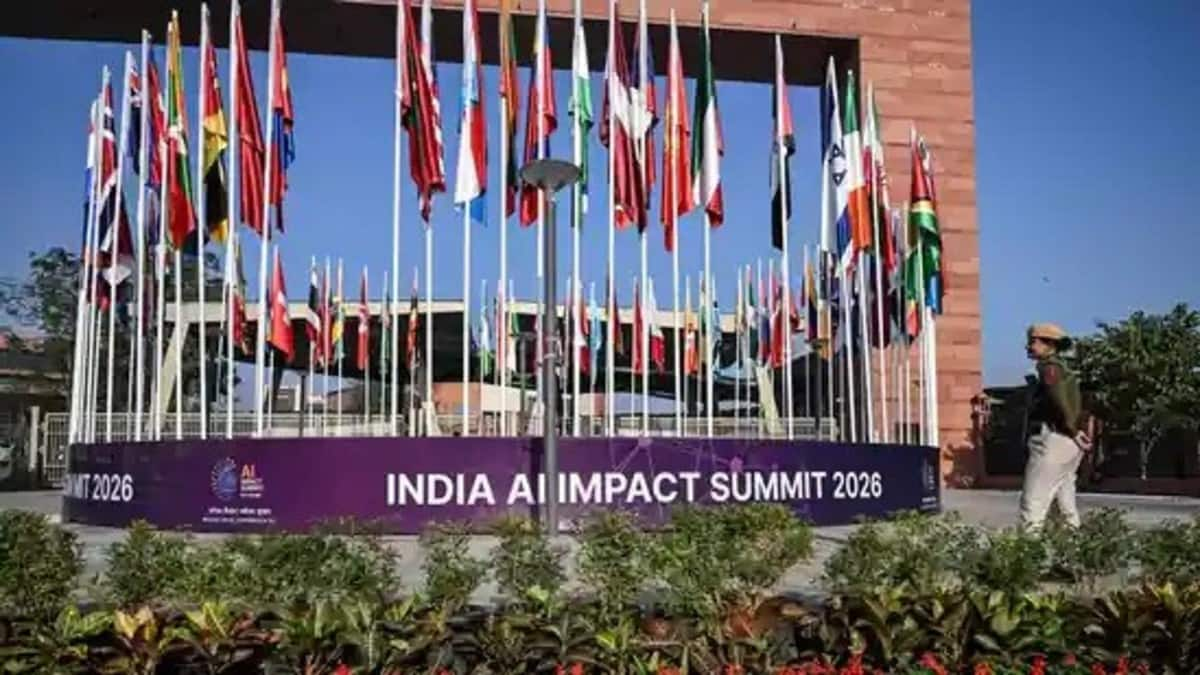
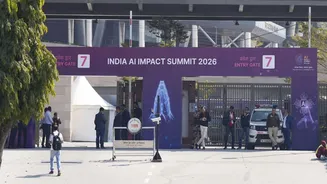
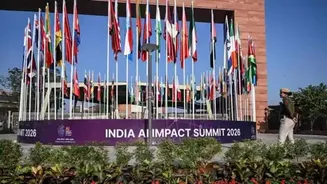
Dozens of world leaders, delegates, and participants from more than 100 countries have registered to take part in the AI Impact Summit 2026. The gathering includes 20 prime ministers and presidents, among them French President Emmanuel Macron, Spanish Prime Minister Pedro Sanchez, Brazilian President Luiz Inacio Lula da Silva, Greek Prime Minister Kyriakos Mitsotakis, and Abu Dhabi Crown Prince Khaled bin Mohamed bin Zayed Al Nahyan.
Day 2
The second day of the big ticket event opened the floor to more innovators with over 300 exhibitions from 30 countries. A key focus of Day 2 was the democratisation of AI. For artificial intelligence to be truly effective in a country as diverse as India, it needs to operate in more than just English.
Exhibitors highlighted multilingual Large Language Models (LLMs) tailored to reflect India’s regional languages and cultural nuances. These solutions are intended to empower small business owners in remote villages, enabling them to use AI for tasks such as accounting, content creation, and other day-to-day operations.
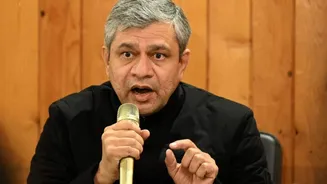
A major development that came from the second day was when Union IT Minister Ashwini Vaishnaw said that India is stepping up scrutiny of age-based restrictions on social media platforms, following Australia’s move to ban users under 16 from platforms such as Instagram, X, YouTube, TikTok and Snapchat.
Vaishnaw also emphasised on the imposition of stronger rules needed on deepfakes, while expecting $200 billion in AI investment over the next two years.
"Nice to be back in India for the AI Impact Summit - a very warm welcome as always," Pichai wrote on X.
Nice to be back in India for the AI Impact Summit - a very warm welcome as always and the papers looked great too:) pic.twitter.com/szM9g2wB4d
— Sundar Pichai (@sundarpichai) February 18, 2026
AI Impact Summit highlights
Day 1
The summit opened on February 16 with Prime Minister Narendra Modi launching the event in New Delhi's Bharat Mandapam. He said that India stands at the forefront of the transformation of artificial intelligence.
The first day of the summit attracted over thousands of participants from all over the world. The summit hosted more than 100 events, not counting sessions that were not livestreamed. Across the expansive exhibition hall complex, upwards of 400 booths were in operation, representing industry leaders, academic institutions, startups, and major global technology companies.
PM Modi also inaugurated the India AI Impact Expo at Bharat Mandapam, where he interacted with startups and companies by visiting stalls and talking to representatives.
Dozens of world leaders, delegates, and participants from more than 100 countries have registered to take part in the AI Impact Summit 2026. The gathering includes 20 prime ministers and presidents, among them French President Emmanuel Macron, Spanish Prime Minister Pedro Sanchez, Brazilian President Luiz Inacio Lula da Silva, Greek Prime Minister Kyriakos Mitsotakis, and Abu Dhabi Crown Prince Khaled bin Mohamed bin Zayed Al Nahyan.
Day 2
The second day of the big ticket event opened the floor to more innovators with over 300 exhibitions from 30 countries. A key focus of Day 2 was the democratisation of AI. For artificial intelligence to be truly effective in a country as diverse as India, it needs to operate in more than just English.
Exhibitors highlighted multilingual Large Language Models (LLMs) tailored to reflect India’s regional languages and cultural nuances. These solutions are intended to empower small business owners in remote villages, enabling them to use AI for tasks such as accounting, content creation, and other day-to-day operations.
A major development that came from the second day was when Union IT Minister Ashwini Vaishnaw said that India is stepping up scrutiny of age-based restrictions on social media platforms, following Australia’s move to ban users under 16 from platforms such as Instagram, X, YouTube, TikTok and Snapchat.
Vaishnaw also emphasised on the imposition of stronger rules needed on deepfakes, while expecting $200 billion in AI investment over the next two years.