






What is the story about?
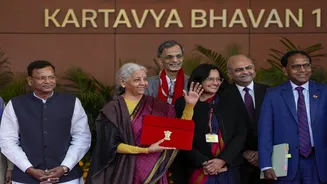
In the Union Budget 2026-27, Finance Minister Nirmala Sitharaman opted for what she described as a “realistic” nominal GDP projection, pushing back against suggestions that the government may be erring on the side of conservatism at a time when inflation has cooled sharply and growth remains resilient.
According to government data presented in Parliament on Sunday, nominal GDP will grow at 10 per cent over the First Advance Estimates of FY26. After the Economic Survey 2025-26 projected real GDP growth for FY27 in the range of 6.8-7.2 per cent, and with retail inflation averaging just 1.7 per cent during April-December 2025, questions have emerged over whether the implied deflator underpinning the Budget math is too modest.
At a post-Budget press conference, when asked whether, with real growth expected around 7.2 per cent, the implied inflation assumption of roughly 2.8 per cent appeared conservative and possibly indicative of structurally lower inflation, Sitharaman rejected the suggestion that the government was being overly cautious.
“Inflation is down in India, and it is remaining there for some time. And inflation is not the only deflator; however, largely you depend on that. And I think, therefore, the assumption of the nominal GDP is realistic,” she said.
The Economic Survey notes that headline CPI inflation averaged 1.7 per cent during April-December 2025—the lowest since the beginning of the CPI series.
This disinflationary trend, while easing household pressures and supporting real consumption, has a mechanical impact on nominal GDP. With inflation subdued, nominal growth—the sum of real growth and price rise—naturally moderates.
But as the Finance Minister underlined, CPI inflation is not the sole determinant of the GDP deflator. The deflator captures price movements across the broader economy, including investment goods, exports and government consumption. In a year marked by strong services growth—services GVA expanded 9.3 per cent in H1 FY26—and resilient manufacturing momentum, price dynamics can diverge from retail inflation.
Nominal GDP projections are not mere academic constructs. They determine the denominator against which fiscal deficit, revenue receipts and debt ratios are measured.
A lower nominal GDP assumption has two immediate implications. First, it restrains the fiscal space available for expenditure expansion, as revenue buoyancy estimates remain grounded. Second, it makes fiscal consolidation targets more credible, as the government avoids the temptation of inflating the denominator to cosmetically improve deficit ratios.
In that sense, the government’s approach in Budget 2026-27 appears to favour prudence over projection optimism—particularly at a time when global conditions remain fragile and trade fragmentation risks persist.
Market participants often prefer higher nominal GDP assumptions, as they provide headroom for spending and reduce the perceived fiscal burden. However, overstating nominal growth can undermine credibility if realised outcomes fall short.
India’s macro indicators remain strong. Foreign exchange reserves stand at $701.4 billion as of mid-January 2026, providing import cover of about 11 months. The current account deficit in Q2 FY26 was contained at around 1.3 per cent of GDP. Gross NPAs of scheduled commercial banks have declined to 2.2 per cent, a multi-decadal low.
Against this backdrop, the nominal GDP projection in Budget 2026-27 appears less an exercise in conservatism and more an attempt to align fiscal arithmetic with a structurally lower inflation environment.
If inflation remains anchored near current levels, nominal growth will inevitably track closer to real growth. The government’s choice, as Sitharaman suggested, is not to artificially inflate expectations but to base its fiscal roadmap on “usual calculations”.
For a government that has emphasised credibility—earning sovereign rating upgrades in 2025—realism may be the more strategic choice. Whether that prudence translates into stronger fiscal outcomes will depend on how growth, inflation, and tax buoyancy evolve through FY27.
For now, Budget 2026-27 signals that New Delhi is willing to trade headline nominal exuberance for macro stability—a stance that may appear conservative on paper but arguably strengthens the foundations of fiscal policy in an era of lower inflation.
According to government data presented in Parliament on Sunday, nominal GDP will grow at 10 per cent over the First Advance Estimates of FY26. After the Economic Survey 2025-26 projected real GDP growth for FY27 in the range of 6.8-7.2 per cent, and with retail inflation averaging just 1.7 per cent during April-December 2025, questions have emerged over whether the implied deflator underpinning the Budget math is too modest.
At a post-Budget press conference, when asked whether, with real growth expected around 7.2 per cent, the implied inflation assumption of roughly 2.8 per cent appeared conservative and possibly indicative of structurally lower inflation, Sitharaman rejected the suggestion that the government was being overly cautious.
“Inflation is down in India, and it is remaining there for some time. And inflation is not the only deflator; however, largely you depend on that. And I think, therefore, the assumption of the nominal GDP is realistic,” she said.
The Economic Survey notes that headline CPI inflation averaged 1.7 per cent during April-December 2025—the lowest since the beginning of the CPI series.
This disinflationary trend, while easing household pressures and supporting real consumption, has a mechanical impact on nominal GDP. With inflation subdued, nominal growth—the sum of real growth and price rise—naturally moderates.
But as the Finance Minister underlined, CPI inflation is not the sole determinant of the GDP deflator. The deflator captures price movements across the broader economy, including investment goods, exports and government consumption. In a year marked by strong services growth—services GVA expanded 9.3 per cent in H1 FY26—and resilient manufacturing momentum, price dynamics can diverge from retail inflation.
Why nominal GDP matters for the Budget
Nominal GDP projections are not mere academic constructs. They determine the denominator against which fiscal deficit, revenue receipts and debt ratios are measured.
A lower nominal GDP assumption has two immediate implications. First, it restrains the fiscal space available for expenditure expansion, as revenue buoyancy estimates remain grounded. Second, it makes fiscal consolidation targets more credible, as the government avoids the temptation of inflating the denominator to cosmetically improve deficit ratios.
In that sense, the government’s approach in Budget 2026-27 appears to favour prudence over projection optimism—particularly at a time when global conditions remain fragile and trade fragmentation risks persist.
Conservative or credible?
Market participants often prefer higher nominal GDP assumptions, as they provide headroom for spending and reduce the perceived fiscal burden. However, overstating nominal growth can undermine credibility if realised outcomes fall short.
India’s macro indicators remain strong. Foreign exchange reserves stand at $701.4 billion as of mid-January 2026, providing import cover of about 11 months. The current account deficit in Q2 FY26 was contained at around 1.3 per cent of GDP. Gross NPAs of scheduled commercial banks have declined to 2.2 per cent, a multi-decadal low.
Against this backdrop, the nominal GDP projection in Budget 2026-27 appears less an exercise in conservatism and more an attempt to align fiscal arithmetic with a structurally lower inflation environment.
If inflation remains anchored near current levels, nominal growth will inevitably track closer to real growth. The government’s choice, as Sitharaman suggested, is not to artificially inflate expectations but to base its fiscal roadmap on “usual calculations”.
For a government that has emphasised credibility—earning sovereign rating upgrades in 2025—realism may be the more strategic choice. Whether that prudence translates into stronger fiscal outcomes will depend on how growth, inflation, and tax buoyancy evolve through FY27.
For now, Budget 2026-27 signals that New Delhi is willing to trade headline nominal exuberance for macro stability—a stance that may appear conservative on paper but arguably strengthens the foundations of fiscal policy in an era of lower inflation.