






What is the story about?
India is set to register its third driest June in the past 100 years, with the nationwide monsoon rainfall deficit standing at 42% as the month draws to a close. The below-normal rainfall has raised concerns that El Nino may already be influencing this year's southwest monsoon, although the India Meteorological Department (IMD) expects rainfall to improve during the first week of July.
The country has received 92.2mm of rainfall so far this June, well below the normal 157.7mm for the month.
Even if widespread rain occurs on Tuesday, the last day of June, the month's total rainfall is expected to reach only around 100mm.
Data for the period 1927-2026 show that only 2009, when 87.5mm of rain was recorded, and 2014, with 92.1mm, witnessed lower June rainfall totals.
Among the country's four meteorological regions, Central India has recorded the largest rainfall deficit at 54% this month.
It is followed by East and Northeast India at 41%, Northwest India at 30%, and South India at 28%.
It is uncommon for all four regions to experience such significant rainfall shortages simultaneously, a pattern that could indicate El Nino is beginning to affect India's monsoon.
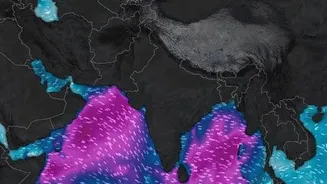
According to an update issued last week by the US International Research Institute for Climate and Society, El Nino had already approached moderate strength as sea surface temperatures in the equatorial Pacific continued to warm rapidly.
Forecasts indicate that El Nino is likely to intensify over the coming months.
A stronger El Nino generally increases the likelihood of adverse effects on India's summer monsoon.
El Nino is a periodic warming of surface waters in the eastern and central Pacific Ocean, accompanied by changes in wind patterns that influence weather systems worldwide, including the Indian monsoon.
After making a weak onset over Kerala on June 4, the monsoon has struggled to gain momentum. During June, daily rainfall across the country has exceeded the seasonal normal on only one day so far.
On a positive note, the IMD has projected better and more evenly distributed rainfall across most parts of the country during the first week of July, particularly over Central India, which currently has the highest monsoon deficit.
The country has received 92.2mm of rainfall so far this June, well below the normal 157.7mm for the month.
Even if widespread rain occurs on Tuesday, the last day of June, the month's total rainfall is expected to reach only around 100mm.
Data for the period 1927-2026 show that only 2009, when 87.5mm of rain was recorded, and 2014, with 92.1mm, witnessed lower June rainfall totals.
Central India records biggest rainfall deficit
Among the country's four meteorological regions, Central India has recorded the largest rainfall deficit at 54% this month.
It is followed by East and Northeast India at 41%, Northwest India at 30%, and South India at 28%.
It is uncommon for all four regions to experience such significant rainfall shortages simultaneously, a pattern that could indicate El Nino is beginning to affect India's monsoon.
According to an update issued last week by the US International Research Institute for Climate and Society, El Nino had already approached moderate strength as sea surface temperatures in the equatorial Pacific continued to warm rapidly.
El Nino expected to strengthen
Forecasts indicate that El Nino is likely to intensify over the coming months.
A stronger El Nino generally increases the likelihood of adverse effects on India's summer monsoon.
El Nino is a periodic warming of surface waters in the eastern and central Pacific Ocean, accompanied by changes in wind patterns that influence weather systems worldwide, including the Indian monsoon.
After making a weak onset over Kerala on June 4, the monsoon has struggled to gain momentum. During June, daily rainfall across the country has exceeded the seasonal normal on only one day so far.
On a positive note, the IMD has projected better and more evenly distributed rainfall across most parts of the country during the first week of July, particularly over Central India, which currently has the highest monsoon deficit.