




What is the story about?
Narendra Modi on Wednesday (June 10) surpassed Jawaharlal Nehru as India’s longest-serving prime minister.
Modi, who came to power in 2014, has broken all sorts of records during his tenure. As did Nehru, who was India’s first prime minister after Independence.
But how do their leadership styles compare? What about how they communicated with the public?
Let’s take a closer look.
Narendra Modi’s leadership style has been described in multiple contemporary analyses as decisive, action-oriented, and leader-centric. He is a visionary leader who articulates ambitious national goals and focuses on efficiency, development, and national security, with a clear emphasis on outcomes and implementation, as per a paper published by Amity University.
Modi’s leadership is also framed as transformational and policy-driven, particularly through initiatives like Atmanirbhar Bharat, which emphasise self-reliance, economic growth, and global competitiveness. His style blends centralised decision-making at the top with decentralised execution in sectors like business and entrepreneurship, according to a paper published by the Indian Institute of Public Administration.
Scholarly analysis suggests that Modi’s leadership aligns with global frameworks such as Kouzes and Posner’s “Five Practices of Exemplary Leadership.” These include modelling values, inspiring a shared vision, challenging systems through bold reforms, enabling citizens, and encouraging collective participation. Policies such as GST, Digital India, and Jan Dhan Yojana reflect this combination of vision and execution, as per a paper published in the Journal of Practical & Professional Nursing.
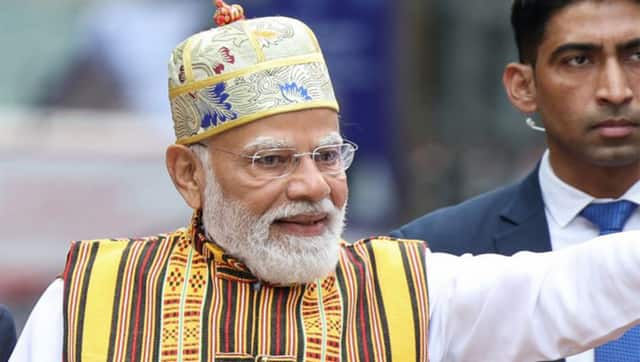
Modi’s approach is therefore not just about governance, but also about constant political messaging and public engagement. His communication strategy reinforces his leadership style, allowing him to directly connect with citizens and build a strong, leader-centric political narrative.
Nehru, on the other hand, was more of a consensus builder and an institutionalist. Though his leadership style was a mix of idealism and pragmatism, he emphasised consultation, debate, and democratic processes. He promoted scientific temper, secularism, and global moral leadership, while adopting a mixed economy approach known as the Nehruvian model, as per BA Notes.org.
Nehru’s leadership also extended deeply into foreign policy and global strategy. His approach combined idealism with strategic autonomy, positioning India as a moral and independent voice during the Cold War. Through policies such as non-alignment and Panchsheel, he sought to balance ethical diplomacy with geopolitical realities, as per
Bharati International Journal of Multidisciplinary Research & Development.
At the same time, Nehru exercised significant personal influence where decision-making was often centralised around him. While this ensured coherence, it also limited institutional consultation in some cases, as per BIJMRD.
He created the Planning Commission and Five-Year Plans through which the central government played a significant role in development, reflecting a state-led approach to nation-building, as per Testbook.
The contrast between Modi and Nehru becomes even sharper when examining how they communicated with the public.
Modi operates in a fundamentally different communication environment compared to Nehru—one defined by digital media, real-time feedback, and constant public scrutiny. He leverages social media, radio programmes like
Mann Ki Baat, public rallies, and direct messaging to engage with citizens continuously. His communication style is marked by clarity, simplicity, and emotional appeal, as per the Amity University paper.
The ability to connect directly with the masses through speeches and digital platforms strengthens his image as a transformational leader capable of inspiring collective action. Symbolic gestures and campaigns further reinforce public participation and national identity, as per a paper published in the Journal of Practical & Professional Nursing.
More
importantly, Modi governs in an era where communication is continuous rather than periodic. Every policy decision or speech is instantly analysed and debated across platforms, with citizens actively participating in discourse, as per News18.
Nehru, on the other hand, operated in a much slower communication ecosystem. His primary tools were radio broadcasts, newspapers, parliamentary speeches, and public rallies. Political messaging unfolded over days and weeks rather than minutes.
However, Nehru too was a powerful communicator in his own right. His speeches and writings reflected intellectual depth and moral clarity, helping shape public thinking around democracy, secularism, and scientific temper.
His communication style during the freedom movement mobilised youth and intellectuals, building a broad national consciousness, as per Testbook. The two men are also similar in other ways – both used the weight of morals to articulate India’s position on peace and global cooperation.
Beyond style and communication, another key difference lies in how the two leaders approached change and reform.
Modi’s leadership has often been associated with a willingness to take bold decisions. Major policy moves and governance initiatives reflect a leadership style that seeks rapid implementation of projects. This aligns with leadership frameworks that emphasise “challenging the process”, where leaders seek to break from established systems to drive transformation, as per a paper published in the
Journal of Practical & Professional Nursing.
His governance also places strong emphasis on citizen participation and behavioural change, with campaigns designed to create a sense of shared responsibility and national involvement. This paper too highlighted how platforms like Mann Ki Baat further reinforce Modi's campaign by highlighting grassroots stories and recognising everyday contributions, strengthening emotional connection and public engagement, as per the same journal paper.
Nehru’s approach to change, on the other hand, was more measured and institution-driven. Rather than relying on immediate decisions, he focused on building long-term structures. His emphasis on planning, public sector growth, and scientific institutions reflected a belief that nation-building required steady, coordinated effort over time. His leadership combined idealism with strategic thinking, aiming to balance ethical goals with practical constraints, as per the
Bharati International Journal of Multidisciplinary Research & Development.
This difference is also visible in how both leaders engaged with the idea of self-reliance. While Modi’s Atmanirbhar Bharat initiative frames self-reliance as a contemporary economic and strategic priority, Nehru’s early policies similarly aimed to reduce dependence on external powers, albeit through state-led industrialisation and planning, according to a paper published by the Indian Institute of Public Administration.
Ultimately, the differences between Modi and Nehru reflect two distinct eras. Nehru led a newly independent nation, focusing on institution-building, democratic consolidation, and long-term development. His leadership was deliberative, intellectual, and rooted in consensus.
Modi leads a far larger, far more connected, and diverse India, where leadership is more centralised, visible, and communication-driven. His style emphasises decisiveness, execution, and direct public engagement.
Where Nehru relied on institutions, Modi depends on communication, campaigns, and personal leadership to drive change. Both approaches have left their own unique imprint on India.
1. How does Modi’s leadership style differ from Nehru’s?
Modi is often described as decisive and leader-centric, focusing on rapid implementation and direct communication, while Nehru was more consensus-driven, emphasising institutions and deliberation.
2. How did Nehru communicate with the public?
Nehru primarily used radio broadcasts, newspapers, parliamentary speeches, and public rallies, operating in a slower, less interactive media environment.
3. How has communication changed in Modi’s era?
Modi communicates through social media, radio, and real-time platforms, allowing continuous engagement with citizens and instant public feedback.
With inputs from agencies
Modi, who came to power in 2014, has broken all sorts of records during his tenure. As did Nehru, who was India’s first prime minister after Independence.
But how do their leadership styles compare? What about how they communicated with the public?
Let’s take a closer look.
Modi, a decisive leader
Narendra Modi’s leadership style has been described in multiple contemporary analyses as decisive, action-oriented, and leader-centric. He is a visionary leader who articulates ambitious national goals and focuses on efficiency, development, and national security, with a clear emphasis on outcomes and implementation, as per a paper published by Amity University.
Modi’s leadership is also framed as transformational and policy-driven, particularly through initiatives like Atmanirbhar Bharat, which emphasise self-reliance, economic growth, and global competitiveness. His style blends centralised decision-making at the top with decentralised execution in sectors like business and entrepreneurship, according to a paper published by the Indian Institute of Public Administration.
Scholarly analysis suggests that Modi’s leadership aligns with global frameworks such as Kouzes and Posner’s “Five Practices of Exemplary Leadership.” These include modelling values, inspiring a shared vision, challenging systems through bold reforms, enabling citizens, and encouraging collective participation. Policies such as GST, Digital India, and Jan Dhan Yojana reflect this combination of vision and execution, as per a paper published in the Journal of Practical & Professional Nursing.
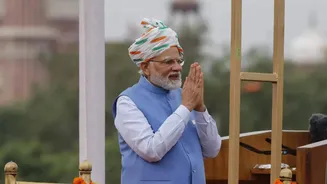
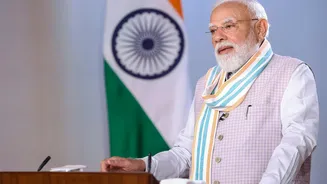
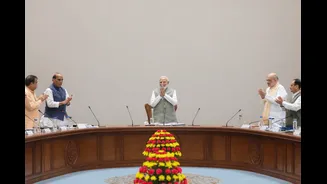
Prime Minister Narendra Modi’s leadership is also framed as transformational and policy-driven, particularly through initiatives like Atmanirbhar Bharat,
Modi’s approach is therefore not just about governance, but also about constant political messaging and public engagement. His communication strategy reinforces his leadership style, allowing him to directly connect with citizens and build a strong, leader-centric political narrative.
Nehru, a consensus builder
Nehru, on the other hand, was more of a consensus builder and an institutionalist. Though his leadership style was a mix of idealism and pragmatism, he emphasised consultation, debate, and democratic processes. He promoted scientific temper, secularism, and global moral leadership, while adopting a mixed economy approach known as the Nehruvian model, as per BA Notes.org.
Nehru’s leadership also extended deeply into foreign policy and global strategy. His approach combined idealism with strategic autonomy, positioning India as a moral and independent voice during the Cold War. Through policies such as non-alignment and Panchsheel, he sought to balance ethical diplomacy with geopolitical realities, as per
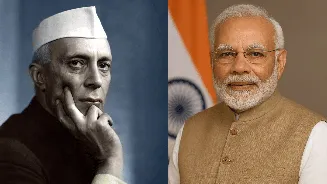
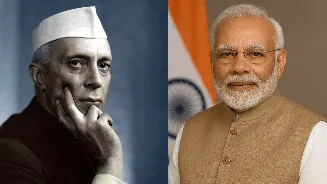
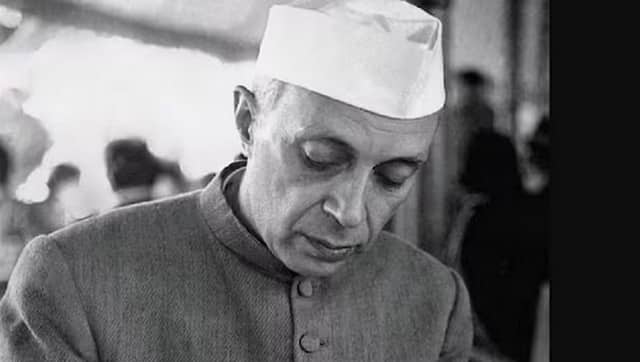
Jawaharlal Nehru has been described as consensus builder and an institutionalist.
At the same time, Nehru exercised significant personal influence where decision-making was often centralised around him. While this ensured coherence, it also limited institutional consultation in some cases, as per BIJMRD.
He created the Planning Commission and Five-Year Plans through which the central government played a significant role in development, reflecting a state-led approach to nation-building, as per Testbook.
Modi, the mass communicator
The contrast between Modi and Nehru becomes even sharper when examining how they communicated with the public.
Modi operates in a fundamentally different communication environment compared to Nehru—one defined by digital media, real-time feedback, and constant public scrutiny. He leverages social media, radio programmes like
The ability to connect directly with the masses through speeches and digital platforms strengthens his image as a transformational leader capable of inspiring collective action. Symbolic gestures and campaigns further reinforce public participation and national identity, as per a paper published in the Journal of Practical & Professional Nursing.
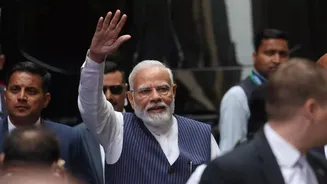
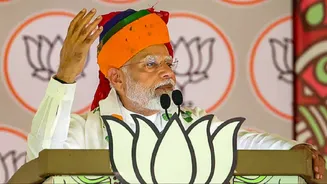
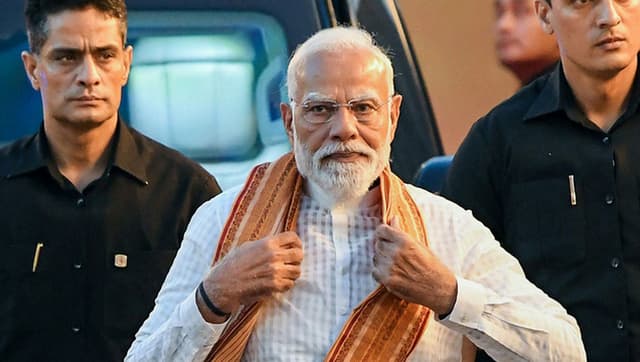
Prime Minister Narendra Modi operates in a fundamentally different communication environment compared to Jawaharlal Nehru. ANI
More
Nehru, on the other hand, operated in a much slower communication ecosystem. His primary tools were radio broadcasts, newspapers, parliamentary speeches, and public rallies. Political messaging unfolded over days and weeks rather than minutes.
However, Nehru too was a powerful communicator in his own right. His speeches and writings reflected intellectual depth and moral clarity, helping shape public thinking around democracy, secularism, and scientific temper.
His communication style during the freedom movement mobilised youth and intellectuals, building a broad national consciousness, as per Testbook. The two men are also similar in other ways – both used the weight of morals to articulate India’s position on peace and global cooperation.
Beyond style and communication, another key difference lies in how the two leaders approached change and reform.
Change and reform
Modi’s leadership has often been associated with a willingness to take bold decisions. Major policy moves and governance initiatives reflect a leadership style that seeks rapid implementation of projects. This aligns with leadership frameworks that emphasise “challenging the process”, where leaders seek to break from established systems to drive transformation, as per a paper published in the
His governance also places strong emphasis on citizen participation and behavioural change, with campaigns designed to create a sense of shared responsibility and national involvement. This paper too highlighted how platforms like Mann Ki Baat further reinforce Modi's campaign by highlighting grassroots stories and recognising everyday contributions, strengthening emotional connection and public engagement, as per the same journal paper.
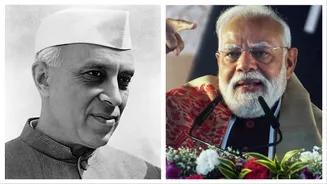
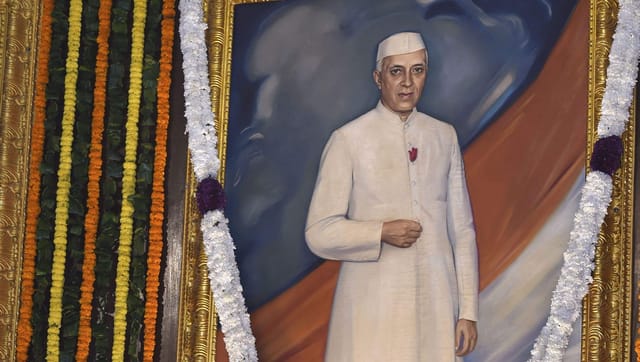
Jawaharlal Nehru operated in a much slower communication ecosystem. PTI
Nehru’s approach to change, on the other hand, was more measured and institution-driven. Rather than relying on immediate decisions, he focused on building long-term structures. His emphasis on planning, public sector growth, and scientific institutions reflected a belief that nation-building required steady, coordinated effort over time. His leadership combined idealism with strategic thinking, aiming to balance ethical goals with practical constraints, as per the
This difference is also visible in how both leaders engaged with the idea of self-reliance. While Modi’s Atmanirbhar Bharat initiative frames self-reliance as a contemporary economic and strategic priority, Nehru’s early policies similarly aimed to reduce dependence on external powers, albeit through state-led industrialisation and planning, according to a paper published by the Indian Institute of Public Administration.
Two eras, two models
Ultimately, the differences between Modi and Nehru reflect two distinct eras. Nehru led a newly independent nation, focusing on institution-building, democratic consolidation, and long-term development. His leadership was deliberative, intellectual, and rooted in consensus.
Modi leads a far larger, far more connected, and diverse India, where leadership is more centralised, visible, and communication-driven. His style emphasises decisiveness, execution, and direct public engagement.
Where Nehru relied on institutions, Modi depends on communication, campaigns, and personal leadership to drive change. Both approaches have left their own unique imprint on India.
FAQs
1. How does Modi’s leadership style differ from Nehru’s?
Modi is often described as decisive and leader-centric, focusing on rapid implementation and direct communication, while Nehru was more consensus-driven, emphasising institutions and deliberation.
2. How did Nehru communicate with the public?
Nehru primarily used radio broadcasts, newspapers, parliamentary speeches, and public rallies, operating in a slower, less interactive media environment.
3. How has communication changed in Modi’s era?
Modi communicates through social media, radio, and real-time platforms, allowing continuous engagement with citizens and instant public feedback.
With inputs from agencies