







What is the story about?
Pakistan's financial capital Karachi is reporting one of its most severe water shortages in recent years, with many residents seeing prolonged supply disruptions during the peak summer season.
The immediate problem seems to be a shortage of water reaching homes and businesses across the sprawling metropolis.
Opposition leaders are accusing the provincial administration of failing to solve a problem that has persisted for years despite repeated promises and major public spending commitments.
The latest shortage comes amid soaring temperatures and heightened demand during Eid-ul-Adha celebrations, a period when households typically require additional water for religious observances and daily activities.
According to reports, almost 70 per cent of Karachi has experienced irregular or disrupted water supply in recent weeks. Residents in numerous neighbourhoods have reported prolonged shortages, forcing many families to purchase water from private tanker operators to meet basic needs.
Among the localities most affected are Gulistan-e-Jauhar, Gulshan-e-Iqbal, Azizabad, Liaquatabad, North Nazimabad, Nazimabad and North Karachi. Reports suggest that some of these areas have been dealing with severe supply disruptions for more than two weeks.
Karachi, home to nearly 20 million people, requires more than 1,080 million gallons of water daily according to some estimates, while other assessments place the requirement at more than 1,200 million gallons per day.
Actual supply remains significantly below those figures, resulting in a shortfall that exceeds 400 million gallons each day.
As a consequence, access to water has become increasingly uneven across the city, with many residents receiving limited supplies or depending on alternative sources.
The shortage has become particularly noticeable because it coincides with one of the hottest periods of the year, placing additional pressure on households already grappling with intermittent municipal services.
In criticism of the Pakistan People's Party (PPP)-led administration in Sindh province, Jamaat-e-Islami Pakistan chief Hafiz Naeem ur Rehman used Eid-ul-Adha celebrations to launch an attack on the provincial government's handling of public services.
Speaking to journalists during Eid, Hafiz Naeem noted that Jamaat-e-Islami had arranged collective sacrifice programmes at more than 150 locations throughout Karachi, describing the initiative as a longstanding effort that helps maintain links between the party and local communities.
At the same time, he drew attention to the difficulties many residents were experiencing in obtaining essential services during the holiday period.
According to reports, the Jamaat-e-Islami leader questioned why a city of Karachi's size and importance continued to suffer recurring water shortages despite nearly two decades of PPP governance in Sindh, reported ARY News.
He also disputed Karachi Mayor Murtaza Wahab's assessment that the city was not facing a water shortage.
Hafiz Naeem also targeted the Sindh Solid Waste Management Board, alleging that the institution had not adequately handled the disposal of sacrificial animal waste despite operating with a massive budget.
The PPP-led provincial government has faced similar criticism in the past over civic services, urban planning and infrastructure management, but the latest shortage has once again pushed the issue into public debate.
Experts have repeatedly pointed to structural weaknesses within Karachi's water distribution system as a major contributor to the city's recurring shortages.
Although Karachi depends heavily on water originating from the Indus River Basin through Keenjhar Lake, as well as supplies from Hub Dam, obtaining water is only part of the challenge. Delivering it efficiently to consumers remains an equally significant problem.
A substantial proportion of the city's water never reaches households. Estimates suggest that between 30 and 40 per cent of piped water is lost through leakages, damaged infrastructure and illegal diversions before it can be delivered to consumers.
These losses are particularly significant in a city already operating with a major supply deficit.
Rapid urban expansion has only complicated the situation. Karachi's population has grown dramatically over the years, while large sections of the distribution network have aged without corresponding upgrades.
Distribution losses, illegal connections and deteriorating pipelines have collectively reduced the effectiveness of the municipal network, leaving many communities vulnerable to shortages whenever supply levels decline.
Several large-scale projects have been launched with the objective of improving Karachi's water and sanitation infrastructure, but progress has been uneven.
Among them is the S-III Sewerage Project, which was intended to modernise sewage collection and treatment facilities. The project has experienced lengthy delays linked to disputes over financing responsibilities as well as complications involving land acquisition.
At the same time, treatment capacity at important facilities, including TP-I and TP-III, has deteriorated significantly. As a result, more than 400 million gallons of municipal and industrial wastewater are reportedly discharged into coastal waters instead of being treated and reused.
The city's long-delayed K-IV project has faced similar challenges. Presented as a major solution to Karachi's growing water needs through additional supplies from Keenjhar Lake, the project has repeatedly encountered obstacles ranging from funding shortages to administrative hurdles and land-related issues.
The shortage has fuelled the growth of a private tanker industry that supplies water to neighbourhoods unable to rely on regular municipal deliveries.
According to reports, hydrants are frequently exploited by private operators who extract water from public sources and sell it to consumers at substantially higher prices.
This has created what many observers describe as a parallel water economy by the so called 'tanker mafia'. For residents living in areas affected by prolonged disruptions, tanker deliveries often represent the only viable source of water.
The dependence on private suppliers has become even more pronounced during periods when electricity outages affect pumping stations.
Karachi's water distribution system relies heavily on continuous power supplies. When load-shedding interrupts operations at major pumping facilities, water movement through the network is disrupted, reducing supplies to entire neighbourhoods.
The Indus River System Authority (IRSA) recently decided to distribute shortages among provinces through a policy of equalisation, a move that generated strong objections from Sindh.
According to the data cited in reports, inflows at key monitoring locations have fallen sharply. One notable example is Tarbela Dam, where inflows were reported at approximately 63,400 cusecs compared with more than 181,000 cusecs during the corresponding period a year earlier.
Although Karachi's dedicated Kalri Baghar supply canal reportedly continues to maintain a surplus, concerns remain because the city ultimately depends on the broader health of Sindh's water system.
Any sustained pressure on provincial water resources inevitably attracts attention in Karachi because of the city's dependence on those supplies.
Signed in 1960, the agreement established a framework for sharing the waters of the Indus river system between India and Pakistan.
Under the arrangement, India received control over the eastern rivers — Ravi, Beas and Sutlej — while Pakistan retained rights over the western rivers—Indus, Jhelum and Chenab.
For decades, the treaty survived periods of conflict and political tension between the two countries. That situation changed after the April 2025 terror attack in Pahalgam.
In response, India announced that the treaty would be placed in abeyance, arguing that water cooperation could not remain insulated from concerns about cross-border terrorism. New Delhi stated that the arrangement would not return to normal unless Pakistan ceased support for regional terrorism.
Subsequently, Pakistan accelerated efforts to pursue a dispute concerning India's Kishenganga and Ratle hydroelectric projects before the Permanent Court of Arbitration in The Hague. The court issued an award relating to maximum pondage on the western rivers.
India rejected the ruling and described the court as illegally constituted. New Delhi declared the proceedings invalid and maintained that any disagreements concerning water issues should be addressed bilaterally under the framework of the 1972 Simla Agreement.
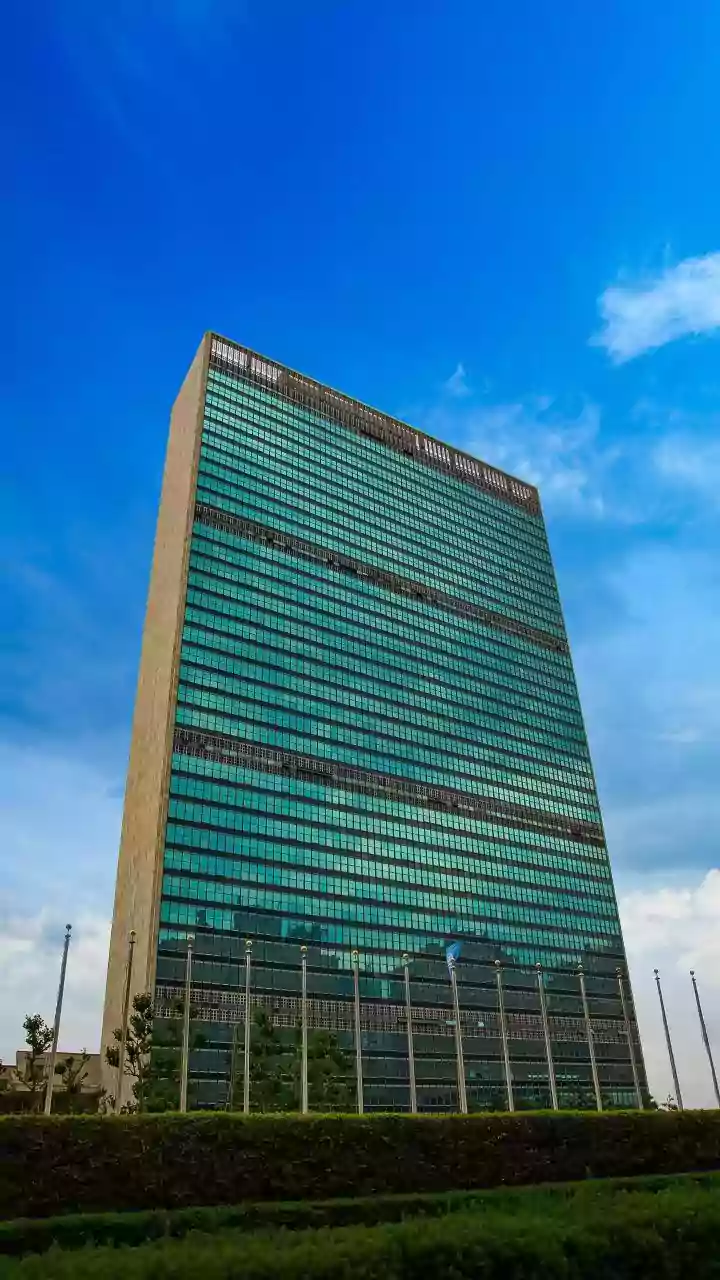
Pakistan, meanwhile, used its position as a non-permanent member of the United Nations Security Council
to raise concerns about the implications of unilateral actions affecting the treaty.
But is the treaty responsible for Karachi's current water shortage? Based on the information currently available, the answer is no.
The immediate causes of Karachi's water crisis are rooted in local factors, including ageing infrastructure, illegal siphoning, delayed development projects and governance shortcomings.
At the same time, the debate surrounding the Indus Waters Treaty remains relevant because Karachi occupies a particularly vulnerable position within the broader Indus basin. As Pakistan's largest city located at the tail end of the river system, Karachi depends on water resources that are influenced by developments occurring elsewhere in the country.
With inputs from agencies
The immediate problem seems to be a shortage of water reaching homes and businesses across the sprawling metropolis.
Opposition leaders are accusing the provincial administration of failing to solve a problem that has persisted for years despite repeated promises and major public spending commitments.
What is happening in Karachi?
The latest shortage comes amid soaring temperatures and heightened demand during Eid-ul-Adha celebrations, a period when households typically require additional water for religious observances and daily activities.
According to reports, almost 70 per cent of Karachi has experienced irregular or disrupted water supply in recent weeks. Residents in numerous neighbourhoods have reported prolonged shortages, forcing many families to purchase water from private tanker operators to meet basic needs.
Among the localities most affected are Gulistan-e-Jauhar, Gulshan-e-Iqbal, Azizabad, Liaquatabad, North Nazimabad, Nazimabad and North Karachi. Reports suggest that some of these areas have been dealing with severe supply disruptions for more than two weeks.
Karachi, home to nearly 20 million people, requires more than 1,080 million gallons of water daily according to some estimates, while other assessments place the requirement at more than 1,200 million gallons per day.
Actual supply remains significantly below those figures, resulting in a shortfall that exceeds 400 million gallons each day.
As a consequence, access to water has become increasingly uneven across the city, with many residents receiving limited supplies or depending on alternative sources.
The shortage has become particularly noticeable because it coincides with one of the hottest periods of the year, placing additional pressure on households already grappling with intermittent municipal services.
How have opposition leaders reacted?
In criticism of the Pakistan People's Party (PPP)-led administration in Sindh province, Jamaat-e-Islami Pakistan chief Hafiz Naeem ur Rehman used Eid-ul-Adha celebrations to launch an attack on the provincial government's handling of public services.
Speaking to journalists during Eid, Hafiz Naeem noted that Jamaat-e-Islami had arranged collective sacrifice programmes at more than 150 locations throughout Karachi, describing the initiative as a longstanding effort that helps maintain links between the party and local communities.
At the same time, he drew attention to the difficulties many residents were experiencing in obtaining essential services during the holiday period.
According to reports, the Jamaat-e-Islami leader questioned why a city of Karachi's size and importance continued to suffer recurring water shortages despite nearly two decades of PPP governance in Sindh, reported ARY News.
He also disputed Karachi Mayor Murtaza Wahab's assessment that the city was not facing a water shortage.
Hafiz Naeem also targeted the Sindh Solid Waste Management Board, alleging that the institution had not adequately handled the disposal of sacrificial animal waste despite operating with a massive budget.
The PPP-led provincial government has faced similar criticism in the past over civic services, urban planning and infrastructure management, but the latest shortage has once again pushed the issue into public debate.
What is behind Karachi's repeated water shortage?
Experts have repeatedly pointed to structural weaknesses within Karachi's water distribution system as a major contributor to the city's recurring shortages.
Although Karachi depends heavily on water originating from the Indus River Basin through Keenjhar Lake, as well as supplies from Hub Dam, obtaining water is only part of the challenge. Delivering it efficiently to consumers remains an equally significant problem.
A substantial proportion of the city's water never reaches households. Estimates suggest that between 30 and 40 per cent of piped water is lost through leakages, damaged infrastructure and illegal diversions before it can be delivered to consumers.
These losses are particularly significant in a city already operating with a major supply deficit.
Rapid urban expansion has only complicated the situation. Karachi's population has grown dramatically over the years, while large sections of the distribution network have aged without corresponding upgrades.
Distribution losses, illegal connections and deteriorating pipelines have collectively reduced the effectiveness of the municipal network, leaving many communities vulnerable to shortages whenever supply levels decline.
Several large-scale projects have been launched with the objective of improving Karachi's water and sanitation infrastructure, but progress has been uneven.
Among them is the S-III Sewerage Project, which was intended to modernise sewage collection and treatment facilities. The project has experienced lengthy delays linked to disputes over financing responsibilities as well as complications involving land acquisition.
At the same time, treatment capacity at important facilities, including TP-I and TP-III, has deteriorated significantly. As a result, more than 400 million gallons of municipal and industrial wastewater are reportedly discharged into coastal waters instead of being treated and reused.
The city's long-delayed K-IV project has faced similar challenges. Presented as a major solution to Karachi's growing water needs through additional supplies from Keenjhar Lake, the project has repeatedly encountered obstacles ranging from funding shortages to administrative hurdles and land-related issues.
The shortage has fuelled the growth of a private tanker industry that supplies water to neighbourhoods unable to rely on regular municipal deliveries.
According to reports, hydrants are frequently exploited by private operators who extract water from public sources and sell it to consumers at substantially higher prices.
This has created what many observers describe as a parallel water economy by the so called 'tanker mafia'. For residents living in areas affected by prolonged disruptions, tanker deliveries often represent the only viable source of water.
The dependence on private suppliers has become even more pronounced during periods when electricity outages affect pumping stations.
Karachi's water distribution system relies heavily on continuous power supplies. When load-shedding interrupts operations at major pumping facilities, water movement through the network is disrupted, reducing supplies to entire neighbourhoods.
The Indus River System Authority (IRSA) recently decided to distribute shortages among provinces through a policy of equalisation, a move that generated strong objections from Sindh.
According to the data cited in reports, inflows at key monitoring locations have fallen sharply. One notable example is Tarbela Dam, where inflows were reported at approximately 63,400 cusecs compared with more than 181,000 cusecs during the corresponding period a year earlier.
Although Karachi's dedicated Kalri Baghar supply canal reportedly continues to maintain a surplus, concerns remain because the city ultimately depends on the broader health of Sindh's water system.
Any sustained pressure on provincial water resources inevitably attracts attention in Karachi because of the city's dependence on those supplies.
Does the Indus Waters Treaty fit into the story?
Signed in 1960, the agreement established a framework for sharing the waters of the Indus river system between India and Pakistan.
Under the arrangement, India received control over the eastern rivers — Ravi, Beas and Sutlej — while Pakistan retained rights over the western rivers—Indus, Jhelum and Chenab.
For decades, the treaty survived periods of conflict and political tension between the two countries. That situation changed after the April 2025 terror attack in Pahalgam.
In response, India announced that the treaty would be placed in abeyance, arguing that water cooperation could not remain insulated from concerns about cross-border terrorism. New Delhi stated that the arrangement would not return to normal unless Pakistan ceased support for regional terrorism.
Subsequently, Pakistan accelerated efforts to pursue a dispute concerning India's Kishenganga and Ratle hydroelectric projects before the Permanent Court of Arbitration in The Hague. The court issued an award relating to maximum pondage on the western rivers.
India rejected the ruling and described the court as illegally constituted. New Delhi declared the proceedings invalid and maintained that any disagreements concerning water issues should be addressed bilaterally under the framework of the 1972 Simla Agreement.
Pakistan, meanwhile, used its position as a non-permanent member of the United Nations Security Council
But is the treaty responsible for Karachi's current water shortage? Based on the information currently available, the answer is no.
The immediate causes of Karachi's water crisis are rooted in local factors, including ageing infrastructure, illegal siphoning, delayed development projects and governance shortcomings.
At the same time, the debate surrounding the Indus Waters Treaty remains relevant because Karachi occupies a particularly vulnerable position within the broader Indus basin. As Pakistan's largest city located at the tail end of the river system, Karachi depends on water resources that are influenced by developments occurring elsewhere in the country.
With inputs from agencies