







What is the story about?
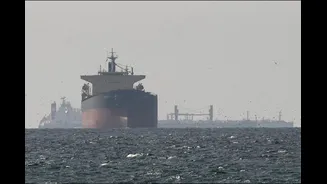
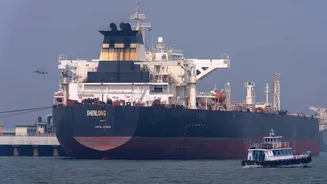
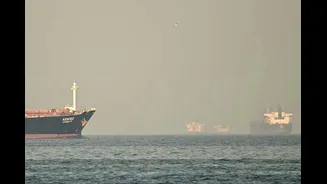
Two vessels have transited the Strait of Hormuz since Iran agreed to reopen the key shipping lane under a ceasefire deal, maritime tracker MarineTraffic said on Wednesday.
The Greek-owned bulk carrier NJ Earth crossed the strait at 08:44 UTC, while the Liberia-flagged Daytona Beach passed through earlier at 06:59 UTC after departing Bandar Abbas, MarineTraffic said in a post on X.
The movements follow a two-week ceasefire agreed between the United States and Iran overnight, under which passage through the strait will be allowed in coordination with Iran’s armed forces, according to Foreign Minister Abbas Araghchi.
Analysts cautioned it was too early to draw firm conclusions. Ana Subasic of Kpler said the transit of NJ Earth could signal a reopening, but may also reflect a previously authorised passage.
The United States and Iran agreed overnight from Tuesday to Wednesday to a two-week ceasefire, during which passage through the Strait of Hormuz "will be possible via coordination with Iran's Armed Forces", Iran's Foreign Minister Abbas Araghchi said on X.
"NJ Earth’s transit may be an early sign of movement, but it is still too soon to tell whether this reflects a broader ceasefire-driven reopening or a previously approved exception", Ana Subasic, analyst at MarineTraffic owner Kpler told AFP.
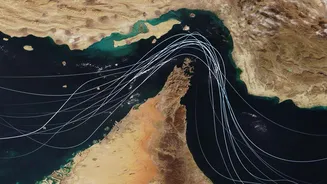
The Greek-owned ship kept its transponder signal on as it transited the strait via an Iranian-approved route near Larak Island, used by most vessels crossing the waterway for the past three weeks.
AFP could not immediately confirm the ship's destination.
"While we expect more crossings in the coming days, from a risk and compliance perspective this first transit should be read cautiously," Subasic added.
Some shipowners and charterers are preparing to move their vessels stuck in the Gulf, shipping journal Lloyd's List reported on Wednesday morning. It estimates around 800 ships are currently stuck in the Gulf.
Access to the strait was severely restricted by Iran in retaliation against US and Israeli attacks since February 28.
From March 1 to April 7, commodities carriers have made 307 crossings, according to Kpler data, a 95-percent decrease from peacetime traffic.
Around a fifth of global crude oil and liquefied natural gas (LNG) passes through the dbwaterway in peacetime.
With inputs from agencies
The Greek-owned bulk carrier NJ Earth crossed the strait at 08:44 UTC, while the Liberia-flagged Daytona Beach passed through earlier at 06:59 UTC after departing Bandar Abbas, MarineTraffic said in a post on X.
Vessel movements resume in the Strait of Hormuz following ceasefire announcement
Early signs of vessel activity are emerging in the Strait of Hormuz following a ceasefire announcement, which includes a temporary reopening of the strategic waterway to allow for negotiations.… pic.twitter.com/CSy6PZlCJ4
— MarineTraffic (@MarineTraffic) April 8, 2026
The movements follow a two-week ceasefire agreed between the United States and Iran overnight, under which passage through the strait will be allowed in coordination with Iran’s armed forces, according to Foreign Minister Abbas Araghchi.
Analysts cautioned it was too early to draw firm conclusions. Ana Subasic of Kpler said the transit of NJ Earth could signal a reopening, but may also reflect a previously authorised passage.
The United States and Iran agreed overnight from Tuesday to Wednesday to a two-week ceasefire, during which passage through the Strait of Hormuz "will be possible via coordination with Iran's Armed Forces", Iran's Foreign Minister Abbas Araghchi said on X.
"NJ Earth’s transit may be an early sign of movement, but it is still too soon to tell whether this reflects a broader ceasefire-driven reopening or a previously approved exception", Ana Subasic, analyst at MarineTraffic owner Kpler told AFP.
The Greek-owned ship kept its transponder signal on as it transited the strait via an Iranian-approved route near Larak Island, used by most vessels crossing the waterway for the past three weeks.
AFP could not immediately confirm the ship's destination.
"While we expect more crossings in the coming days, from a risk and compliance perspective this first transit should be read cautiously," Subasic added.
Some shipowners and charterers are preparing to move their vessels stuck in the Gulf, shipping journal Lloyd's List reported on Wednesday morning. It estimates around 800 ships are currently stuck in the Gulf.
Access to the strait was severely restricted by Iran in retaliation against US and Israeli attacks since February 28.
From March 1 to April 7, commodities carriers have made 307 crossings, according to Kpler data, a 95-percent decrease from peacetime traffic.
Around a fifth of global crude oil and liquefied natural gas (LNG) passes through the dbwaterway in peacetime.
With inputs from agencies