






What is the story about?
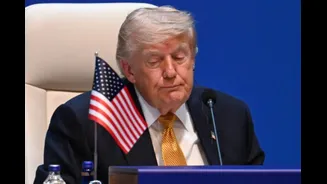
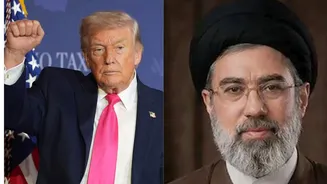
US President Donald Trump remains open to reaching a diplomatic agreement with Iran despite the renewed outbreak of hostilities, the White House said on Thursday, adding that Washington continues to engage with Tehran even as military tensions escalate.
The remarks came a day after Trump thanked Iran for releasing a US citizen detained since December 2024, a development viewed as a potential opening for renewed diplomatic engagement.
White House Press Secretary Karoline Leavitt said Trump remained committed to diplomacy but would respond firmly if Iran violated its commitments.
"The president will hold them accountable when they turn their back on the words that they state to the United States. But he is always open to diplomacy at the very same time," White House Press Secretary Karoline Leavitt told reporters.
"They have expressed they still want to make a deal to the president. We're talking to them, but again, the president is not going to allow them to fire on ships in the Strait without paying a consequence for that."
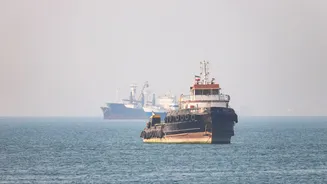
A fragile ceasefire agreed in June is on the rocks after the United States launched several rounds of strikes in recent days in a bid to curb Iran's ability to threaten shipping in the Strait of Hormuz.
Trump has also warned he could widen attacks to target power plants and bridges unless the Islamic republic returns to talks.
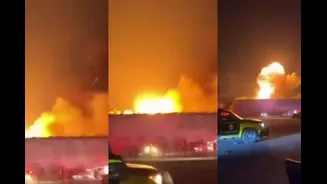
Meanwhile, Iranian media on Thursday reported that the United States carried out strikes near Qeshm Island in the Gulf, close to the strategic Strait of Hormuz, as hostilities between Washington and Tehran intensified following the collapse of a fragile diplomatic truce.
According to Iran's Fars news agency, local authorities confirmed an "American missile strike in the vicinity of Qeshm." The Tasnim news agency also reported that areas around the island had been hit by "projectiles from the American enemy," citing its correspondent on the ground.
Iranian state television further reported that the port city of Bandar Abbas came under what it described as "American enemy's aggression" on Thursday evening.
The renewed fighting comes nearly a month after the United States and Iran signed a preliminary agreement aimed at de-escalating the conflict that erupted in late February following large-scale US-Israeli strikes on Iran.
Earlier in the day, Tehran warned it would target infrastructure across the region if US President Donald Trump acted on his threat to strike Iran's power plants and bridges.
The warning followed another round of military exchanges between the two countries.
Iran's Islamic Revolutionary Guard Corps (IRGC) said it had launched ballistic missiles at a US airbase in Jordan, describing the attack as retaliation for what it claimed was an American strike near a children's cancer hospital in Iran.
Meanwhile, Kuwait and Bahrain also reported incoming aerial attacks as the confrontation expanded across the Gulf region, raising fears of a broader regional conflict centred around the strategically vital Strait of Hormuz.
With inputs from agencies
The remarks came a day after Trump thanked Iran for releasing a US citizen detained since December 2024, a development viewed as a potential opening for renewed diplomatic engagement.
White House Press Secretary Karoline Leavitt said Trump remained committed to diplomacy but would respond firmly if Iran violated its commitments.
"The president will hold them accountable when they turn their back on the words that they state to the United States. But he is always open to diplomacy at the very same time," White House Press Secretary Karoline Leavitt told reporters.
"They have expressed they still want to make a deal to the president. We're talking to them, but again, the president is not going to allow them to fire on ships in the Strait without paying a consequence for that."
A fragile ceasefire agreed in June is on the rocks after the United States launched several rounds of strikes in recent days in a bid to curb Iran's ability to threaten shipping in the Strait of Hormuz.
Trump has also warned he could widen attacks to target power plants and bridges unless the Islamic republic returns to talks.
US strikes Qeshm Island
Meanwhile, Iranian media on Thursday reported that the United States carried out strikes near Qeshm Island in the Gulf, close to the strategic Strait of Hormuz, as hostilities between Washington and Tehran intensified following the collapse of a fragile diplomatic truce.
According to Iran's Fars news agency, local authorities confirmed an "American missile strike in the vicinity of Qeshm." The Tasnim news agency also reported that areas around the island had been hit by "projectiles from the American enemy," citing its correspondent on the ground.
Iranian state television further reported that the port city of Bandar Abbas came under what it described as "American enemy's aggression" on Thursday evening.
The renewed fighting comes nearly a month after the United States and Iran signed a preliminary agreement aimed at de-escalating the conflict that erupted in late February following large-scale US-Israeli strikes on Iran.
Earlier in the day, Tehran warned it would target infrastructure across the region if US President Donald Trump acted on his threat to strike Iran's power plants and bridges.
The warning followed another round of military exchanges between the two countries.
Iran's Islamic Revolutionary Guard Corps (IRGC) said it had launched ballistic missiles at a US airbase in Jordan, describing the attack as retaliation for what it claimed was an American strike near a children's cancer hospital in Iran.
Meanwhile, Kuwait and Bahrain also reported incoming aerial attacks as the confrontation expanded across the Gulf region, raising fears of a broader regional conflict centred around the strategically vital Strait of Hormuz.
With inputs from agencies