









What is the story about?
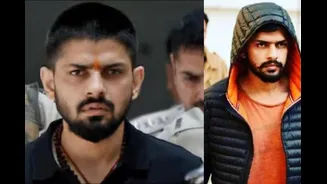
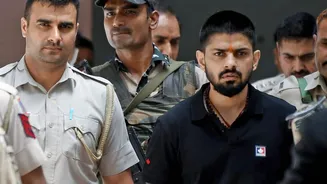
The United States formally charged jailed gangster Lawrence Bishnoi in a sweeping organised crime case and publicly declared its intention to seek his extradition from India.
The case has also revived attention on the 2023 killing of Khalistan separatist Hardeep Singh Nijjar in Canada.
According to the newly unsealed indictment, Lawrence Bishnoi and his close associate Satinderjeet Singh, better known as Goldy Brar, allegedly orchestrated the assassination. The allegations, however, stop short of accusing the Indian government of any involvement in the incident.
The latest charges stem from a multinational investigation known as "Operation Hard Ball", a coordinated effort involving the US Department of Justice, the Federal Bureau of Investigation (FBI), the Los Angeles Police Department (LAPD) and Canada's Royal Canadian Mounted Police (RCMP).
On July 7, federal prosecutors in Los Angeles announced three major indictments targeting what they described as three India-linked transnational organised crime syndicates.
Altogether, 37 individuals were charged in connection with the investigation, making it one of the most significant coordinated crackdowns on India-linked organised crime networks operating overseas.
Among those named in the indictments is Lawrence Bishnoi, whom American prosecutors describe as a 33-year-old resident of Punjab who has remained imprisoned in India while allegedly continuing to manage criminal activities beyond the country's borders.
His longtime associate Satinderjeet Singh, alias Goldy Brar, was also identified as one of the principal figures in the alleged enterprise.
The indictments are not limited to Lawrence Bishnoi and Goldy Brar alone. Punjab Police Station House Officer Gurinderjit Singh Nagra and several other individuals have also been charged as part of what American investigators allege is an interconnected criminal organisation operating across India, Canada and the United States.
The investigation culminated in charges against individuals allegedly associated with three organised crime groups that prosecutors say were involved in violent crimes, large-scale extortion operations and international narcotics trafficking.
Authorities stated that 24 of the 37 accused had either already been arrested or were in custody at the time the indictments were announced.
The US Department of Justice has accused Lawrence Bishnoi of participating in and directing a broad criminal enterprise whose activities allegedly extended across India, Canada, the United States and parts of Europe.
Among the principal accusations are:
According to prosecutors, Lawrence Bishnoi continued to exercise operational control over members of his organisation despite being lodged in an Indian prison.
The indictment alleges that he relied on smuggled smartphones, WhatsApp and encrypted Voice-over-IP (VoIP) communication platforms to issue instructions to associates. Prosecutors claim this pattern of communication continued as recently as December 2025 and January 2026.
Another significant component of the indictment concerns narcotics trafficking. American authorities allege that the organisation coordinated cross-border movement of illegal drugs, with investigators referring to the seizure of more than 1,000 kilogrammes of cocaine during the broader investigation.
The extortion allegations outlined by prosecutors also extend beyond India. Court documents describe a sustained campaign of intimidation directed at a prominent Indian film and television personality identified only by the initials "S.K."
The details included in the indictment correspond to previously reported threats received by Bollywood actor Salman Khan, although the court documents themselves use only the initials.
American prosecutors contend that these activities demonstrate the organised and continuing nature of the alleged enterprise, a key requirement for charges under the RICO Act.
One of the most notable aspects of the American case is the decision to prosecute Lawrence Bishnoi and his associates under the Racketeer Influenced and Corrupt Organizations Act, more commonly known as the RICO Act.
Originally enacted to combat organised crime syndicates in the United States, the legislation enables prosecutors to pursue not only individuals accused of committing specific offences but also those alleged to have directed or participated in an organised criminal enterprise through a continuing pattern of unlawful activity.
Rather than treating every offence as an isolated incident, the RICO framework allows prosecutors to argue that multiple criminal acts collectively form part of a structured organisation.
The offences that can fall within the scope of the Act include murder, extortion, fraud, drug trafficking and other organised criminal conduct.
Each RICO count carries a maximum sentence of up to 20 years' imprisonment.
According to the charging documents, Lawrence Bishnoi allegedly coordinated the operation while imprisoned in India through the use of smuggled mobile phones.
Prosecutors also allege that he supplied one of the co-conspirators with a photograph of Hardeep Singh Nijjar as well as multiple addresses connected to him in order to facilitate the killing.
Goldy Brar, described in the indictment as a childhood friend of Lawrence Bishnoi, is accused of overseeing the organisation's North American operations.
Hardeep Singh Nijjar, a Canadian citizen, had campaigned for the creation of Khalistan, an independent Sikh homeland to be carved out of India. The Indian government had designated him as a terrorist before his death.
The killing triggered one of the most serious diplomatic disputes in recent years between Canada and India.
Several months after the shooting, then Canadian Prime Minister Justin Trudeau stated that Canadian authorities were "actively pursuing credible allegations" linking Indian government agents to the murder. India rejected those allegations as "absurd".
The newly unsealed American indictment, however, does not accuse the Government of India or any Indian state institution of involvement in Hardeep Singh Nijjar's killing.
That distinction was reinforced during the Los Angeles press conference announcing the indictments. Neither First Assistant US Attorney Bill Essayli nor any other American official alleged that the Indian government participated in or had prior knowledge of the murder.
The case remains one of the most internationally sensitive episodes that significantly strained diplomatic ties between Ottawa and New Delhi.
Although relations have improved under Canadian Prime Minister Mark Carney,
who travelled to India in February during his first official visit and reopened negotiations on a bilateral trade agreement expected to conclude by November, the Nijjar case continues to attract attention.
The indictments themselves do not automatically transfer Lawrence Bishnoi into American custody. However, senior officials made it clear that the criminal case represents only the first stage of a broader legal process.
During the press conference announcing the indictments, First Assistant US Attorney Bill Essayli directly addressed the issue of extradition, arguing that Lawrence Bishnoi's continued incarceration in India had not prevented the alleged criminal enterprise from operating internationally.
He said, "When they come to a federal penitentiary here in the United States, I guarantee you, he won't be extorting any more victims once he's in our custody... we expect [Bishnoi] to be extradited to the US."
The statement leaves little doubt that Washington intends to pursue Lawrence Bishnoi's transfer through the formal legal mechanisms available under the India-US Extradition Treaty.
However, expressing an intention to seek extradition and actually obtaining custody of an accused person are two very different stages of the process.
While the United States has now established the criminal charges on which an extradition request can be based, any transfer would still require compliance with the detailed procedures laid down in the bilateral treaty, India's Extradition Act, 1962.
The legal foundation for any attempt to transfer Lawrence Bishnoi from India to the United States lies in the India-US Extradition Treaty, which was signed in 1997 and entered into force in 1999.
The agreement replaced the 1931 UK-US Extradition Treaty that had previously applied to British India and has since served as the primary framework governing extradition requests between the two countries.
The treaty is designed to facilitate the surrender of individuals who are accused, charged or convicted of serious offences in the requesting country. It applies to a broad range of crimes, including terrorism, organised crime, financial fraud and narcotics-related offences.
Since the allegations against Lawrence Bishnoi include murder, organised crime, extortion and drug trafficking, they fall within the categories generally covered by the agreement.
One of the treaty's most important provisions is the principle of "dual criminality". In simple terms, this means that the conduct for which extradition is sought must constitute a criminal offence under the laws of both countries.
The legal terminology used in India and the United States does not have to be identical; what matters is whether the underlying conduct is punishable in both jurisdictions.
The treaty also covers conspiracy, attempts, aiding and abetting, and participation in organised criminal activity. This is particularly relevant in the Lawrence Bishnoi case because several allegations relate to conspiracy and the management of an alleged criminal organisation rather than direct physical participation in every offence.
Another notable feature of the agreement is that neither India nor the United States is prohibited from extraditing its own nationals. This means that Lawrence Bishnoi's Indian citizenship does not automatically shield him from extradition if all legal requirements are satisfied.
However, the treaty is not an automatic transfer mechanism. It contains several safeguards and exceptions intended to protect the rights of the individual concerned and to preserve each country's sovereign legal processes.
Among those safeguards is the possibility of refusing extradition for political offences. A request may also be declined if it could expose the individual to the death penalty without satisfactory assurances that such a sentence will neither be imposed nor carried out.
Other recognised grounds for refusing extradition include double jeopardy, expiry of the limitation period where applicable, insufficient evidence or failure to satisfy the treaty's procedural requirements.
The agreement also incorporates what is known as the "rule of specialty". Under this principle, a person extradited from one country may only be prosecuted in the requesting country for the offences for which extradition was specifically granted.
If prosecutors later wish to pursue additional charges, the consent of the country that approved the extradition is generally required.
Similarly, an extradited person cannot be surrendered onward to a third country without the approval of the country that originally authorised the extradition.
The first requirement would be the submission of a formal extradition request by the United States through diplomatic channels.
Such requests are typically accompanied by a comprehensive dossier containing arrest warrants, statements of facts, details of the alleged offences, the applicable legal provisions and evidence supporting the prosecution's case.
Once received in India, the request would undergo scrutiny by the Ministry of External Affairs (MEA) and the Ministry of Home Affairs (MHA).
If the documentation is considered complete, the matter would then be placed before a magistrate under the Extradition Act, 1962. The magistrate's role is not to conduct a criminal trial but to determine whether the legal requirements for extradition under the treaty and Indian law have been satisfied.
If the magistrate concludes that a prima facie case exists and that the request meets the treaty's conditions, the proceedings move to the executive stage.
Even then, extradition is not automatic. The final decision regarding whether the individual should actually be surrendered rests with the Government of India.
Although the legal framework for extradition exists, Lawrence Bishnoi's domestic legal situation presents perhaps the single biggest obstacle to any immediate transfer to the United States.
According to chargesheets prepared by the National Investigation Agency (NIA), Lawrence Bishnoi is facing at least 84 active criminal cases across several Indian jurisdictions, including Delhi, Punjab, Rajasthan and Chandigarh.
These proceedings encompass a wide range of allegations, including the conspiracy surrounding the murder of Punjabi singer Sidhu Moosewala as well as terror-funding investigations and other serious criminal cases.
Indian courts generally give significant weight to ongoing domestic criminal proceedings when considering extradition requests.
Lawrence Bishnoi's current custodial status presents an additional hurdle as he is presently lodged in Sabarmati Central Jail in Ahmedabad, Gujarat, under stringent security arrangements.
The Union Home Ministry has invoked Section 303 of the Bharatiya Nagarik Suraksha Sanhita (BNSS), imposing strict restrictions on his physical movement outside prison.
As a result of these measures, Lawrence Bishnoi does not routinely appear physically before Indian courts. Instead, he participates in legal proceedings through secure video conferencing facilities.
The restrictions were introduced as part of broader security measures aimed at preventing operational risks, including possible escape attempts and gang-related violence.
Any proposal involving Lawrence Bishnoi's physical transfer outside India would therefore require significant administrative and legal approvals beyond those associated with a standard extradition request.
Even if the Indian government were to view an American extradition request favourably, the legal process would still be far from complete.
Once a magistrate approves an extradition request, the individual concerned has the right to challenge that decision through India's judicial system. Such challenges can proceed before the relevant High Court and, if necessary, ultimately reach the Supreme Court of India.
Each stage involves judicial examination of the legality of the extradition request, the sufficiency of evidence, compliance with treaty obligations and other legal safeguards.
Experience from previous high-profile extradition proceedings illustrates how lengthy such litigation can become.
India's efforts to secure the extradition of Vijay Mallya and Nirav Modi from the United Kingdom demonstrate that extradition cases often remain tied up in judicial proceedings for years despite the existence of bilateral treaties.
The current discussion surrounding Lawrence Bishnoi's possible extradition has inevitably drawn comparisons with recent extradition cases involving India and the United States. One of the most prominent examples is Tahawwur Hussain Rana.
The same bilateral treaty now under discussion was used in 2025 when the United States extradited Tahawwur Hussain Rana to India to face proceedings connected with the 2008 Mumbai terror attacks.
That case demonstrated that the treaty is not merely theoretical but remains an active legal instrument capable of facilitating extradition between the two countries.
One legal possibility that has attracted attention is the concept of "temporary surrender".
Under such an arrangement, a requested country may, in limited circumstances, allow an accused individual to be transferred temporarily so that criminal proceedings can be conducted in another jurisdiction before the person is returned.
In Lawrence Bishnoi's case, this could theoretically involve India permitting his temporary transfer to the United States for trial, subject to conditions requiring his return to India to continue facing domestic proceedings or to serve any sentences imposed by Indian courts.
However, such arrangements are uncommon and would depend upon detailed negotiations between the governments involved. At present, no such arrangement has been announced.
Instead, the publicly known position remains that American prosecutors have indicated their intention to seek extradition through the existing treaty framework.
Also Watch:
With inputs from agencies
The case has also revived attention on the 2023 killing of Khalistan separatist Hardeep Singh Nijjar in Canada.
According to the newly unsealed indictment, Lawrence Bishnoi and his close associate Satinderjeet Singh, better known as Goldy Brar, allegedly orchestrated the assassination. The allegations, however, stop short of accusing the Indian government of any involvement in the incident.
Why has the United States indicted Lawrence Bishnoi now?
The latest charges stem from a multinational investigation known as "Operation Hard Ball", a coordinated effort involving the US Department of Justice, the Federal Bureau of Investigation (FBI), the Los Angeles Police Department (LAPD) and Canada's Royal Canadian Mounted Police (RCMP).
On July 7, federal prosecutors in Los Angeles announced three major indictments targeting what they described as three India-linked transnational organised crime syndicates.
Altogether, 37 individuals were charged in connection with the investigation, making it one of the most significant coordinated crackdowns on India-linked organised crime networks operating overseas.
Among those named in the indictments is Lawrence Bishnoi, whom American prosecutors describe as a 33-year-old resident of Punjab who has remained imprisoned in India while allegedly continuing to manage criminal activities beyond the country's borders.
His longtime associate Satinderjeet Singh, alias Goldy Brar, was also identified as one of the principal figures in the alleged enterprise.
The indictments are not limited to Lawrence Bishnoi and Goldy Brar alone. Punjab Police Station House Officer Gurinderjit Singh Nagra and several other individuals have also been charged as part of what American investigators allege is an interconnected criminal organisation operating across India, Canada and the United States.
The investigation culminated in charges against individuals allegedly associated with three organised crime groups that prosecutors say were involved in violent crimes, large-scale extortion operations and international narcotics trafficking.
Authorities stated that 24 of the 37 accused had either already been arrested or were in custody at the time the indictments were announced.
What are the allegations against Lawrence Bishnoi?
The US Department of Justice has accused Lawrence Bishnoi of participating in and directing a broad criminal enterprise whose activities allegedly extended across India, Canada, the United States and parts of Europe.
Among the principal accusations are:
- Racketeering conspiracy under the Racketeer Influenced and Corrupt Organizations (RICO) Act.
- Hobbs Act extortion conspiracy.
- Murder conspiracy.
- International narcotics trafficking.
- Participation in an organised criminal enterprise operating across national borders.
According to prosecutors, Lawrence Bishnoi continued to exercise operational control over members of his organisation despite being lodged in an Indian prison.
The indictment alleges that he relied on smuggled smartphones, WhatsApp and encrypted Voice-over-IP (VoIP) communication platforms to issue instructions to associates. Prosecutors claim this pattern of communication continued as recently as December 2025 and January 2026.
Another significant component of the indictment concerns narcotics trafficking. American authorities allege that the organisation coordinated cross-border movement of illegal drugs, with investigators referring to the seizure of more than 1,000 kilogrammes of cocaine during the broader investigation.
The extortion allegations outlined by prosecutors also extend beyond India. Court documents describe a sustained campaign of intimidation directed at a prominent Indian film and television personality identified only by the initials "S.K."
The details included in the indictment correspond to previously reported threats received by Bollywood actor Salman Khan, although the court documents themselves use only the initials.
American prosecutors contend that these activities demonstrate the organised and continuing nature of the alleged enterprise, a key requirement for charges under the RICO Act.
What is the RICO Act?
One of the most notable aspects of the American case is the decision to prosecute Lawrence Bishnoi and his associates under the Racketeer Influenced and Corrupt Organizations Act, more commonly known as the RICO Act.
Originally enacted to combat organised crime syndicates in the United States, the legislation enables prosecutors to pursue not only individuals accused of committing specific offences but also those alleged to have directed or participated in an organised criminal enterprise through a continuing pattern of unlawful activity.
Rather than treating every offence as an isolated incident, the RICO framework allows prosecutors to argue that multiple criminal acts collectively form part of a structured organisation.
The offences that can fall within the scope of the Act include murder, extortion, fraud, drug trafficking and other organised criminal conduct.
Each RICO count carries a maximum sentence of up to 20 years' imprisonment.
How does the Hardeep Singh Nijjar case fit into the investigation?
According to the charging documents, Lawrence Bishnoi allegedly coordinated the operation while imprisoned in India through the use of smuggled mobile phones.
Prosecutors also allege that he supplied one of the co-conspirators with a photograph of Hardeep Singh Nijjar as well as multiple addresses connected to him in order to facilitate the killing.
Goldy Brar, described in the indictment as a childhood friend of Lawrence Bishnoi, is accused of overseeing the organisation's North American operations.
Hardeep Singh Nijjar, a Canadian citizen, had campaigned for the creation of Khalistan, an independent Sikh homeland to be carved out of India. The Indian government had designated him as a terrorist before his death.
The killing triggered one of the most serious diplomatic disputes in recent years between Canada and India.
Several months after the shooting, then Canadian Prime Minister Justin Trudeau stated that Canadian authorities were "actively pursuing credible allegations" linking Indian government agents to the murder. India rejected those allegations as "absurd".
The newly unsealed American indictment, however, does not accuse the Government of India or any Indian state institution of involvement in Hardeep Singh Nijjar's killing.
That distinction was reinforced during the Los Angeles press conference announcing the indictments. Neither First Assistant US Attorney Bill Essayli nor any other American official alleged that the Indian government participated in or had prior knowledge of the murder.
The case remains one of the most internationally sensitive episodes that significantly strained diplomatic ties between Ottawa and New Delhi.
Although relations have improved under Canadian Prime Minister Mark Carney,
Why are US authorities confident about seeking extradition?
The indictments themselves do not automatically transfer Lawrence Bishnoi into American custody. However, senior officials made it clear that the criminal case represents only the first stage of a broader legal process.
During the press conference announcing the indictments, First Assistant US Attorney Bill Essayli directly addressed the issue of extradition, arguing that Lawrence Bishnoi's continued incarceration in India had not prevented the alleged criminal enterprise from operating internationally.
He said, "When they come to a federal penitentiary here in the United States, I guarantee you, he won't be extorting any more victims once he's in our custody... we expect [Bishnoi] to be extradited to the US."
The statement leaves little doubt that Washington intends to pursue Lawrence Bishnoi's transfer through the formal legal mechanisms available under the India-US Extradition Treaty.
However, expressing an intention to seek extradition and actually obtaining custody of an accused person are two very different stages of the process.
While the United States has now established the criminal charges on which an extradition request can be based, any transfer would still require compliance with the detailed procedures laid down in the bilateral treaty, India's Extradition Act, 1962.
How does the India-US Extradition Treaty work?
The legal foundation for any attempt to transfer Lawrence Bishnoi from India to the United States lies in the India-US Extradition Treaty, which was signed in 1997 and entered into force in 1999.
The agreement replaced the 1931 UK-US Extradition Treaty that had previously applied to British India and has since served as the primary framework governing extradition requests between the two countries.
The treaty is designed to facilitate the surrender of individuals who are accused, charged or convicted of serious offences in the requesting country. It applies to a broad range of crimes, including terrorism, organised crime, financial fraud and narcotics-related offences.
Since the allegations against Lawrence Bishnoi include murder, organised crime, extortion and drug trafficking, they fall within the categories generally covered by the agreement.
One of the treaty's most important provisions is the principle of "dual criminality". In simple terms, this means that the conduct for which extradition is sought must constitute a criminal offence under the laws of both countries.
The legal terminology used in India and the United States does not have to be identical; what matters is whether the underlying conduct is punishable in both jurisdictions.
The treaty also covers conspiracy, attempts, aiding and abetting, and participation in organised criminal activity. This is particularly relevant in the Lawrence Bishnoi case because several allegations relate to conspiracy and the management of an alleged criminal organisation rather than direct physical participation in every offence.
Another notable feature of the agreement is that neither India nor the United States is prohibited from extraditing its own nationals. This means that Lawrence Bishnoi's Indian citizenship does not automatically shield him from extradition if all legal requirements are satisfied.
However, the treaty is not an automatic transfer mechanism. It contains several safeguards and exceptions intended to protect the rights of the individual concerned and to preserve each country's sovereign legal processes.
Among those safeguards is the possibility of refusing extradition for political offences. A request may also be declined if it could expose the individual to the death penalty without satisfactory assurances that such a sentence will neither be imposed nor carried out.
Other recognised grounds for refusing extradition include double jeopardy, expiry of the limitation period where applicable, insufficient evidence or failure to satisfy the treaty's procedural requirements.
The agreement also incorporates what is known as the "rule of specialty". Under this principle, a person extradited from one country may only be prosecuted in the requesting country for the offences for which extradition was specifically granted.
If prosecutors later wish to pursue additional charges, the consent of the country that approved the extradition is generally required.
Similarly, an extradited person cannot be surrendered onward to a third country without the approval of the country that originally authorised the extradition.
What would the extradition process look like?
The first requirement would be the submission of a formal extradition request by the United States through diplomatic channels.
Such requests are typically accompanied by a comprehensive dossier containing arrest warrants, statements of facts, details of the alleged offences, the applicable legal provisions and evidence supporting the prosecution's case.
Once received in India, the request would undergo scrutiny by the Ministry of External Affairs (MEA) and the Ministry of Home Affairs (MHA).
If the documentation is considered complete, the matter would then be placed before a magistrate under the Extradition Act, 1962. The magistrate's role is not to conduct a criminal trial but to determine whether the legal requirements for extradition under the treaty and Indian law have been satisfied.
If the magistrate concludes that a prima facie case exists and that the request meets the treaty's conditions, the proceedings move to the executive stage.
Even then, extradition is not automatic. The final decision regarding whether the individual should actually be surrendered rests with the Government of India.
Why could delay the extradition?
Although the legal framework for extradition exists, Lawrence Bishnoi's domestic legal situation presents perhaps the single biggest obstacle to any immediate transfer to the United States.
According to chargesheets prepared by the National Investigation Agency (NIA), Lawrence Bishnoi is facing at least 84 active criminal cases across several Indian jurisdictions, including Delhi, Punjab, Rajasthan and Chandigarh.
These proceedings encompass a wide range of allegations, including the conspiracy surrounding the murder of Punjabi singer Sidhu Moosewala as well as terror-funding investigations and other serious criminal cases.
Indian courts generally give significant weight to ongoing domestic criminal proceedings when considering extradition requests.
Lawrence Bishnoi's current custodial status presents an additional hurdle as he is presently lodged in Sabarmati Central Jail in Ahmedabad, Gujarat, under stringent security arrangements.
The Union Home Ministry has invoked Section 303 of the Bharatiya Nagarik Suraksha Sanhita (BNSS), imposing strict restrictions on his physical movement outside prison.
As a result of these measures, Lawrence Bishnoi does not routinely appear physically before Indian courts. Instead, he participates in legal proceedings through secure video conferencing facilities.
The restrictions were introduced as part of broader security measures aimed at preventing operational risks, including possible escape attempts and gang-related violence.
Any proposal involving Lawrence Bishnoi's physical transfer outside India would therefore require significant administrative and legal approvals beyond those associated with a standard extradition request.
Even if the Indian government were to view an American extradition request favourably, the legal process would still be far from complete.
Once a magistrate approves an extradition request, the individual concerned has the right to challenge that decision through India's judicial system. Such challenges can proceed before the relevant High Court and, if necessary, ultimately reach the Supreme Court of India.
Each stage involves judicial examination of the legality of the extradition request, the sufficiency of evidence, compliance with treaty obligations and other legal safeguards.
Experience from previous high-profile extradition proceedings illustrates how lengthy such litigation can become.
India's efforts to secure the extradition of Vijay Mallya and Nirav Modi from the United Kingdom demonstrate that extradition cases often remain tied up in judicial proceedings for years despite the existence of bilateral treaties.
Does the Tahawwur Rana case offer a precedent?
The current discussion surrounding Lawrence Bishnoi's possible extradition has inevitably drawn comparisons with recent extradition cases involving India and the United States. One of the most prominent examples is Tahawwur Hussain Rana.
The same bilateral treaty now under discussion was used in 2025 when the United States extradited Tahawwur Hussain Rana to India to face proceedings connected with the 2008 Mumbai terror attacks.
That case demonstrated that the treaty is not merely theoretical but remains an active legal instrument capable of facilitating extradition between the two countries.
Is there any alternative?
One legal possibility that has attracted attention is the concept of "temporary surrender".
Under such an arrangement, a requested country may, in limited circumstances, allow an accused individual to be transferred temporarily so that criminal proceedings can be conducted in another jurisdiction before the person is returned.
In Lawrence Bishnoi's case, this could theoretically involve India permitting his temporary transfer to the United States for trial, subject to conditions requiring his return to India to continue facing domestic proceedings or to serve any sentences imposed by Indian courts.
However, such arrangements are uncommon and would depend upon detailed negotiations between the governments involved. At present, no such arrangement has been announced.
Instead, the publicly known position remains that American prosecutors have indicated their intention to seek extradition through the existing treaty framework.
Also Watch:
With inputs from agencies