





What is the story about?
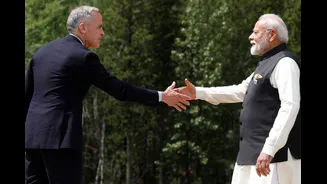
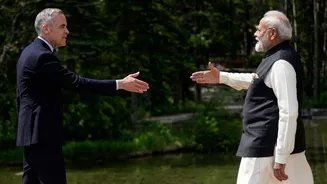
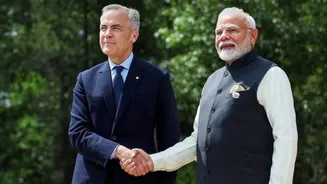
Canadian Prime Minister Mark Carney arrived in Mumbai on Friday in a high-stakes visit aimed at recalibrating relations with India following a sharp diplomatic rupture under former premier Justin Trudeau. The trip marks Ottawa’s most concerted effort yet to restore ties that collapsed in 2023 over allegations surrounding the killing of Sikh activist Hardeep Singh Nijjar.
Carney’s office has termed the visit as forward-looking, focusing on “ambitious new partnerships” in trade, energy, artificial intelligence, culture and defence. After landing in India’s financial capital, Carney met business leaders before heading to New Delhi for talks with Prime Minister Narendra Modi.
The previous diplomatic breakdown stemmed from Ottawa’s accusation that Indian agents were linked to Nijjar’s assassination on Canadian soil, a claim New Delhi strongly denied. The row deepened when Trudeau’s government alleged India was involved in a broader campaign of intimidation targeting Sikh activists advocating for Khalistan. Both countries expelled senior diplomats in 2024, pushing relations into their worst crisis in decades.
Since Carney assumed office in March 2025, efforts to cool tensions have gathered pace. Diplomatic envoys have been restored and bilateral engagements revived. Canadian Foreign Minister Anita Anand has indicated that concerns about transnational repression remain central, but the overall tone has shifted toward pragmatic engagement.
At the heart of Carney’s outreach lies trade. Ottawa aims to more than double bilateral commerce with India by 2030, targeting annual two-way trade of $51 billion. Negotiations over a proposed free trade agreement, suspended amid diplomatic tensions, resumed last year and are expected to gather momentum.
India, the world’s fastest-growing major economy, presents an attractive long-term partner for Canada. Canadian pension and sovereign wealth funds have already invested $73 billion in India, highlighting deep economic linkages that endured despite political strain.
Energy cooperation is likely to be a cornerstone of discussions. Energy-hungry India is expanding its nuclear power capacity to meet climate and development goals. Canada, with its established nuclear technology sector and uranium exports, could emerge as a strategic partner in India’s clean energy push.
Beyond nuclear power, artificial intelligence and technology partnerships are on the table. Canada’s push to collaborate on innovation ecosystems aligns with India’s growing digital economy ambitions. For Carney, strengthening ties in these sectors serves not only diplomatic repair but also economic resilience.
Carney’s India visit is part of a broader strategy to reduce Canada’s economic reliance on the United States. In 2024, more than 75 percent of Canadian exports went south of the border, with bilateral trade exceeding $900 billion. While much of that trade remains tariff-free, industry-specific tariffs and uncertainty over long-term US trade policy have raised concerns in Ottawa.
By deepening engagement with India, Australia, and Japan, Canada aims to hedge against potential volatility in its US ties. Cooperation on critical mineral supply chains will be a key theme, especially as advanced economies seek alternatives to China’s dominance in rare earth processing. Securing diversified supply chains is increasingly viewed as a strategic imperative in high-tech manufacturing and renewable energy transitions.
For India, closer ties with Canada fit its broader agenda of attracting foreign investment and expanding global partnerships. For Canada, rebuilding trust with New Delhi is not only about diplomatic redemption but also about anchoring its Indo-Pacific strategy in one of the region’s most dynamic economies.
As Carney and Modi prepare to meet in New Delhi, the visit highlights a shared recognition: despite unresolved tensions, economic pragmatism and geopolitical shifts are compelling both nations toward a cautious yet deliberate reset.
With inputs from agencies
Carney’s office has termed the visit as forward-looking, focusing on “ambitious new partnerships” in trade, energy, artificial intelligence, culture and defence. After landing in India’s financial capital, Carney met business leaders before heading to New Delhi for talks with Prime Minister Narendra Modi.
The previous diplomatic breakdown stemmed from Ottawa’s accusation that Indian agents were linked to Nijjar’s assassination on Canadian soil, a claim New Delhi strongly denied. The row deepened when Trudeau’s government alleged India was involved in a broader campaign of intimidation targeting Sikh activists advocating for Khalistan. Both countries expelled senior diplomats in 2024, pushing relations into their worst crisis in decades.
Since Carney assumed office in March 2025, efforts to cool tensions have gathered pace. Diplomatic envoys have been restored and bilateral engagements revived. Canadian Foreign Minister Anita Anand has indicated that concerns about transnational repression remain central, but the overall tone has shifted toward pragmatic engagement.
Trade ambitions and economic diversification drive the agenda
At the heart of Carney’s outreach lies trade. Ottawa aims to more than double bilateral commerce with India by 2030, targeting annual two-way trade of $51 billion. Negotiations over a proposed free trade agreement, suspended amid diplomatic tensions, resumed last year and are expected to gather momentum.
India, the world’s fastest-growing major economy, presents an attractive long-term partner for Canada. Canadian pension and sovereign wealth funds have already invested $73 billion in India, highlighting deep economic linkages that endured despite political strain.
Energy cooperation is likely to be a cornerstone of discussions. Energy-hungry India is expanding its nuclear power capacity to meet climate and development goals. Canada, with its established nuclear technology sector and uranium exports, could emerge as a strategic partner in India’s clean energy push.
Beyond nuclear power, artificial intelligence and technology partnerships are on the table. Canada’s push to collaborate on innovation ecosystems aligns with India’s growing digital economy ambitions. For Carney, strengthening ties in these sectors serves not only diplomatic repair but also economic resilience.
Pivoting from US dependence to Indo-Pacific partnerships
Carney’s India visit is part of a broader strategy to reduce Canada’s economic reliance on the United States. In 2024, more than 75 percent of Canadian exports went south of the border, with bilateral trade exceeding $900 billion. While much of that trade remains tariff-free, industry-specific tariffs and uncertainty over long-term US trade policy have raised concerns in Ottawa.
By deepening engagement with India, Australia, and Japan, Canada aims to hedge against potential volatility in its US ties. Cooperation on critical mineral supply chains will be a key theme, especially as advanced economies seek alternatives to China’s dominance in rare earth processing. Securing diversified supply chains is increasingly viewed as a strategic imperative in high-tech manufacturing and renewable energy transitions.
For India, closer ties with Canada fit its broader agenda of attracting foreign investment and expanding global partnerships. For Canada, rebuilding trust with New Delhi is not only about diplomatic redemption but also about anchoring its Indo-Pacific strategy in one of the region’s most dynamic economies.
As Carney and Modi prepare to meet in New Delhi, the visit highlights a shared recognition: despite unresolved tensions, economic pragmatism and geopolitical shifts are compelling both nations toward a cautious yet deliberate reset.
With inputs from agencies