








What is the story about?
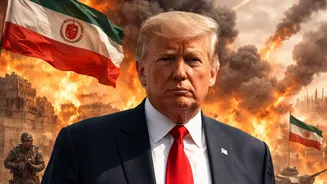
Iran on Wednesday rejected US President Donald Trump's 15-point proposal and floated its own five-point proposal. Among other demands, Iran has sought reparations for the war and recognition of its sovereignty over the Strait of Hormuz. Trump is unlikely to accept these demands.
But White House continued to insist that the US-Iran talks continued and remained "productive".
The administration stuck to the carrots-and-sticks approach: Trump offering terms while also ramping up military deployment and White House saying talks were ongoing but also warning he would "unleash hell" upon failure of talks.
"If Iran fails to accept the reality of the current moment, if they fail to understand that they have been defeated militarily, Trump will ensure they are hit harder than they have ever been hit before," White House Press Secretary Karoline Leavitt said on Wednesday.
Follow our live coverage of the US-Israeli war on Iran here
Trump had passed on a 15-point proposal to Iran through Pakistan, which had been mediating in the ongoing war. While he had pushed for talks as early as Thursday and named Vice President JD Vance as his interlocutor, as per Axios, Iran has been concerned about being played for the third time.
While the specifics of Trump's proposal are not yet known, it broadly addressed sanctions relief, a rollback of Iran’s nuclear programme, limits on missiles, and reopening the Strait of Hormuz, two officials from Pakistan told AP.
Iranian state media on Wednesday reported that the regime had dismissed Trump's proposal.
Iranian state media reported that the regime had floated its own five-point plan: halt in the US-Israeli assassination campaign, means to make sure no other war is waged against it, reparations for the war, the end of hostilities, and Iran’s exercise of sovereignty over the Strait of Hormuz.
Around the same time, Iranian Foreign Minister Seyed Abbas Araghchi also said that no talks with the United States have taken place.
“No negotiations have happened with the enemy until now, and we do not plan on any negotiations,” said Araghchi.
Iran appears to be counting on the energy shock and domestic political pressure to push Trump towards a better deal. The closure of the Strait of Hormuz has raised oil prices by 34 per cent in the United States. The price rise amid economic downturn has plunged Trump's approval rating to an all-time low. Amid continuing troop deployment, dissent appears to be emerging even among Republican lawmakers.
ALSO READ — $95 oil isn’t the shock it once was, but $120 could change everything: Report
Trump, however, maintained that Iran was part of talks and said "they want to make a deal so badly, but they’re afraid to say it because they figure they’ll be killed by their own people”.
Iran has previously said that Trump must be negotiating with himself as it said there had been no talks with the United States. It has, however, said that countries have passed on messages between it and the United States lately — an apparent acknowledgement of indirect talks.
But White House continued to insist that the US-Iran talks continued and remained "productive".
The administration stuck to the carrots-and-sticks approach: Trump offering terms while also ramping up military deployment and White House saying talks were ongoing but also warning he would "unleash hell" upon failure of talks.
"If Iran fails to accept the reality of the current moment, if they fail to understand that they have been defeated militarily, Trump will ensure they are hit harder than they have ever been hit before," White House Press Secretary Karoline Leavitt said on Wednesday.
Follow our live coverage of the US-Israeli war on Iran here
Trump had passed on a 15-point proposal to Iran through Pakistan, which had been mediating in the ongoing war. While he had pushed for talks as early as Thursday and named Vice President JD Vance as his interlocutor, as per Axios, Iran has been concerned about being played for the third time.
While the specifics of Trump's proposal are not yet known, it broadly addressed sanctions relief, a rollback of Iran’s nuclear programme, limits on missiles, and reopening the Strait of Hormuz, two officials from Pakistan told AP.
Iran reverts with 5-point proposal and counts on economic pressure
Iranian state media on Wednesday reported that the regime had dismissed Trump's proposal.
Iranian state media reported that the regime had floated its own five-point plan: halt in the US-Israeli assassination campaign, means to make sure no other war is waged against it, reparations for the war, the end of hostilities, and Iran’s exercise of sovereignty over the Strait of Hormuz.
Around the same time, Iranian Foreign Minister Seyed Abbas Araghchi also said that no talks with the United States have taken place.
“No negotiations have happened with the enemy until now, and we do not plan on any negotiations,” said Araghchi.
Iran appears to be counting on the energy shock and domestic political pressure to push Trump towards a better deal. The closure of the Strait of Hormuz has raised oil prices by 34 per cent in the United States. The price rise amid economic downturn has plunged Trump's approval rating to an all-time low. Amid continuing troop deployment, dissent appears to be emerging even among Republican lawmakers.
ALSO READ — $95 oil isn’t the shock it once was, but $120 could change everything: Report
Trump, however, maintained that Iran was part of talks and said "they want to make a deal so badly, but they’re afraid to say it because they figure they’ll be killed by their own people”.
Iran has previously said that Trump must be negotiating with himself as it said there had been no talks with the United States. It has, however, said that countries have passed on messages between it and the United States lately — an apparent acknowledgement of indirect talks.