








What is the story about?
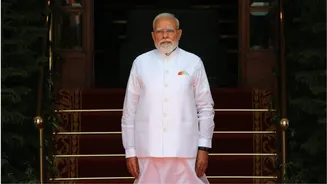
Prime Minister Narendra Modi has completed 12 years at the helm of the Indian government, a period marked by significant changes in the country's digital and technology ecosystem. During these years, India has pushed aggressively into areas ranging from digital payments and public digital infrastructure to semiconductor manufacturing, artificial intelligence and space technology.
India has evolved into a trusted partner in the global technology value chain under Modi's leadership. He pointed to the country's growing electronics exports and progress in advanced manufacturing as evidence of that transformation, said Union Electronics and Information Technology Minister Ashwini Vaishnaw while speaking to news agency PTI on the occasion.
"Some very complex electronics products, like railway propulsion, we exported to France, Germany, Italy and the US. Last year, we also exported around Rs 35,000 crore worth of components to China," Vaishnaw said.
One of the government's biggest technology priorities has been reducing dependence on imports and building domestic manufacturing capabilities.
Attempts to establish a semiconductor ecosystem in India date back decades, Vaishnaw said, but meaningful progress has been achieved only in recent years. The government's Semicon India Programme, backed by an outlay of Rs 76,000 crore, has approved five semiconductor projects worth Rs 1.52 lakh crore.
The minister also highlighted efforts to create a skilled workforce for the industry.
He said around 75,000 students have already been trained for semiconductor-related jobs within four years, close to the original target of 80,000 professionals that was expected to be achieved over a decade.
India's semiconductor demand is projected to touch USD 100 billion by 2030, making local manufacturing a strategic priority as global supply chains continue to diversify.
The Digital India initiative has become one of the defining pillars of the government's technology agenda.
Among its most visible successes is DigiLocker, a cloud-based platform that enables citizens to securely store, access and share official documents digitally. The service has become a key part of India's digital governance framework, reducing paperwork and simplifying access to government services.
Another notable initiative is Bhashini, an AI-powered language platform designed to bridge linguistic barriers across the country. The platform enables translation and communication across multiple Indian languages, helping expand digital access beyond English-speaking users.
Together, these initiatives have contributed to broader digital inclusion and helped create a foundation for future technology-driven public services.
Artificial intelligence has emerged as another major focus area in recent years.
The IndiaAI Mission, backed by an allocation of Rs 10,300 crore, aims to build a robust domestic AI ecosystem. Government-backed initiatives such as BharatGen and Sarvam-1 are intended to support researchers, startups and developers working on indigenous AI models and applications.
India has also invested in high-performance computing infrastructure, including a facility equipped with more than 18,000 GPUs to support AI research and innovation.
Government data indicates that India's AI skills penetration now exceeds that of several advanced economies, including the United States and Germany.
Perhaps no technology initiative has had a more visible impact on everyday life than the Unified Payments Interface (UPI).
What began as a digital payments platform in 2016 has grown into one of the world's largest real-time payments systems. By April 2025, UPI was facilitating more than 1,789 crore transactions and accounted for nearly half of global real-time payment volumes.
The platform now connects hundreds of banks and millions of merchants, enabling instant transactions across the country. During FY 2024-25, UPI processed transactions worth more than Rs 214 lakh crore.
Its influence has also expanded beyond India's borders. UPI has been introduced in several countries, including France and Singapore, helping strengthen India's position in the global fintech ecosystem.
India's technology journey during the Modi years has extended beyond Earth as well.
The country's space programme achieved global recognition through Chandrayaan-3's successful lunar landing in 2023 and the Aditya-L1 solar mission. More recently, the SpaDeX mission demonstrated space docking capabilities, placing India among a select group of nations with that expertise.
Commercially, India has launched hundreds of foreign satellites and established a Rs 1,000 crore venture capital fund to support private space startups.
As PM Modi completes 12 years in office, the government argues that these achievements collectively reflect India's ambition to move from being primarily a consumer of technology to becoming a creator, manufacturer and exporter of advanced technological solutions.
India has evolved into a trusted partner in the global technology value chain under Modi's leadership. He pointed to the country's growing electronics exports and progress in advanced manufacturing as evidence of that transformation, said Union Electronics and Information Technology Minister Ashwini Vaishnaw while speaking to news agency PTI on the occasion.
"Some very complex electronics products, like railway propulsion, we exported to France, Germany, Italy and the US. Last year, we also exported around Rs 35,000 crore worth of components to China," Vaishnaw said.
India's electronics and semiconductor ambitions take shape
One of the government's biggest technology priorities has been reducing dependence on imports and building domestic manufacturing capabilities.
Attempts to establish a semiconductor ecosystem in India date back decades, Vaishnaw said, but meaningful progress has been achieved only in recent years. The government's Semicon India Programme, backed by an outlay of Rs 76,000 crore, has approved five semiconductor projects worth Rs 1.52 lakh crore.
The minister also highlighted efforts to create a skilled workforce for the industry.
He said around 75,000 students have already been trained for semiconductor-related jobs within four years, close to the original target of 80,000 professionals that was expected to be achieved over a decade.
India's semiconductor demand is projected to touch USD 100 billion by 2030, making local manufacturing a strategic priority as global supply chains continue to diversify.
Digital India and the rise of public digital infrastructure
The Digital India initiative has become one of the defining pillars of the government's technology agenda.
Among its most visible successes is DigiLocker, a cloud-based platform that enables citizens to securely store, access and share official documents digitally. The service has become a key part of India's digital governance framework, reducing paperwork and simplifying access to government services.
Another notable initiative is Bhashini, an AI-powered language platform designed to bridge linguistic barriers across the country. The platform enables translation and communication across multiple Indian languages, helping expand digital access beyond English-speaking users.
Together, these initiatives have contributed to broader digital inclusion and helped create a foundation for future technology-driven public services.
AI and emerging technologies move to the forefront
Artificial intelligence has emerged as another major focus area in recent years.
The IndiaAI Mission, backed by an allocation of Rs 10,300 crore, aims to build a robust domestic AI ecosystem. Government-backed initiatives such as BharatGen and Sarvam-1 are intended to support researchers, startups and developers working on indigenous AI models and applications.
India has also invested in high-performance computing infrastructure, including a facility equipped with more than 18,000 GPUs to support AI research and innovation.
Government data indicates that India's AI skills penetration now exceeds that of several advanced economies, including the United States and Germany.
UPI becomes India's global technology success story
Perhaps no technology initiative has had a more visible impact on everyday life than the Unified Payments Interface (UPI).
What began as a digital payments platform in 2016 has grown into one of the world's largest real-time payments systems. By April 2025, UPI was facilitating more than 1,789 crore transactions and accounted for nearly half of global real-time payment volumes.
The platform now connects hundreds of banks and millions of merchants, enabling instant transactions across the country. During FY 2024-25, UPI processed transactions worth more than Rs 214 lakh crore.
Its influence has also expanded beyond India's borders. UPI has been introduced in several countries, including France and Singapore, helping strengthen India's position in the global fintech ecosystem.
Space achievements expand India's technological reach
India's technology journey during the Modi years has extended beyond Earth as well.
The country's space programme achieved global recognition through Chandrayaan-3's successful lunar landing in 2023 and the Aditya-L1 solar mission. More recently, the SpaDeX mission demonstrated space docking capabilities, placing India among a select group of nations with that expertise.
Commercially, India has launched hundreds of foreign satellites and established a Rs 1,000 crore venture capital fund to support private space startups.
As PM Modi completes 12 years in office, the government argues that these achievements collectively reflect India's ambition to move from being primarily a consumer of technology to becoming a creator, manufacturer and exporter of advanced technological solutions.