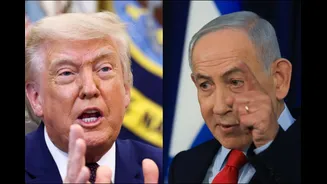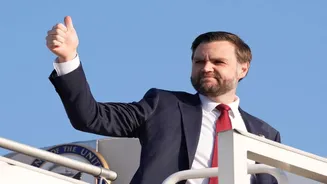

His unusually blunt remarks laid bare growing tensions between Washington and Jerusalem, as Israeli leaders continued to voice concerns over the deal.
Israeli officials, including members of Prime Minister Benjamin Netanyahu’s cabinet, have criticised the US-Iran memorandum of understanding (MoU), arguing that it fails to adequately address Tehran’s nuclear ambitions, curb its ballistic missile programme, or preserve Israel’s freedom to act against Hezbollah in Lebanon.
Vance defends US-Iran agreement
Speaking at a White House press conference, Vance defended the MoU signed this week between Washington and Tehran, which aims to end months of conflict, reopen the Strait of Hormuz and launch negotiations towards a broader settlement.
“My message to them would be twofold. No. 1: Donald J. Trump is the only head of state in the entire world who is sympathetic to the nation of Israel at this moment in time,” Vance said.
“If I was in the cabinet of the Israeli government, I might not be attacking the only powerful ally that I have anywhere left in the entire world.”
Criticism from Israel and pro-Israel groups
The agreement has sparked intense debate among pro-Israel groups in Washington and within Israel’s political establishment.
Vance, however, brushed aside the criticism and highlighted America's longstanding military support for Israel. He noted that two-thirds of the defensive systems protecting the country had been “built by American hands and paid for by American tax dollars”.
The US currently provides Israel with around $4 billion in military assistance annually, while discussions are underway on a new defence aid package.
“The problem for Israel is not Donald J. Trump and anybody in Israel who thinks their biggest problem is the president of the United States needs to wake up and smell the reality of the situation that country is in,” Vance said.
His remarks came amid reports that Netanyahu was unhappy with the agreement, although Vance said he had not personally heard such concerns from the Israeli prime minister.
‘Freakout’ over deal draws sharp response
Vance reserved some of his strongest criticism for members of Israel’s governing coalition who have publicly opposed the agreement.
In an interview with The New York Times, he questioned whether military force alone could resolve Israel’s long-term security challenges.
“What is your exact proposal? You're a country of 9 million people. You can't just kill your way out of solving every single national security problem that you have,” Vance said.
He also dismissed the backlash against the agreement.
“I find this whole freakout in Israel a little bit odd because I think that it comes from a place of mistrust, and I think that America has earned the trust of that region of the world,” he said.
The comments prompted a swift response from Israeli National Security Minister Itamar Ben-Gvir, one of the most vocal critics of the deal.
“This is the proposal ... To deal with the Nazis of the 21st century, just as the United States dealt with the Nazis of the 20th century,” Ben-Gvir wrote on X.
Vance warns over Lebanon strikes
Vance also criticised recent Israeli military operations in Lebanon, describing heavy strikes in Beirut as “unacceptable” and warning that they could jeopardise ongoing diplomatic efforts between Washington and Tehran.
He said Trump had grown increasingly frustrated whenever progress towards an agreement appeared within reach, only for violence to erupt and threaten a wider regional escalation.
“Israel has the right to defend itself, but fundamentally the Israelis, just like everybody else, have to respect this peace process that is fundamentally good for them and good for the entire region,” Vance said.
“What the president gets very frustrated (with) sometimes is that we seem to be right on the cusp of a major breakthrough in the agreement, and then all of a sudden, there's a major explosion that goes off in a civilian population center in Beirut, and a lot of people who have nothing to do with Hezbollah lose their lives. That's not acceptable. That's the sort of thing that we've asked for closer coordination so that we ensure it doesn't happen,” he added.