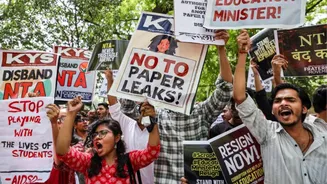










In the aftermath of India instituting a temporary ban on the Telegram messaging platform ahead of the NEET UG re-examination, Telegram CEO Pavel Durov has raised strong criticism. He stated that the move punishes millions of ordinary users while failing to stop the spread of leaked exam papers.
In a post on X on Tuesday, Durov reacted to the government’s decision to block Telegram for a week following allegations that leaked examination questions had been circulated on the platform. He added that the restrictions target users rather than those responsible for the leaks and do little to address the underlying problem.
India’s IT ministry banned Telegram for one week because some users shared leaked exam questions.
This punishes 150M+ ordinary Telegram users in India — not the insiders who leaked the exam materials.
And the ban hasn't stopped anything. The leaks just moved to other apps. https://t.co/CzQWN4mXfb
— Pavel Durov (@durov) June 16, 2026
Durov stated, “India’s IT ministry banned Telegram for one week because some users shared leaked exam questions. This punishes 150 million+ ordinary Telegram users in India, not the insiders who leaked the exam materials. And the ban hasn’t stopped anything. The leaks have just moved to other apps.”
His remarks came after the Ministry of Electronics and Information Technology acted on a recommendation from the National Testing Agency (NTA) and restricted access to Telegram in India until June 22. The NEET UG examination is scheduled to be conducted on June 21.
Durov’s comments were made in response to a statement by the Internet Freedom Foundation (IFF), which also challenged both the platform-wide restriction and a separate order requiring Telegram to disable the message-editing feature for Indian users until June 30.
The IFF stated that Section 69A of the Information Technology Act, 2000, allows the government to block specific online content but does not permit the shutdown of an entire intermediary platform. The organisation also questioned the legal basis for directing Telegram to alter a core feature of its service.
Durov’s comments, along with those from the IFF, have raised concerns over the sudden ban on the application. The IFF further highlighted that the paper leaks reportedly originated from within the examination system itself, arguing that blocking Telegram would not address the root issue. It urged the government to publish the MeitY order and the NTA recommendation behind the restriction, clarify the legal basis for the message-editing directive, and justify the platform-wide ban.