






What is the story about?
Two decades ago, translating a sentence online often meant clunky phrasing and limited accuracy. Today, it can mean pointing a camera at a sign, speaking into a phone, or listening to real-time conversations unfold seamlessly across languages. As digital communication becomes increasingly global, the tools enabling it have quietly become indispensable.
Now, Google is marking a milestone moment for one of its most widely used products. Google Translate has turned 20, and what began as a modest research experiment has grown into a cornerstone of the company’s artificial intelligence ecosystem.
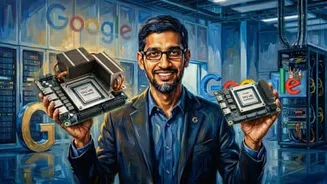
To mark the anniversary, Sundar Pichai looked back at how far the platform has come. Launched in 2006 with support for only a handful of languages, Google Translate now works across nearly 250, serving more than a billion users worldwide.
Despite its rapid evolution, Pichai emphasised that its core purpose has remained unchanged: breaking down language barriers and helping people understand one another, regardless of geography.
What started as a relatively simple text-based tool has since expanded into a far more sophisticated system. Today, it offers features such as live conversation translation, allowing two people to speak different languages and communicate in real time. Through Google Lens, users can also translate text captured in images, from street signs to restaurant menus, almost instantly.
The platform has also embraced real-time transcription, enabling users to follow along with spoken content as it is translated on the fly. These capabilities reflect broader advances in AI, where improvements in machine learning have dramatically enhanced accuracy, speed and usability.
In many ways, Google Translate’s journey mirrors the trajectory of artificial intelligence itself, moving from experimental technology to an everyday utility used across education, travel, business and communication.
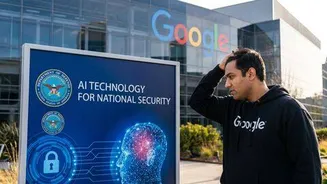
Even as Google celebrates this milestone, it finds itself navigating a more complex and contentious chapter in its AI ambitions. The company has signed an agreement with the US Department of Defense, allowing its AI models to be used for classified work.
Under the deal, the Pentagon can deploy Google’s AI systems for “any lawful government purpose”, placing the company alongside other major players such as OpenAI and xAI, both of which also provide AI tools for sensitive government use.
These classified systems support a range of high-stakes functions, including mission planning and weapons targeting. Similar agreements in recent years have reportedly been valued at up to $200 million each, underscoring the scale and strategic importance of such partnerships.
Google’s agreement includes safeguards, stating that its AI should not be used for domestic mass surveillance or fully autonomous weapons without human oversight. The Pentagon, for its part, has said it does not intend to use AI for mass surveillance of citizens or to develop weapons that operate without human involvement, while maintaining that lawful uses should remain open.
The deal has not been without controversy. Reports suggest that hundreds of Google employees urged the company not to proceed, reflecting ongoing ethical debates within the tech industry about the role of AI in military applications.
Tensions have also surfaced elsewhere. A dispute between the Pentagon and Anthropic emerged after the company declined to provide unrestricted access to its AI systems, leading US Defence Secretary Peter Hegseth to label it a supply chain risk.
Now, Google is marking a milestone moment for one of its most widely used products. Google Translate has turned 20, and what began as a modest research experiment has grown into a cornerstone of the company’s artificial intelligence ecosystem.
Sundar Pichai reflects on 20 years of Google Translate
To mark the anniversary, Sundar Pichai looked back at how far the platform has come. Launched in 2006 with support for only a handful of languages, Google Translate now works across nearly 250, serving more than a billion users worldwide.
Despite its rapid evolution, Pichai emphasised that its core purpose has remained unchanged: breaking down language barriers and helping people understand one another, regardless of geography.
Hello. How are you? Thank you. I love you. Please.
Some of the most frequently translated phrases of the past 20 years!
Google Translate began twenty years ago with a mission to help people understand one another, regardless of the language they speak. What started as a small… pic.twitter.com/wpQ5BQT44D
— Sundar Pichai (@sundarpichai) April 28, 2026
What started as a relatively simple text-based tool has since expanded into a far more sophisticated system. Today, it offers features such as live conversation translation, allowing two people to speak different languages and communicate in real time. Through Google Lens, users can also translate text captured in images, from street signs to restaurant menus, almost instantly.
The platform has also embraced real-time transcription, enabling users to follow along with spoken content as it is translated on the fly. These capabilities reflect broader advances in AI, where improvements in machine learning have dramatically enhanced accuracy, speed and usability.
In many ways, Google Translate’s journey mirrors the trajectory of artificial intelligence itself, moving from experimental technology to an everyday utility used across education, travel, business and communication.
Google signs a deal with the Pentagon
Even as Google celebrates this milestone, it finds itself navigating a more complex and contentious chapter in its AI ambitions. The company has signed an agreement with the US Department of Defense, allowing its AI models to be used for classified work.
Under the deal, the Pentagon can deploy Google’s AI systems for “any lawful government purpose”, placing the company alongside other major players such as OpenAI and xAI, both of which also provide AI tools for sensitive government use.
These classified systems support a range of high-stakes functions, including mission planning and weapons targeting. Similar agreements in recent years have reportedly been valued at up to $200 million each, underscoring the scale and strategic importance of such partnerships.
Google’s agreement includes safeguards, stating that its AI should not be used for domestic mass surveillance or fully autonomous weapons without human oversight. The Pentagon, for its part, has said it does not intend to use AI for mass surveillance of citizens or to develop weapons that operate without human involvement, while maintaining that lawful uses should remain open.
The deal has not been without controversy. Reports suggest that hundreds of Google employees urged the company not to proceed, reflecting ongoing ethical debates within the tech industry about the role of AI in military applications.
Tensions have also surfaced elsewhere. A dispute between the Pentagon and Anthropic emerged after the company declined to provide unrestricted access to its AI systems, leading US Defence Secretary Peter Hegseth to label it a supply chain risk.