








What is the story about?
India’s robotics sector is growing.
While research remains strong, the sector has not been able to convert that into products that have been adopted on a large scale. While robotics is being used when it comes to logistics, warehousing, agriculture, healthcare and defence, India continues to lag behind global adopters such as South Korea, China, the United States, Germany and the Western European economies.
Closing the gap between innovation and large-scale deployment remains a critical challenge. While research institutions and startups are busy developing advanced technologies, the lack of a strong ecosystem and customers willing to buy these robots and see how they work in Indian conditions is making things more difficult for the sector. Figuring this out will be crucial as India looks to compete with global leaders.
The developments come as the Technology Advisory Group (TAG), constituted by the Empowered Technology Group (ETG), held its third meeting in February. The meeting, chaired by Professor Ajay Kumar Sood, Principal Scientific Adviser (PSA) to the Government of India, discussed the ecosystem, successes, challenges and strategic roadmap for robotics in India.
But what do we know about robotics in India? Where is it headed?
Let'ss take a closer look:
At the Indian Institute of Science (IISc), the Robotics Innovations Lab (RIL), established in 2019 within the Department of Design and Manufacturing, reflects a shift in India’s approach to robotics: from academic research towards translational systems.
The lab focuses on human-collaborative robotics, physical AI and autonomous systems, with an emphasis on embodied intelligence - machines designed to function in real-world, unstructured environments. It has contributed to international-level R&D in robotics and AI. The lab has consistently published the Group’s translational research outcomes in tier-1 international and national journals and conferences, and has also won competitions such as ICRA London and IROS Kyoto.
“We aim to create user-centric, translational and hands-on learning programmes in human collaborative robotics, physical AI and autonomous systems,” professor Abhra Roy Chowdhury, Head of Robotics Innovations Lab (RIL), Department of Design and Manufacturing, IISc Bangalore, told Firstpost.
Since 2020, the lab has produced seven granted Indian patents and contributed to international research. Some of these innovations are now seeing early commercial interest through institutional pathways such as the National Research Development Corporation. However, the transition from research output to scaled deployment remains gradual.
The most visible adoption of robotics in India today is concentrated in logistics and warehousing, where operational pressures have created a clear demand for automation. At Unbox Robotics, this shift is already evident.
“Customers are not looking at robotics as mere innovation anymore - they are deploying systems because they need higher throughput, faster order processing, better space utilisation and more predictable operations,” said Pramod Vasant Ghadge, Director and CEO, Unbox Robotics. These systems are running in production environments, processing thousands of shipments daily, indicating a shift from pilot-driven adoption to operational integration.
This aligns with a broader industry view of where robotics is commercially viable today.
“The commercially viable categories are those tied directly to operational ROI - warehouse automation, sorting, palletising, inspection, agriculture, ports and parts of manufacturing. These environments are structured enough for reliability, but large enough that even modest efficiency gains matter,” said Dr Ashutosh Saxena, Founder and CEO, TorqueAGI (builds foundation AI models that give robots real-world intelligence to perform complex physical tasks reliably) and Stanford PhD in AI.
Globally, robotics adoption operates at a different scale.
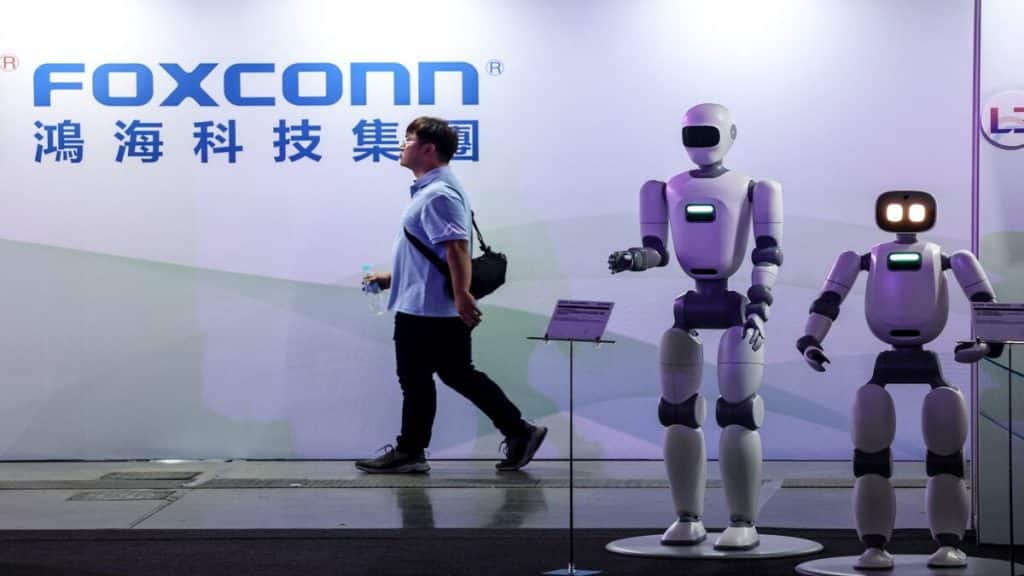
According to the International Federation of Robotics (IFR) World Robotics Report 2025, robot density, measured as the number of industrial robots per 10,000 manufacturing workers, highlights this gap. The global average is around 150. The United States exceeds at 300, while Germany and other Western European economies range between 250 and 400. South Korea remains the most automated, with density above 1,000.
China presents a distinct model. While its density varies by methodology, it accounts for over half of global industrial robot installations annually and has the largest operational robot base globally. India, by comparison, remains in the single digits to low teens. However, robotics has made its way into manufacturing, warehousing, agriculture, healthcare and defence, apart from many other fields in India as well.
The drivers of robotics adoption in India differ from those in global markets. “In India, robotics cannot position itself purely as labour replacement. It has to deliver productivity, flexibility, speed and space efficiency,” Ghadge said.
Indian environments are less standardised and more dynamic. As a result, robotics systems must prioritise adaptability, modularity and rapid deployment rather than fixed, large-scale automation.
Despite progress in research and deployment, the connection between the two remains limited.
“India risks staying a services economy for robotics, integrating other people’s hardware and software, unless it bets on building products,” said Rudraksh Kuchiya, Entrepreneur in Residence, GreyOrange (builds AI-powered software and robots that automate and optimise warehouse and retail fulfilment operations). “The absence of a domestic customer willing to absorb the risk of buying an unproven Indian robotics product is holding the ecosystem back,” he added.
Saxena frames this gap as an ecosystem challenge. “India’s biggest opportunity is in building global Physical AI products. The real gap is not talent, but deployment ecosystems - environments where robotics systems can be tested, iterated and scaled in real-world conditions,” he said.
Advances in AI are beginning to reshape robotics systems. “We are at a real inflection point because AI is allowing robots to move beyond rigid automation into adaptive reasoning. Robots are beginning to understand geometry, spatial layouts, object interactions and changing environments,” said Saxena.
This shift is also expanding robotics into more complex workflows. “Physical AI is extending robotics into environments involving mixed objects, deformable materials and dynamic conditions that previously required human intervention,” he added.

At the same time, parts of the robotics narrative remain ahead of reality. “Broad consumer humanoids and general-purpose home robots are still some distance from reliable deployment at scale. Commercial success in robotics comes from operational reliability, not occasional impressive demos,” Saxena noted.
This aligns with a broader industry shift. “The breakthrough isn’t a humanoid robot doing everything. It’s AI making narrow robots smarter and more deployable,” added Kuchiya.
This makes the longer-term trajectory seem obvious. “Robotics is fundamentally harder than digital AI because the physical world involves physics, uncertainty, latency and safety. The next decade will likely focus on building foundation models for the physical world,” Saxena said.
India’s robotics ecosystem reflects a system in transition. It combines a growing research base, early signs of commercial deployment and increasing alignment with operational use cases. At the same time, it continues to face gaps in productisation, demand-side risk-taking and deployment infrastructure.
In contrast to the United States, Europe and China — where robotics adoption is driven by capital, policy and industrial scale — India’s trajectory is shaped by efficiency, constraint and selective adoption.
1. Why is India’s robotics sector not scaling quickly?
Because of gaps between research and real-world deployment, limited customer adoption, and a weak product ecosystem.
2. Which sectors are currently using robotics in India?
Robotics is mainly being used in logistics, warehousing, agriculture, healthcare and defence.
3. What is needed for India to compete globally in robotics?
India needs stronger deployment ecosystems, more risk-taking customers, and the ability to convert research into scalable products.
With inputs from agencies
While research remains strong, the sector has not been able to convert that into products that have been adopted on a large scale. While robotics is being used when it comes to logistics, warehousing, agriculture, healthcare and defence, India continues to lag behind global adopters such as South Korea, China, the United States, Germany and the Western European economies.
Closing the gap between innovation and large-scale deployment remains a critical challenge. While research institutions and startups are busy developing advanced technologies, the lack of a strong ecosystem and customers willing to buy these robots and see how they work in Indian conditions is making things more difficult for the sector. Figuring this out will be crucial as India looks to compete with global leaders.
The developments come as the Technology Advisory Group (TAG), constituted by the Empowered Technology Group (ETG), held its third meeting in February. The meeting, chaired by Professor Ajay Kumar Sood, Principal Scientific Adviser (PSA) to the Government of India, discussed the ecosystem, successes, challenges and strategic roadmap for robotics in India.
But what do we know about robotics in India? Where is it headed?
Let'ss take a closer look:
Innovation is a strength
At the Indian Institute of Science (IISc), the Robotics Innovations Lab (RIL), established in 2019 within the Department of Design and Manufacturing, reflects a shift in India’s approach to robotics: from academic research towards translational systems.
The lab focuses on human-collaborative robotics, physical AI and autonomous systems, with an emphasis on embodied intelligence - machines designed to function in real-world, unstructured environments. It has contributed to international-level R&D in robotics and AI. The lab has consistently published the Group’s translational research outcomes in tier-1 international and national journals and conferences, and has also won competitions such as ICRA London and IROS Kyoto.
“We aim to create user-centric, translational and hands-on learning programmes in human collaborative robotics, physical AI and autonomous systems,” professor Abhra Roy Chowdhury, Head of Robotics Innovations Lab (RIL), Department of Design and Manufacturing, IISc Bangalore, told Firstpost.
Since 2020, the lab has produced seven granted Indian patents and contributed to international research. Some of these innovations are now seeing early commercial interest through institutional pathways such as the National Research Development Corporation. However, the transition from research output to scaled deployment remains gradual.
Where is robotics actually deployed in India?
The most visible adoption of robotics in India today is concentrated in logistics and warehousing, where operational pressures have created a clear demand for automation. At Unbox Robotics, this shift is already evident.
“Customers are not looking at robotics as mere innovation anymore - they are deploying systems because they need higher throughput, faster order processing, better space utilisation and more predictable operations,” said Pramod Vasant Ghadge, Director and CEO, Unbox Robotics. These systems are running in production environments, processing thousands of shipments daily, indicating a shift from pilot-driven adoption to operational integration.
“The commercially viable categories are those tied directly to operational ROI - warehouse automation, sorting, palletising, inspection, agriculture, ports and parts of manufacturing. These environments are structured enough for reliability, but large enough that even modest efficiency gains matter,” said Dr Ashutosh Saxena, Founder and CEO, TorqueAGI (builds foundation AI models that give robots real-world intelligence to perform complex physical tasks reliably) and Stanford PhD in AI.
Globally, robotics adoption operates at a different scale.
India continues to lag behind global adopters such as South Korea, China, the United States, Germany and the Western European economies. AFP
According to the International Federation of Robotics (IFR) World Robotics Report 2025, robot density, measured as the number of industrial robots per 10,000 manufacturing workers, highlights this gap. The global average is around 150. The United States exceeds at 300, while Germany and other Western European economies range between 250 and 400. South Korea remains the most automated, with density above 1,000.
China presents a distinct model. While its density varies by methodology, it accounts for over half of global industrial robot installations annually and has the largest operational robot base globally. India, by comparison, remains in the single digits to low teens. However, robotics has made its way into manufacturing, warehousing, agriculture, healthcare and defence, apart from many other fields in India as well.
The drivers of robotics adoption in India differ from those in global markets. “In India, robotics cannot position itself purely as labour replacement. It has to deliver productivity, flexibility, speed and space efficiency,” Ghadge said.
Indian environments are less standardised and more dynamic. As a result, robotics systems must prioritise adaptability, modularity and rapid deployment rather than fixed, large-scale automation.
From capacity to output
Despite progress in research and deployment, the connection between the two remains limited.
“India risks staying a services economy for robotics, integrating other people’s hardware and software, unless it bets on building products,” said Rudraksh Kuchiya, Entrepreneur in Residence, GreyOrange (builds AI-powered software and robots that automate and optimise warehouse and retail fulfilment operations). “The absence of a domestic customer willing to absorb the risk of buying an unproven Indian robotics product is holding the ecosystem back,” he added.
Saxena frames this gap as an ecosystem challenge. “India’s biggest opportunity is in building global Physical AI products. The real gap is not talent, but deployment ecosystems - environments where robotics systems can be tested, iterated and scaled in real-world conditions,” he said.
Where AI is heading
Advances in AI are beginning to reshape robotics systems. “We are at a real inflection point because AI is allowing robots to move beyond rigid automation into adaptive reasoning. Robots are beginning to understand geometry, spatial layouts, object interactions and changing environments,” said Saxena.
This shift is also expanding robotics into more complex workflows. “Physical AI is extending robotics into environments involving mixed objects, deformable materials and dynamic conditions that previously required human intervention,” he added.
Advances in AI are beginning to reshape robotics systems. (File Photo)
At the same time, parts of the robotics narrative remain ahead of reality. “Broad consumer humanoids and general-purpose home robots are still some distance from reliable deployment at scale. Commercial success in robotics comes from operational reliability, not occasional impressive demos,” Saxena noted.
This aligns with a broader industry shift. “The breakthrough isn’t a humanoid robot doing everything. It’s AI making narrow robots smarter and more deployable,” added Kuchiya.
This makes the longer-term trajectory seem obvious. “Robotics is fundamentally harder than digital AI because the physical world involves physics, uncertainty, latency and safety. The next decade will likely focus on building foundation models for the physical world,” Saxena said.
The big picture
India’s robotics ecosystem reflects a system in transition. It combines a growing research base, early signs of commercial deployment and increasing alignment with operational use cases. At the same time, it continues to face gaps in productisation, demand-side risk-taking and deployment infrastructure.
In contrast to the United States, Europe and China — where robotics adoption is driven by capital, policy and industrial scale — India’s trajectory is shaped by efficiency, constraint and selective adoption.
FAQs
1. Why is India’s robotics sector not scaling quickly?
Because of gaps between research and real-world deployment, limited customer adoption, and a weak product ecosystem.
2. Which sectors are currently using robotics in India?
Robotics is mainly being used in logistics, warehousing, agriculture, healthcare and defence.
3. What is needed for India to compete globally in robotics?
India needs stronger deployment ecosystems, more risk-taking customers, and the ability to convert research into scalable products.
With inputs from agencies