




What is the story about?
West Bengal's political landscape witnessed a seismic shift on Monday as the Bharatiya Janata Party (BJP) made deep inroads into a state that Trinamool Congress has dominated for nearly a decade.
A combination of administrative, social, and political factors came together to upend the patterns that had long worked in Mamata Banerjee's favour.
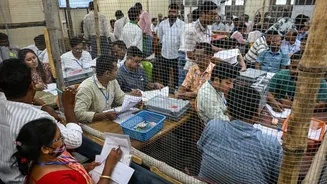
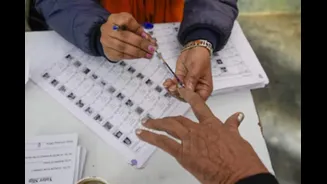
First, the voter turnout hit a record high of 92.47 per cent. The surge came on the back of a Special Intensive Revision (SIR) exercise which reportedly removed around 89 lakh voters from the electoral list.
Bharatiya Janata Yuva Morcha's West Bengal in-charge Shakti Singh, who has been stationed in the state for the past six months, pointed to the SIR exercise as directly linked to the infiltration question.
"It was essential to remove illegal Bangladeshi infiltrators who have become a core vote bank of Mamata," he told Firstpost. Singh added that with adequate security arrangements in place, the sense of fear among voters evaporated, and they came out in large numbers to vote.
One of the most layered factors was what observers are now calling the M-factor — a convergence of four distinct forces.
First, Mamata Banerjee herself, whose perceived proximity to Jamaat drew sharp criticism and alienated sections of the Hindu electorate.
Shakti Singh was pointed in his assessment of Mamata. "Her anti-Hindu mindset became visible repeatedly, and people understood that the real Bengali-Manus is Suvendu Adhikari and other BJP leaders," he said.
Second, the Matua community, a significant voter bloc, which is widely understood to have returned to the BJP fold.
Third, migrants — the question of illegal Bangladeshi migrants dominated campaign narratives, while a large number of migrant voters with roots in Hindi heartland states backed the BJP firmly.
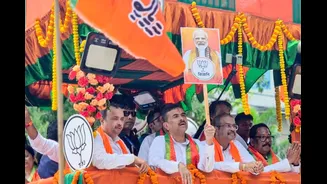
Fourth, the Modi magic, which finally appeared to find its footing in Bengal.
West Bengal has historically been associated with election-related violence, but this round saw comparatively fewer large-scale incidents reported across the state.
A key reason was the deployment of nearly 200,000 central security personnel spread across two phases of voting. The sheer scale of the security presence appeared to act as a deterrent.
Anecdotal evidence from the ground points to a quiet but decisive phenomenon: voters who were targeted in post-election violence following the 2021 assembly results came back to polling booths with a clear sense of purpose.
Many reportedly voted specifically against the ruling government, turning personal grievance into political action.
On the ground, the BJP's youth-focused outreach also played a role. The party's promise of a one crore 'Rojgar Yuva Guarantee Card,' alongside a commitment to quality education, gave young voters a tangible reason to shift allegiance. Singh credited this as a key mobilisation tool for the BJYM's campaign across the state.
Together, these five factors rewrote Bengal's electoral script — and handed the BJP one of its most significant wins in the state's recent political history.
A combination of administrative, social, and political factors came together to upend the patterns that had long worked in Mamata Banerjee's favour.
First, the voter turnout hit a record high of 92.47 per cent. The surge came on the back of a Special Intensive Revision (SIR) exercise which reportedly removed around 89 lakh voters from the electoral list.
Bharatiya Janata Yuva Morcha's West Bengal in-charge Shakti Singh, who has been stationed in the state for the past six months, pointed to the SIR exercise as directly linked to the infiltration question.
"It was essential to remove illegal Bangladeshi infiltrators who have become a core vote bank of Mamata," he told Firstpost. Singh added that with adequate security arrangements in place, the sense of fear among voters evaporated, and they came out in large numbers to vote.
M-factor rewrites the arithmetic
One of the most layered factors was what observers are now calling the M-factor — a convergence of four distinct forces.
First, Mamata Banerjee herself, whose perceived proximity to Jamaat drew sharp criticism and alienated sections of the Hindu electorate.
Shakti Singh was pointed in his assessment of Mamata. "Her anti-Hindu mindset became visible repeatedly, and people understood that the real Bengali-Manus is Suvendu Adhikari and other BJP leaders," he said.
Second, the Matua community, a significant voter bloc, which is widely understood to have returned to the BJP fold.
Third, migrants — the question of illegal Bangladeshi migrants dominated campaign narratives, while a large number of migrant voters with roots in Hindi heartland states backed the BJP firmly.
Fourth, the Modi magic, which finally appeared to find its footing in Bengal.
Fewer reports of violence
West Bengal has historically been associated with election-related violence, but this round saw comparatively fewer large-scale incidents reported across the state.
A key reason was the deployment of nearly 200,000 central security personnel spread across two phases of voting. The sheer scale of the security presence appeared to act as a deterrent.
The vengeance vote
Anecdotal evidence from the ground points to a quiet but decisive phenomenon: voters who were targeted in post-election violence following the 2021 assembly results came back to polling booths with a clear sense of purpose.
Many reportedly voted specifically against the ruling government, turning personal grievance into political action.
A jobs promise that landed
On the ground, the BJP's youth-focused outreach also played a role. The party's promise of a one crore 'Rojgar Yuva Guarantee Card,' alongside a commitment to quality education, gave young voters a tangible reason to shift allegiance. Singh credited this as a key mobilisation tool for the BJYM's campaign across the state.
Together, these five factors rewrote Bengal's electoral script — and handed the BJP one of its most significant wins in the state's recent political history.