





What is the story about?
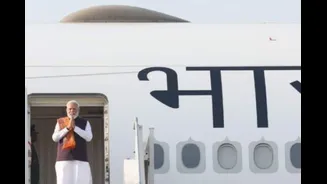
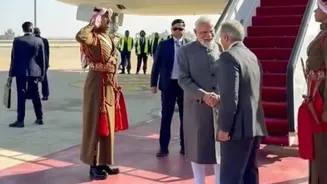
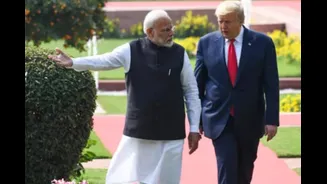
Prime Minister Narendra Modi’s visit to Jordan represents a rare geopolitical confluence in West Asia. New Delhi and Amman are strategically well aligned to leverage shared opportunities. This arrives at a juncture when Jordan’s strategic positioning has acquired fresh salience and India’s role in the region has expanded after the free trade agreement with the UAE. The celebration of the 75th anniversary of diplomatic relations is a launchpad for multifaceted engagement.
Jordan’s location has always defined it. Nestled between Israel, Syria, and Gaza with Iraq, the kingdom occupies a position of such geographic precarity that stability itself becomes an asset.
While the region has convulsed with conflicts—civil wars in Syria, sectarian violence in Iraq, endless Israeli-Palestinian tensions—Jordan under King Abdullah II has maintained a delicate equilibrium. That equilibrium is increasingly valuable. As West Asia has fractured into competing power blocs with Turkish, Iranian, and Saudi interests pulling in different directions, Jordan remains a moderate, secular state committed to the rules-based international order. This matters to India deeply. For a nation seeking to deepen engagement across West Asia without becoming entangled in its sectarian politics, Jordan offers both accessibility and credibility.
Historically this relationship lacked the strategic depth that geography and shared values might have suggested. India maintained relations with Jordan as part of its broader West Asian portfolio, but without the intensity it deployed elsewhere. The kingdom for long was largely isolated from India’s economic influence.
What makes the current moment significant is that both nations have finally begun to acknowledge what geography always implied. That India and Jordan share common adversaries in extremism and terrorism. Both recognise that stability is not a given but something to be actively constructed. For Jordan, particularly, India’s experience in counter-terrorism and its demonstrated capability in maintaining multi-religious, multi-ethnic cohesion offer lessons of real value.
The memory of Pakistan’s military assistance to Jordan complicates this equation for Indian observers. When Brigadier Zia-ul-Haq led Pakistani military advisers to Jordan in 1970, those efforts culminated in the military operation known as Black September, in which an estimated 25,000 Palestinians were killed. That this assistance came from a nation with which India has fought three wars and which continues to sponsor terrorism against Indian soil adds a bitter dimension to India’s assessment of regional alignments. Yet it also clarifies why India’s own contemporary military engagement with Jordan carries different weight. India comes not to destabilise but to strengthen, not to exploit vulnerability but to build capacity.
It takes the bilateral defence framework 2018 forward to a deeper alignment. It encompasses military training, defence industry cooperation, counter-terrorism intelligence sharing and possible Indian military exports forward. India’s military expertise in asymmetric warfare, its experience in combating jihadist organisations, and its sophisticated surveillance capabilities—these represent genuine value for Jordan. Conversely, Jordan’s position as a critical node in regional security provides India with a strategic presence in West Asia. The two nations recognise that their security cannot be decoupled from regional peace and that regional peace increasingly requires Indian engagement.
The economic pillar of this relationship has grown more robust, though it remains underdeveloped relative to potential. India ranks as Jordan’s fourth-largest trading partner, with bilateral trade at almost three billion dollars in 2023-24. Indian exports, valued at $1.465 billion, encompass petroleum products, pharmaceuticals, and machinery. Yet the more significant story lies in investment. Indian capital, totalling approximately $1.5 billion, has become embedded in critical sectors of the Jordanian economy. The garment industry alone hosts approximately 15 Indian companies with cumulative investments near $500 million. These structured long-term commitments integrated themselves into Jordan’s industrial expansion.
The phosphate sector exemplifies the sophistication possible in bilateral economic relations. Jordan possesses vast phosphate reserves, a critical input for agriculture globally. India, with its enormous farming sector and appetite for fertiliser, represents the natural market. The Jordan India Fertiliser Company (JIFCO), a joint venture between India’s IFFCO and Jordan’s JPMC established in 2015, operates a phosphoric acid plant at Eshidiya with an annual capacity exceeding 475,000 tonnes in P₂O₅ terms. This represents $860 million in capital investment and demonstrates how complementary endowments can create mutual prosperity.
The absence of significant Jordanian direct investment in India suggests untapped opportunity that the OPM visit aims to unlock. Indian capital markets, technology sector expansion, and renewable energy initiatives could attract Jordanian investors seeking diversification beyond the Middle Eastern orbit. Modi’s visit provides the occasion to articulate this vision explicitly.
The foreseeable trajectory of India-Jordan cooperation extends across three domains that warrant immediate attention. First, renewable energy and green technology. Jordan faces persistent energy constraints; India possesses world-leading expertise in solar technology and has pledged resources through the International Solar Alliance to support clean energy transitions.
Second, artificial intelligence and digitalisation. Jordan explicitly seeks to become a technology hub; Indian expertise in software development, data analytics, and digital infrastructure could accelerate this ambition through joint ventures and capacity building. Third, food security and agricultural modernisation. Jordan is looking to import both fresh produce and livestock from India.
What Modi’s visit ultimately signals is that India and Jordan have transcended the lull that set in over the relationship over 75 years. Jordan and India bring something rare: a shared commitment to stability.
The convergence of interests creates opportunities, including defence cooperation, economic integration, and technological collaboration.
As Modi symbolically strides the rose-coloured facades of Petra, that ancient Nabataean capital on his visit itinerary, he will be contemplating a city that once thrived at the intersection of trade routes connecting India with Arabia.
Jordan’s embrace of Modi carries particular symbolic weight given the Hashemite monarchy’s direct descent from the Prophet Muhammad and its custodianship of Islam’s third-holiest site, the Al-Aqsa Mosque.
When a kingdom so central to Islamic history and identity receives India’s prime minister with such warmth—hosting him at the highest levels of state, signing defence and economic agreements, and positioning him as a builder of regional stability—it fundamentally reframes the global Muslim perception of Modi and his government. This visit is a long overdue nurture by New Delhi of an important partner in Amman.
(The writer is a senior journalist with expertise in defence. Views expressed are personal and do not necessarily reflect those of Firstpost.)
Jordan’s location has always defined it. Nestled between Israel, Syria, and Gaza with Iraq, the kingdom occupies a position of such geographic precarity that stability itself becomes an asset.
While the region has convulsed with conflicts—civil wars in Syria, sectarian violence in Iraq, endless Israeli-Palestinian tensions—Jordan under King Abdullah II has maintained a delicate equilibrium. That equilibrium is increasingly valuable. As West Asia has fractured into competing power blocs with Turkish, Iranian, and Saudi interests pulling in different directions, Jordan remains a moderate, secular state committed to the rules-based international order. This matters to India deeply. For a nation seeking to deepen engagement across West Asia without becoming entangled in its sectarian politics, Jordan offers both accessibility and credibility.
Historically this relationship lacked the strategic depth that geography and shared values might have suggested. India maintained relations with Jordan as part of its broader West Asian portfolio, but without the intensity it deployed elsewhere. The kingdom for long was largely isolated from India’s economic influence.
What makes the current moment significant is that both nations have finally begun to acknowledge what geography always implied. That India and Jordan share common adversaries in extremism and terrorism. Both recognise that stability is not a given but something to be actively constructed. For Jordan, particularly, India’s experience in counter-terrorism and its demonstrated capability in maintaining multi-religious, multi-ethnic cohesion offer lessons of real value.
The memory of Pakistan’s military assistance to Jordan complicates this equation for Indian observers. When Brigadier Zia-ul-Haq led Pakistani military advisers to Jordan in 1970, those efforts culminated in the military operation known as Black September, in which an estimated 25,000 Palestinians were killed. That this assistance came from a nation with which India has fought three wars and which continues to sponsor terrorism against Indian soil adds a bitter dimension to India’s assessment of regional alignments. Yet it also clarifies why India’s own contemporary military engagement with Jordan carries different weight. India comes not to destabilise but to strengthen, not to exploit vulnerability but to build capacity.
It takes the bilateral defence framework 2018 forward to a deeper alignment. It encompasses military training, defence industry cooperation, counter-terrorism intelligence sharing and possible Indian military exports forward. India’s military expertise in asymmetric warfare, its experience in combating jihadist organisations, and its sophisticated surveillance capabilities—these represent genuine value for Jordan. Conversely, Jordan’s position as a critical node in regional security provides India with a strategic presence in West Asia. The two nations recognise that their security cannot be decoupled from regional peace and that regional peace increasingly requires Indian engagement.
The economic pillar of this relationship has grown more robust, though it remains underdeveloped relative to potential. India ranks as Jordan’s fourth-largest trading partner, with bilateral trade at almost three billion dollars in 2023-24. Indian exports, valued at $1.465 billion, encompass petroleum products, pharmaceuticals, and machinery. Yet the more significant story lies in investment. Indian capital, totalling approximately $1.5 billion, has become embedded in critical sectors of the Jordanian economy. The garment industry alone hosts approximately 15 Indian companies with cumulative investments near $500 million. These structured long-term commitments integrated themselves into Jordan’s industrial expansion.
The phosphate sector exemplifies the sophistication possible in bilateral economic relations. Jordan possesses vast phosphate reserves, a critical input for agriculture globally. India, with its enormous farming sector and appetite for fertiliser, represents the natural market. The Jordan India Fertiliser Company (JIFCO), a joint venture between India’s IFFCO and Jordan’s JPMC established in 2015, operates a phosphoric acid plant at Eshidiya with an annual capacity exceeding 475,000 tonnes in P₂O₅ terms. This represents $860 million in capital investment and demonstrates how complementary endowments can create mutual prosperity.
The absence of significant Jordanian direct investment in India suggests untapped opportunity that the OPM visit aims to unlock. Indian capital markets, technology sector expansion, and renewable energy initiatives could attract Jordanian investors seeking diversification beyond the Middle Eastern orbit. Modi’s visit provides the occasion to articulate this vision explicitly.
The foreseeable trajectory of India-Jordan cooperation extends across three domains that warrant immediate attention. First, renewable energy and green technology. Jordan faces persistent energy constraints; India possesses world-leading expertise in solar technology and has pledged resources through the International Solar Alliance to support clean energy transitions.
Second, artificial intelligence and digitalisation. Jordan explicitly seeks to become a technology hub; Indian expertise in software development, data analytics, and digital infrastructure could accelerate this ambition through joint ventures and capacity building. Third, food security and agricultural modernisation. Jordan is looking to import both fresh produce and livestock from India.
What Modi’s visit ultimately signals is that India and Jordan have transcended the lull that set in over the relationship over 75 years. Jordan and India bring something rare: a shared commitment to stability.
The convergence of interests creates opportunities, including defence cooperation, economic integration, and technological collaboration.
As Modi symbolically strides the rose-coloured facades of Petra, that ancient Nabataean capital on his visit itinerary, he will be contemplating a city that once thrived at the intersection of trade routes connecting India with Arabia.
Jordan’s embrace of Modi carries particular symbolic weight given the Hashemite monarchy’s direct descent from the Prophet Muhammad and its custodianship of Islam’s third-holiest site, the Al-Aqsa Mosque.
When a kingdom so central to Islamic history and identity receives India’s prime minister with such warmth—hosting him at the highest levels of state, signing defence and economic agreements, and positioning him as a builder of regional stability—it fundamentally reframes the global Muslim perception of Modi and his government. This visit is a long overdue nurture by New Delhi of an important partner in Amman.
(The writer is a senior journalist with expertise in defence. Views expressed are personal and do not necessarily reflect those of Firstpost.)