



What is the story about?
US President Donald Trump is nothing if not consistently inconsistent.
Trump has now taken aim at the United Kingdom over the Chagos deal, calling it ‘an act of great stupidity’. Trump has now claimed that the United Kingdom handing over Chagos to Mauritius is one of the reasons why he wants Greenland.
Trump has insisted that it is important for the United States to acquire the Arctic territory for its national security. He has threatened fellow European allies, North Atlantic Treaty Organization (Nato) members, with tariffs if they do not allow the United States to purchase the territory from Denmark.
But what has happened thus far? What is the Chagos deal? How did Trump change tack? Let’s take a closer look.
First, let’s take a closer look at the Chagos Islands.
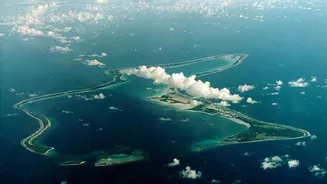
The Chagos Archipelago is a group of six atolls with more than 600 islands in the Indian Ocean, 500 kilometres south of the Maldives and halfway between Africa and Indonesia. Around 4,000 people are currently stationed on the islands.
No indigenous inhabitants, often referred to as Chagossians or Ilois, have lived there since Britain forcibly displaced up to 2,000 people, mostly former agricultural workers, from the islands in the late 1960s and early 1970s to establish the Diego Garcia base.
The islands were administered together with Mauritius by the UK. However, before Mauritius gained independence in 1965, Britain decreed that the Chagos Islands were a separate territory. Mauritius later claimed it was coerced to agree with Britain under the threat of its independence being delayed.
Britain forcibly removed about 1,500–2,000 Chagossians from their homes in the late 1960s and early 1970s to make way for the base. They were dumped in Mauritius and Seychelles, where many fell into poverty. They have never been allowed to return.
Mauritius has for years been demanding the base back, pointing to the fact that Chagos was part of it prior to independence. It also noted that Britain broke up a colony, which is illegal under UN rules.
The international courts sided with Mauritius. This includes the 2015 Arbitration Court, which found that the UK violated Mauritius’s rights, and the 2019 International Court of Justice, which found that Britain’s control of Chagos is illegal and that it must return the islands “as rapidly as possible”. The UN General Assembly also voted that Britain should give the islands back. India too had supported Mauritius’s stance.
However, Britain had refused to do so for years. It noted that the ICJ opinion is merely advisory and not binding. However, the new UK government under Keir Starmer has reversed course. The UK and Mauritius then engaged in nearly a dozen rounds of talks.
The UK in May 2025 agreed to hand over the Chagos Islands to Mauritius. The two countries signed a $4 billion (Rs. 363.84 billion) agreement to do so. However, under the terms of the agreement, Britain has retained control of the joint base it has with the US military on Diego Garcia. The UK agreed to lease the island, the largest in the region, for $118 million per year (about Rs. 10.74 billion per year) from Mauritius for 99 years.
US Secretary of State Marco Rubio, in the aftermath of the deal, described it as a “monumental achievement”. Rubio said that this is a critical asset for regional and global security and that “President Trump expressed his support for this monumental achievement during his meeting with Prime Minister Starmer at the White House. This milestone reflects the enduring strength of the US-UK relationship.”
“They’re talking about a very long-term, powerful lease, a very strong lease, about 140 years actually,” Trump said back then.
“That’s a long time, and I think we’ll be inclined to go along with your country.”

The UK had called the deal a “legal necessity” and noted that it was supported by the US, Canada, Australia and New Zealand. The deal is also important for the US and UK because Diego Garcia is located near international trade routes.
Recent operations launched from Diego Garcia include bombing strikes against Houthi targets in Yemen in 2024 and 2025, humanitarian aid deployments to Gaza and attacks against Taliban and al Qaeda targets in Afghanistan in 2001.
Trump, unsurprisingly, has changed his mind on Chagos because he likely is trying to find any excuse for the US to take Greenland.
“Shockingly, our brilliant Nato ally, the United Kingdom, is currently planning to give away the island of Diego Garcia, the site of a vital US military base, to Mauritius,” Trump wrote on social media.
“There is no doubt that China and Russia have noticed this act of total weakness. These are international powers who only recognise STRENGTH, which is why the United States of America, under my leadership, is now, after only one year, respected like never before.”
“The UK giving away extremely important land is an act of GREAT STUPIDITY, and is another in a very long line of national security reasons why Greenland has to be acquired,” Trump concluded.
Starmer has tried to ease tensions between the United States and the European Union.
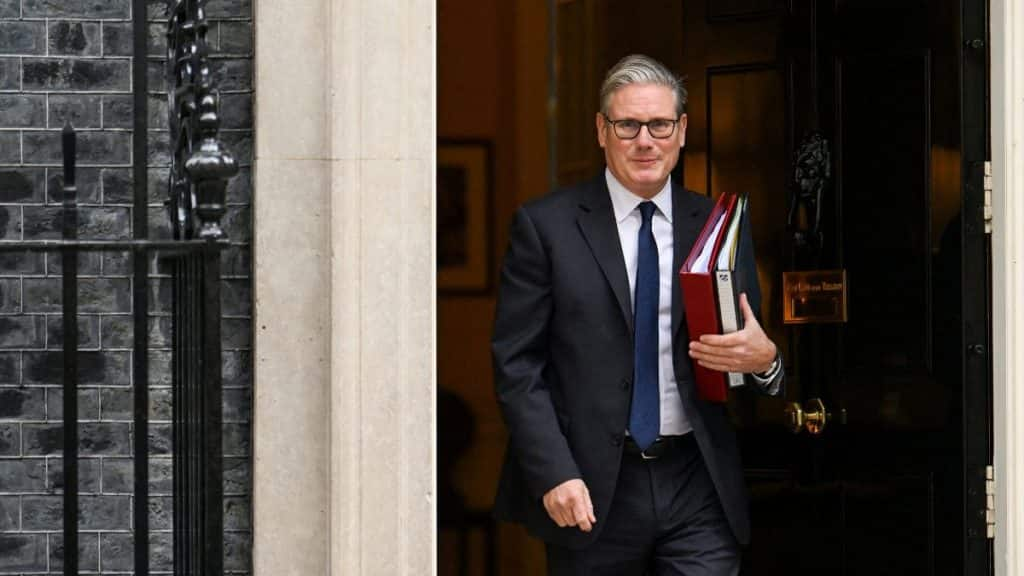
“On Greenland, the right way to approach an issue of this seriousness is through calm discussion between allies,” Starmer said. “But there is a principle here that cannot be set aside, because it goes to the heart of how stable and trusted international cooperation works, so any decision about the future status of Greenland belongs to the people of Greenland and the Kingdom of Denmark alone,” he added.
The United Kingdom has insisted Trump’s statement would make no difference to the deal.
Darren Jones, Chief Secretary to Prime Minister Keir Starmer, told Sky News, “We’ve done a deal with the Mauritian government, we’ve legislated for the process, we’ve agreed the terms of the treaty, which has been signed.
“This is the way in which to secure that military base for the next 100 years. We disagree with President Trump on Greenland, and the Prime Minister has been very clear about that. In the past the Prime Minister has shown that private, proper British diplomacy can work … he has a good track record of this,” he told
BBC Radio 4’s Today programme.
“It’s noisy, I understand that. It’s challenging. It’s not normal for geopolitical discussion to be handled in this way. But British diplomacy is working.”
Kemi Badenoch, leader of the opposition in Britain, said on Tuesday on X that the deal was “complete self-sabotage” that made “us and our Nato allies weaker”.
“I’ve been clear, and unfortunately on this issue President Trump is right. Keir Starmer’s plan to give away the Chagos Islands is a terrible policy that weakens UK security and hands away our sovereign territory. And to top it off, it makes us and our Nato allies weaker in the face of our enemies,” Badenoch wrote.
Leader of the Liberal Democrats Ed Davey says Trump’s Chagos comments show Starmer’s approach to the US President “has failed”. "The Chagos deal was sold as proof the government could work with him. Now it’s falling apart,” Davey wrote on X. “It’s time for the government to stand up to Trump; appeasing a bully never works.”
With inputs from agencies.
Trump has now taken aim at the United Kingdom over the Chagos deal, calling it ‘an act of great stupidity’. Trump has now claimed that the United Kingdom handing over Chagos to Mauritius is one of the reasons why he wants Greenland.
Trump has insisted that it is important for the United States to acquire the Arctic territory for its national security. He has threatened fellow European allies, North Atlantic Treaty Organization (Nato) members, with tariffs if they do not allow the United States to purchase the territory from Denmark.
But what has happened thus far? What is the Chagos deal? How did Trump change tack? Let’s take a closer look.
What has happened thus far?
First, let’s take a closer look at the Chagos Islands.
The Chagos Archipelago is a group of six atolls with more than 600 islands in the Indian Ocean, 500 kilometres south of the Maldives and halfway between Africa and Indonesia. Around 4,000 people are currently stationed on the islands.
No indigenous inhabitants, often referred to as Chagossians or Ilois, have lived there since Britain forcibly displaced up to 2,000 people, mostly former agricultural workers, from the islands in the late 1960s and early 1970s to establish the Diego Garcia base.
The islands were administered together with Mauritius by the UK. However, before Mauritius gained independence in 1965, Britain decreed that the Chagos Islands were a separate territory. Mauritius later claimed it was coerced to agree with Britain under the threat of its independence being delayed.
Britain forcibly removed about 1,500–2,000 Chagossians from their homes in the late 1960s and early 1970s to make way for the base. They were dumped in Mauritius and Seychelles, where many fell into poverty. They have never been allowed to return.
Mauritius has for years been demanding the base back, pointing to the fact that Chagos was part of it prior to independence. It also noted that Britain broke up a colony, which is illegal under UN rules.
The international courts sided with Mauritius. This includes the 2015 Arbitration Court, which found that the UK violated Mauritius’s rights, and the 2019 International Court of Justice, which found that Britain’s control of Chagos is illegal and that it must return the islands “as rapidly as possible”. The UN General Assembly also voted that Britain should give the islands back. India too had supported Mauritius’s stance.
However, Britain had refused to do so for years. It noted that the ICJ opinion is merely advisory and not binding. However, the new UK government under Keir Starmer has reversed course. The UK and Mauritius then engaged in nearly a dozen rounds of talks.
What is the Chagos deal?
The UK in May 2025 agreed to hand over the Chagos Islands to Mauritius. The two countries signed a $4 billion (Rs. 363.84 billion) agreement to do so. However, under the terms of the agreement, Britain has retained control of the joint base it has with the US military on Diego Garcia. The UK agreed to lease the island, the largest in the region, for $118 million per year (about Rs. 10.74 billion per year) from Mauritius for 99 years.
US Secretary of State Marco Rubio, in the aftermath of the deal, described it as a “monumental achievement”. Rubio said that this is a critical asset for regional and global security and that “President Trump expressed his support for this monumental achievement during his meeting with Prime Minister Starmer at the White House. This milestone reflects the enduring strength of the US-UK relationship.”
“They’re talking about a very long-term, powerful lease, a very strong lease, about 140 years actually,” Trump said back then.
US President Donald Trump previously backed the Chagos deal. Reuters
The UK had called the deal a “legal necessity” and noted that it was supported by the US, Canada, Australia and New Zealand. The deal is also important for the US and UK because Diego Garcia is located near international trade routes.
Recent operations launched from Diego Garcia include bombing strikes against Houthi targets in Yemen in 2024 and 2025, humanitarian aid deployments to Gaza and attacks against Taliban and al Qaeda targets in Afghanistan in 2001.
How did Trump change tack?
Trump, unsurprisingly, has changed his mind on Chagos because he likely is trying to find any excuse for the US to take Greenland.
“Shockingly, our brilliant Nato ally, the United Kingdom, is currently planning to give away the island of Diego Garcia, the site of a vital US military base, to Mauritius,” Trump wrote on social media.
“There is no doubt that China and Russia have noticed this act of total weakness. These are international powers who only recognise STRENGTH, which is why the United States of America, under my leadership, is now, after only one year, respected like never before.”
“The UK giving away extremely important land is an act of GREAT STUPIDITY, and is another in a very long line of national security reasons why Greenland has to be acquired,” Trump concluded.
Starmer has tried to ease tensions between the United States and the European Union.
UK Prime Minister Keir Starmer's government called the deal a “legal necessity” and noted that it was supported by the US, Canada, Australia and New Zealand.
“On Greenland, the right way to approach an issue of this seriousness is through calm discussion between allies,” Starmer said. “But there is a principle here that cannot be set aside, because it goes to the heart of how stable and trusted international cooperation works, so any decision about the future status of Greenland belongs to the people of Greenland and the Kingdom of Denmark alone,” he added.
The United Kingdom has insisted Trump’s statement would make no difference to the deal.
Darren Jones, Chief Secretary to Prime Minister Keir Starmer, told Sky News, “We’ve done a deal with the Mauritian government, we’ve legislated for the process, we’ve agreed the terms of the treaty, which has been signed.
“This is the way in which to secure that military base for the next 100 years. We disagree with President Trump on Greenland, and the Prime Minister has been very clear about that. In the past the Prime Minister has shown that private, proper British diplomacy can work … he has a good track record of this,” he told
“It’s noisy, I understand that. It’s challenging. It’s not normal for geopolitical discussion to be handled in this way. But British diplomacy is working.”
Kemi Badenoch, leader of the opposition in Britain, said on Tuesday on X that the deal was “complete self-sabotage” that made “us and our Nato allies weaker”.
“I’ve been clear, and unfortunately on this issue President Trump is right. Keir Starmer’s plan to give away the Chagos Islands is a terrible policy that weakens UK security and hands away our sovereign territory. And to top it off, it makes us and our Nato allies weaker in the face of our enemies,” Badenoch wrote.
Leader of the Liberal Democrats Ed Davey says Trump’s Chagos comments show Starmer’s approach to the US President “has failed”. "The Chagos deal was sold as proof the government could work with him. Now it’s falling apart,” Davey wrote on X. “It’s time for the government to stand up to Trump; appeasing a bully never works.”
With inputs from agencies.