



What is the story about?
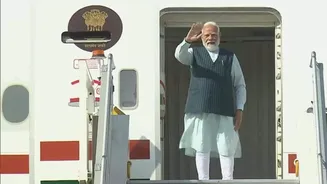
Prime Minister Narendra Modi has entered the last stage of his European trip. He’s arrived in Rome, where he is scheduled to hold a range of diplomatic engagements and talks with his Italian counterpart, Giorgia Meloni.
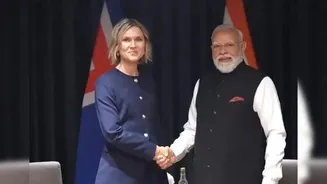
Meloni even extended a warm welcome to Modi on his arrival, and posted a candid picture with him on X, writing, “Welcome to Rome, my friend!”
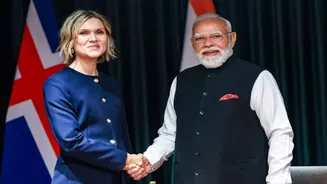
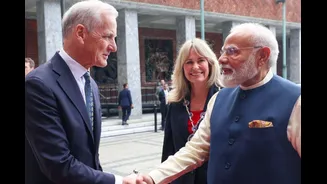
But before Modi arrived in Rome, the Indian leader was in Oslo where he met with Nordic leaders. In this interaction, he repeatedly used the word ‘sambandh’, prompting Iceland’s PM, Kristrún Frostadóttir, to note that she loved this word and that the world needed more ‘sambandh’.
But what does ‘sambandh’ mean? And why did PM Modi repeatedly use this word in his meeting with Nordic leaders?
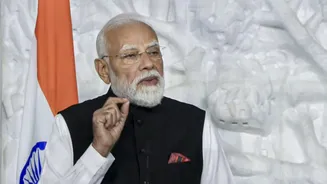
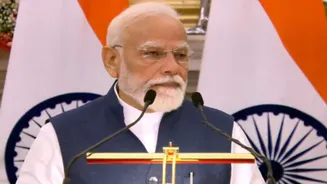
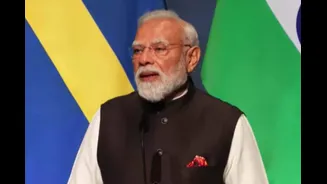
On Tuesday, while in Oslo, PM Modi met with his Nordic counterparts from Denmark, Finland, Iceland, Norway, and Sweden for a joint press conference. During this meeting, he often used the word ‘sambandh’.
“Today, I used the word ‘sambandh’ many times. In several Nordic languages, the word ‘sambandh’ means connection, relations, a bond. In Hindi too, ‘sambandh’ carries the same meaning. This is not just a similarity of words; it reflects the closeness of our thoughts. Let us deepen the bonds between us in every field and make the India-Nordic partnership a model of shared prosperity, innovation, and a sustainable future,” PM Modi said.

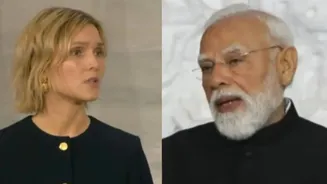
Responding to this, Icelandic PM Kristrún Frostadóttir stated, “This is such a purely Icelandic word,” she said. “People will be very devoted to this language, Prime Minister Modi, because this is what people need. They need more ‘sambandh’ today.”
She further added that she loves the word.
By repeating the word ‘sambandh’ often, PM Modi was blending cultural diplomacy with strategic outreach, using language as a soft power tool to reinforce India’s partnerships. He wanted to show that while India and the Nordic countries may be far away from each other geographically, language brings them together.
Many may not be aware that ‘sambandh’, a Hindi term meaning connection, relationship, or bond, is also a term used in Nordic languages, including Icelandic, Swedish, Norwegian, and Faroese.
In Danish, words such as ‘sammenhæng’ and ‘forbindelse’ are more common, though the prefix ‘sam,’ meaning together, runs through all Nordic languages.
In Icelandic, there’s the word samband that sounds strikingly similar to the Hindi pronunciation and means communication links as well as human or diplomatic bonds. In Iceland, Samband is used for everything — from a phone connection to a diplomatic relationship. This shows that it functions the same way ‘sambandh’ does in Hindi.
But how is it that Hindi, spoken in India, and the Nordic languages share similar-sounding and meaning words?
This similarity can be traced back to the ancient Proto-Indo-European language family, from which both Sanskrit and several European languages evolved. It is believed that the Proto-Indo-European language was a language likely spoken about 4,500 years ago (and before) in what is now Southern Russia and Ukraine. Because its speakers left no written records, it is a reconstructed language. The existing Indo-European languages, such as English, Spanish, and Hindi, descended from this language.
The words samband and sambandh show this clearly. The beginning of the word Sam means ‘together’ in both the Sanskrit as well as Nordic languages. Similarly, bandh in Sanskrit and band in German mean to bind or tie.
Linguists have also pointed out that there are many words in Icelandic that sound similar to Sanskrit. For instance, in Icelandic, mother is móðir, whereas in Sanskrit, it is matr. Similarly, it’s bróðir in Icelandic for brother and bhrātṛ in Sanskrit.
And it seems that these language ties have helped the India-Nordic relationship strengthen. Following the summit, it was announced that India and the Nordic countries have decided to elevate their relationship to a Green Technology and Innovation Strategic Partnership. This enhances cooperation in the areas of blue economy, circular economy, climate action, energy security and education.
India and the Nordic countries also agreed to leverage India-EU FTA and India-EFTA TEPA for greater trade, technology, and investment linkages. Moreover, India and the Nordic nations have agreed upon Arctic cooperation, particularly in the fields of polar research, climate, and environmental issues.
India has also decided to build up defence industrial collaboration with Nordic countries.
All in all, PM Modi’s Norway leg of his Europe visit was very fruitful. He’s now in Italy, the final stage of his visit during which he will hold talks with Italian President Sergio Mattarella and Prime Minister Giorgia Meloni.
He will also visit the headquarters of the United Nations Food and Agriculture Organisation (FAO), highlighting India’s continued focus on multilateral cooperation and global food security initiatives.
With inputs from agencies
Meloni even extended a warm welcome to Modi on his arrival, and posted a candid picture with him on X, writing, “Welcome to Rome, my friend!”
But before Modi arrived in Rome, the Indian leader was in Oslo where he met with Nordic leaders. In this interaction, he repeatedly used the word ‘sambandh’, prompting Iceland’s PM, Kristrún Frostadóttir, to note that she loved this word and that the world needed more ‘sambandh’.
But what does ‘sambandh’ mean? And why did PM Modi repeatedly use this word in his meeting with Nordic leaders?
Modi repeats ‘sambandh’ in meet with Nordic leaders
On Tuesday, while in Oslo, PM Modi met with his Nordic counterparts from Denmark, Finland, Iceland, Norway, and Sweden for a joint press conference. During this meeting, he often used the word ‘sambandh’.
“Today, I used the word ‘sambandh’ many times. In several Nordic languages, the word ‘sambandh’ means connection, relations, a bond. In Hindi too, ‘sambandh’ carries the same meaning. This is not just a similarity of words; it reflects the closeness of our thoughts. Let us deepen the bonds between us in every field and make the India-Nordic partnership a model of shared prosperity, innovation, and a sustainable future,” PM Modi said.
Prime Minister Narendra Modi with Norwegian Prime Minister Jonas Gahr Store, Finnish Prime Minister Petteri Orpo, Swedish Prime Minister Ulf Kristersson, Icelandic Prime Minister Kristrún Frostadóttir and Danish Prime Minister Mette Frederiksen during the Nordic-India Summit, in Oslo, Norway. PTI
Responding to this, Icelandic PM Kristrún Frostadóttir stated, “This is such a purely Icelandic word,” she said. “People will be very devoted to this language, Prime Minister Modi, because this is what people need. They need more ‘sambandh’ today.”
"Prime Minister Modi addressed an increase in investment coming from Iceland into India. So there are so many things that we can do together, and I just have to address, I love that word 'Sambandh'. This is such a purely Icelandic word, and people will be very devoted to this… pic.twitter.com/H0OQtVbcFd
— WION (@WIONews) May 19, 2026
She further added that she loves the word.
By repeating the word ‘sambandh’ often, PM Modi was blending cultural diplomacy with strategic outreach, using language as a soft power tool to reinforce India’s partnerships. He wanted to show that while India and the Nordic countries may be far away from each other geographically, language brings them together.
‘Sambandh’ and its meaning in Nordic languages
Many may not be aware that ‘sambandh’, a Hindi term meaning connection, relationship, or bond, is also a term used in Nordic languages, including Icelandic, Swedish, Norwegian, and Faroese.
In Danish, words such as ‘sammenhæng’ and ‘forbindelse’ are more common, though the prefix ‘sam,’ meaning together, runs through all Nordic languages.
In Icelandic, there’s the word samband that sounds strikingly similar to the Hindi pronunciation and means communication links as well as human or diplomatic bonds. In Iceland, Samband is used for everything — from a phone connection to a diplomatic relationship. This shows that it functions the same way ‘sambandh’ does in Hindi.
The words and their historic links
But how is it that Hindi, spoken in India, and the Nordic languages share similar-sounding and meaning words?
This similarity can be traced back to the ancient Proto-Indo-European language family, from which both Sanskrit and several European languages evolved. It is believed that the Proto-Indo-European language was a language likely spoken about 4,500 years ago (and before) in what is now Southern Russia and Ukraine. Because its speakers left no written records, it is a reconstructed language. The existing Indo-European languages, such as English, Spanish, and Hindi, descended from this language.
The words samband and sambandh show this clearly. The beginning of the word Sam means ‘together’ in both the Sanskrit as well as Nordic languages. Similarly, bandh in Sanskrit and band in German mean to bind or tie.
Linguists have also pointed out that there are many words in Icelandic that sound similar to Sanskrit. For instance, in Icelandic, mother is móðir, whereas in Sanskrit, it is matr. Similarly, it’s bróðir in Icelandic for brother and bhrātṛ in Sanskrit.
PM Modi’s big outcomes in Norway
And it seems that these language ties have helped the India-Nordic relationship strengthen. Following the summit, it was announced that India and the Nordic countries have decided to elevate their relationship to a Green Technology and Innovation Strategic Partnership. This enhances cooperation in the areas of blue economy, circular economy, climate action, energy security and education.
List of outcomes (8 in total) : PM @narendramodi’s participation at the 3rd India-Nordic Summit ⬇️ pic.twitter.com/9H4GMUCbVf
— Randhir Jaiswal (@MEAIndia) May 19, 2026
India and the Nordic countries also agreed to leverage India-EU FTA and India-EFTA TEPA for greater trade, technology, and investment linkages. Moreover, India and the Nordic nations have agreed upon Arctic cooperation, particularly in the fields of polar research, climate, and environmental issues.
India has also decided to build up defence industrial collaboration with Nordic countries.
All in all, PM Modi’s Norway leg of his Europe visit was very fruitful. He’s now in Italy, the final stage of his visit during which he will hold talks with Italian President Sergio Mattarella and Prime Minister Giorgia Meloni.
He will also visit the headquarters of the United Nations Food and Agriculture Organisation (FAO), highlighting India’s continued focus on multilateral cooperation and global food security initiatives.
With inputs from agencies