






What is the story about?
The US has frozen $344 million in cryptocurrency allegedly linked to Iran as the two countries fail to reach a truce deal despite several attempts at diplomatic efforts.
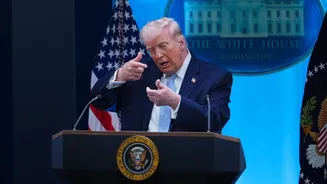
While Iran and the US are currently in a fragile ceasefire, the Trump administration has ramped up economic pressure on Tehran. However, it is unclear whether this sum will have an impact on Iran's approach to the war.
US Treasury Secretary Scott Bessent said on Friday that the agency is "sanctioning multiple wallets tied to Iran.”
He added, "We will follow the money that Tehran is desperately attempting to move outside of the country and target all financial lifelines tied to the regime."
A US official told
CNN that the government had information to suggest that the sum of $344 million was linked to Iran.
“Working with blockchain analytics experts, the US government has observed evidence of material links to the Iranian regime, including confirmed transactions with Iranian exchanges and a series of transactions routed through intermediary addresses that interact with Central Bank of Iran-associated wallets," the official said.
They added, "The Central Bank of Iran (CBI) has used increasingly complex methods to obfuscate its involvement in cross-border transactions using digital assets, as they seek to stabilize the rial and facilitate international trade in an increasingly restricted environment."
Heavily sanctioned countries like Russia and Iran have turned to cryptocurrency, which is less regulated than traditional banking systems.
Cryptocurrency holdings in Iran climbed to $7.8 billion in 2025, expanding at a quicker pace for much of the year compared with 2024, according to crypto-tracing firm Chainalysis.
In the final quarter of 2025, Iran’s influential Islamic Revolutionary Guard Corps was responsible for about half of those blockchain-held assets, “mirroring its dominance in Iran’s economy more broadly,” Chainalysis said.
While Iran and the US are currently in a fragile ceasefire, the Trump administration has ramped up economic pressure on Tehran. However, it is unclear whether this sum will have an impact on Iran's approach to the war.
US Treasury Secretary Scott Bessent said on Friday that the agency is "sanctioning multiple wallets tied to Iran.”
He added, "We will follow the money that Tehran is desperately attempting to move outside of the country and target all financial lifelines tied to the regime."
Why has US frozen the sum?
A US official told
“Working with blockchain analytics experts, the US government has observed evidence of material links to the Iranian regime, including confirmed transactions with Iranian exchanges and a series of transactions routed through intermediary addresses that interact with Central Bank of Iran-associated wallets," the official said.
They added, "The Central Bank of Iran (CBI) has used increasingly complex methods to obfuscate its involvement in cross-border transactions using digital assets, as they seek to stabilize the rial and facilitate international trade in an increasingly restricted environment."
What are Iran's crypto dealings?
Heavily sanctioned countries like Russia and Iran have turned to cryptocurrency, which is less regulated than traditional banking systems.
Cryptocurrency holdings in Iran climbed to $7.8 billion in 2025, expanding at a quicker pace for much of the year compared with 2024, according to crypto-tracing firm Chainalysis.
In the final quarter of 2025, Iran’s influential Islamic Revolutionary Guard Corps was responsible for about half of those blockchain-held assets, “mirroring its dominance in Iran’s economy more broadly,” Chainalysis said.