







What is the story about?
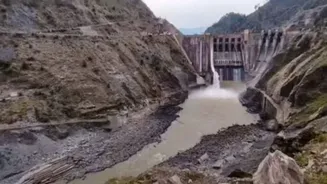
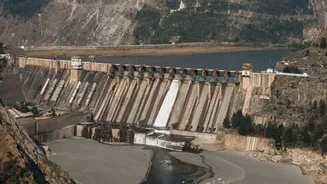
On May 16, the spokesperson for the Ministry of External Affairs of India expressly rejected an ex parte ruling by the Court of Arbitration (CoA) at The Hague concerning maximum pondage at Indian hydroelectric projects on the Indus system, maintaining that the body was constituted in contravention of the Indus Waters Treaty (IWT). The Government of India has also rejected the Permanent Court of Arbitration’s assertion that the CoA has the ‘competence’ to hear the matter. India has repeatedly pointed out that any attempt to bypass the provisions of the IWT, which stipulates a sequential approach to resolving issues, is without locus standi.
India has every right to fully utilise, for developmental purposes, the waters allocated to it under the IWT, which is now in abeyance in the aftermath of the Pahalgam terrorist attack.
Back in 2023, India requested the World Bank to appoint a Neutral Expert to examine the technical issues and objections raised by Pakistan, and that track is conducting its work. Pakistan then asked the World Bank to initiate a legally questionable parallel process through a CoA at The Hague, which falls under the broad ambit of the Permanent Court of Arbitration. Oddly, the World Bank President at the time gave his approval for both tracks simultaneously, thereby violating the fundamental principle that the process is sequential. It is only when the Neutral Expert has either completed the investigation or believes that the issue at hand is beyond the remit of a technical “difference” and is, instead, a legal “dispute”, and so certifies it, that the CoA track comes into the picture.
It is important to understand the sanctity of the structures involved in matters concerning the IWT. Article IX and Annexures F and G establish a sequential mechanism: the Permanent Indus Commission for Questions, then a Neutral Expert for Differences, and finally a Court of Arbitration for Disputes. That sequence has been disrupted by parallel proceedings on the same issues despite India’s refusal to participate. Pakistan has relied on the doctrine of ‘competence-competence’, under which an arbitral body determines its own jurisdiction once constituted.
Having rejected the CoA process in 2023, India declined to nominate its two members to the seven-member panel, while Pakistan proceeded with its own nominations. The remaining members included a legal expert, a technical expert, and the Chair, the latter appointed through the World Bank-backed process.
The CoA comes under the PCA structure, which is distinct from the International Court of Justice (ICJ). The UN Charter provides all 193 member states with automatic association with the ICJ’s Statute, with corresponding access in principle. Countries can choose to sign a declaration accepting the Court’s jurisdiction in disputes. Only 74 countries have opted for this “Optional Clause”, providing for compulsory jurisdiction. Among the P5 members, only the UK has done so. India signed the declaration, albeit with several reservations.
While the ICJ and PCA are separate institutions located in The Hague’s Peace Palace, they retain operational links, including the PCA’s role in nominating ICJ judges through its “national groups”. India continues to remain a contracting party to the PCA even while rejecting the legitimacy of the IWT-specific CoA.
The PCA is an administrative institution that provides secretariat support for ad hoc arbitration panels under various treaties. All permanent members of the UN Security Council are contracting parties, as is India. India’s boycott targets the legitimacy of the IWT-specific CoA, not the PCA itself.
There is a parallel between India’s rejection of the ad hoc CoA ruling last week on the IWT and China’s rejection of the 2016 South China Sea ruling under UNCLOS. Neither country participated in the arbitration proceedings. China’s case is considered particularly egregious, given that it is a party to the United Nations Convention on the Law of the Sea (UNCLOS).
Other global powers routinely push back against perceived judicial overreach; the UK has bypassed international rulings on the Chagos Archipelago, and the US rescinded its acceptance of the ICJ’s compulsory jurisdiction in 1985 over the Nicaragua dispute.
India, on the other hand, has always respected international law, provided the process is transparent and legitimate. For instance, India readily accepted the 2014 arbitral award under UNCLOS in favour of Bangladesh in the Bay of Bengal dispute.
Pakistan has a long history of legal subterfuge before the PCA on the IWT and before the ICJ in the Kulbhushan Jadhav case. One recalls that, soon after Pakistan’s aggression, the UN Security Council resolutions on Kashmir in 1948 similarly envisaged a sequential process of ceasefire, demilitarisation and plebiscite, which Pakistan sought to circumvent.
Well before the IWT was held in abeyance in the wake of the Pahalgam terrorist attack, India had invoked Article XII(3), calling for formal intergovernmental negotiations to undertake a comprehensive review and modification of the 1960 Treaty in view of new realities.
If dialogue with Pakistan ever restarts, foremost on the agenda should be a comprehensive review of the IWT to secure India’s interests.
(The author is the Director General of the Manohar Parrikar Institute for Defence Studies and Analyses. The views expressed in this piece are personal and solely those of the author. They do not necessarily reflect Firstpost’s views.)
India has every right to fully utilise, for developmental purposes, the waters allocated to it under the IWT, which is now in abeyance in the aftermath of the Pahalgam terrorist attack.
Back in 2023, India requested the World Bank to appoint a Neutral Expert to examine the technical issues and objections raised by Pakistan, and that track is conducting its work. Pakistan then asked the World Bank to initiate a legally questionable parallel process through a CoA at The Hague, which falls under the broad ambit of the Permanent Court of Arbitration. Oddly, the World Bank President at the time gave his approval for both tracks simultaneously, thereby violating the fundamental principle that the process is sequential. It is only when the Neutral Expert has either completed the investigation or believes that the issue at hand is beyond the remit of a technical “difference” and is, instead, a legal “dispute”, and so certifies it, that the CoA track comes into the picture.
It is important to understand the sanctity of the structures involved in matters concerning the IWT. Article IX and Annexures F and G establish a sequential mechanism: the Permanent Indus Commission for Questions, then a Neutral Expert for Differences, and finally a Court of Arbitration for Disputes. That sequence has been disrupted by parallel proceedings on the same issues despite India’s refusal to participate. Pakistan has relied on the doctrine of ‘competence-competence’, under which an arbitral body determines its own jurisdiction once constituted.
Having rejected the CoA process in 2023, India declined to nominate its two members to the seven-member panel, while Pakistan proceeded with its own nominations. The remaining members included a legal expert, a technical expert, and the Chair, the latter appointed through the World Bank-backed process.
The CoA comes under the PCA structure, which is distinct from the International Court of Justice (ICJ). The UN Charter provides all 193 member states with automatic association with the ICJ’s Statute, with corresponding access in principle. Countries can choose to sign a declaration accepting the Court’s jurisdiction in disputes. Only 74 countries have opted for this “Optional Clause”, providing for compulsory jurisdiction. Among the P5 members, only the UK has done so. India signed the declaration, albeit with several reservations.
While the ICJ and PCA are separate institutions located in The Hague’s Peace Palace, they retain operational links, including the PCA’s role in nominating ICJ judges through its “national groups”. India continues to remain a contracting party to the PCA even while rejecting the legitimacy of the IWT-specific CoA.
The PCA is an administrative institution that provides secretariat support for ad hoc arbitration panels under various treaties. All permanent members of the UN Security Council are contracting parties, as is India. India’s boycott targets the legitimacy of the IWT-specific CoA, not the PCA itself.
There is a parallel between India’s rejection of the ad hoc CoA ruling last week on the IWT and China’s rejection of the 2016 South China Sea ruling under UNCLOS. Neither country participated in the arbitration proceedings. China’s case is considered particularly egregious, given that it is a party to the United Nations Convention on the Law of the Sea (UNCLOS).
Other global powers routinely push back against perceived judicial overreach; the UK has bypassed international rulings on the Chagos Archipelago, and the US rescinded its acceptance of the ICJ’s compulsory jurisdiction in 1985 over the Nicaragua dispute.
India, on the other hand, has always respected international law, provided the process is transparent and legitimate. For instance, India readily accepted the 2014 arbitral award under UNCLOS in favour of Bangladesh in the Bay of Bengal dispute.
Pakistan has a long history of legal subterfuge before the PCA on the IWT and before the ICJ in the Kulbhushan Jadhav case. One recalls that, soon after Pakistan’s aggression, the UN Security Council resolutions on Kashmir in 1948 similarly envisaged a sequential process of ceasefire, demilitarisation and plebiscite, which Pakistan sought to circumvent.
Well before the IWT was held in abeyance in the wake of the Pahalgam terrorist attack, India had invoked Article XII(3), calling for formal intergovernmental negotiations to undertake a comprehensive review and modification of the 1960 Treaty in view of new realities.
If dialogue with Pakistan ever restarts, foremost on the agenda should be a comprehensive review of the IWT to secure India’s interests.
(The author is the Director General of the Manohar Parrikar Institute for Defence Studies and Analyses. The views expressed in this piece are personal and solely those of the author. They do not necessarily reflect Firstpost’s views.)