







What is the story about?
A Japanese zoo is having its staff dress up as pandas. Adventure World, an amusement park in Japan's Wakayama Prefecture, has its staff dressing up like the animals and mimicking them.
The zoo is also allowing visitors to become panda keepers once a week and feed the 'human pandas', for which they are being given a certificate.
But what do we know? Why has Adventure World done this?
Let’s take a closer look:
Let us take a look at it in detail.
As per the South China Morning Post, a widely shared video on social media shows a staff member at Adventure World wearing a panda hat and costume. The staff member is mimicking panda behaviour, including pretending to eat an apple from a visitor.
This comes after the zoo returned its last four pandas — 24-year-old Rauhin and her children Yuihin, Saihin and Fuhin — to China’s Chengdu Research Base of Giant Panda Breeding in China’s Sichuan province last June. Rauhin, interestingly, was the first panda to be born and raised in Japan. Adventure World Park had been housing pandas for over three decades. The park has witnessed the birth of 17 giant pandas, as per
NDTV.
The development comes after China asked Japan to return all its pandas. Beijing has made ‘panda diplomacy’ one of the cornerstones of its foreign policy. Though it frequently loans the giant bears to nations around the world, it remains the owner of all such animals.
Relations between Japan and China have hit a nadir of late. The latest tensions were triggered by Japanese Prime Minister Sanae Takaichi’s remarks in Parliament on November 7, suggesting that a move by Beijing to use military force against Taiwan would trigger a Japanese military intervention. Zoos outside China usually host pandas on long-term loans. When those agreements end, the animals must be sent back.
The park is doing this in order to keep the public engaged, keep the memories alive and allow visitors to understand what the park will look like without pandas. Staff members wearing realistic panda suits are now occupying the space and demonstrating panda behaviour such as eating bamboo, climbing structures and resting for long stretches.
The park is also allowing visitors to feed the ‘human pandas’ by dressing up as zookeepers for the sum of approximately $51 (Rs 4,597). Videos show at least four staff members dressed up as pandas and entertaining visitors, who are also given a tour of the pandas' living areas. They are also given a keeper certificate.
The concept, known as the “Panda Love Club”, was proposed by Manami Wakabayashi, the zoo’s public relations officer, who has raised pandas for decades. The once-a-week event, which lasts around 90 minutes, also includes keeper-led talks about departed pandas and behind-the-scenes tours of the enclosure.
Visitors get to “experience a programme that mimics actual animal care work, such as preparing meals, observing behaviour, filling out daily reports and checking the safety of the exercise area,”
The Times reported.
“This special attraction will allow visitors to learn about the relationship between pandas and care staff … and experience the significance of passing on the lives of giant pandas to the future,” the park was quoted as saying in a statement.
“This special attraction will allow visitors to learn about the relationship between pandas and care staff … and experience the significance of passing on the lives of giant pandas to the future,” the park was quoted as saying in a statement.
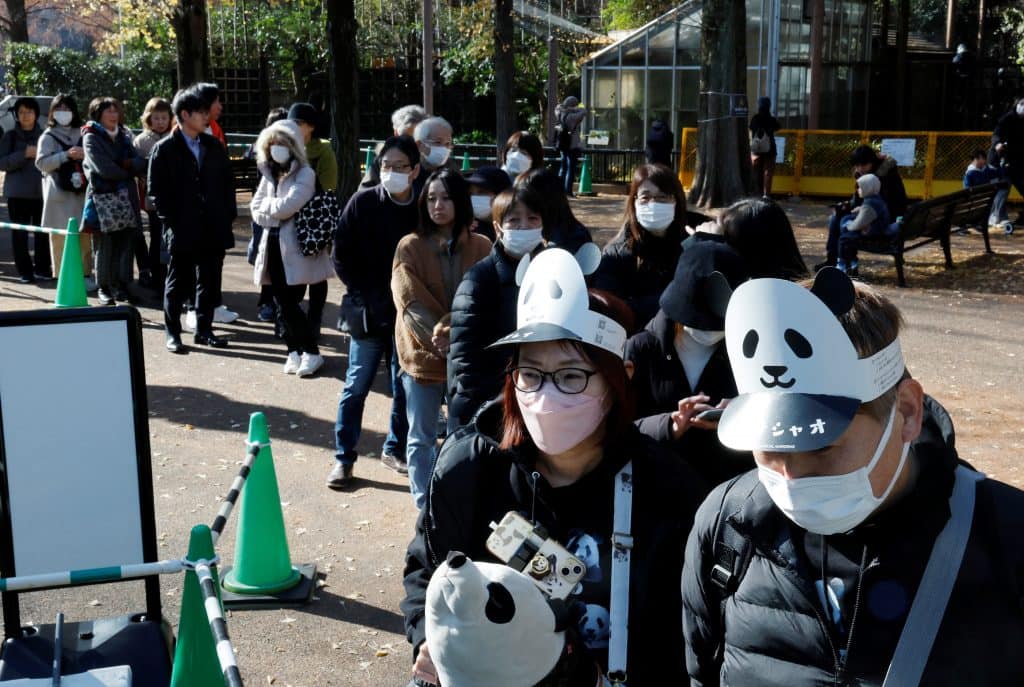
Japan’s last remaining pandas, twin sisters Xiao Xiao and Lei Lei, born at Tokyo’s Ueno Zoo, are set to return to China by the end of January, prompting long lines of visitors eager to see them one last time. With tensions between the two nations continuing, it is unlikely that the zoo will receive pandas any time soon.
This isn’t the first time a zoo has taken such drastic measures.
In 2025, a zoo in Zibo City in Shandong province, China, faced mockery after visitors and social media users realised that its “zebras” were actually donkeys painted with black and white stripes. The amusement park’s management later admitted to doing so using dye, but claimed it was a marketing ploy and that the animals were unharmed.
Footage on China’s Douyin app also showed animals at a zoo that were claimed to be tigers, but turned out to be Chow Chow dogs dyed with orange and black markings.
Some found the scene downright bizarre, while others were more appreciative.
One Japanese commenter said, “It looks like an avant-garde theatre,” while another stated, “It looks so surreal that I thought it was generated by artificial intelligence.”
A third person added, “It seems that the park is also holding this event to prevent the keepers from losing their know-how. However, it is somehow sad to continue reminiscing about something that is no longer there.”
“It is nice in a way that it prevents the keepers from unemployment,” another added.
With inputs from agencies
The zoo is also allowing visitors to become panda keepers once a week and feed the 'human pandas', for which they are being given a certificate.
But what do we know? Why has Adventure World done this?
Let’s take a closer look:
Let us take a look at it in detail.
How Zoo staff are dressing up as pandas
As per the South China Morning Post, a widely shared video on social media shows a staff member at Adventure World wearing a panda hat and costume. The staff member is mimicking panda behaviour, including pretending to eat an apple from a visitor.
This comes after the zoo returned its last four pandas — 24-year-old Rauhin and her children Yuihin, Saihin and Fuhin — to China’s Chengdu Research Base of Giant Panda Breeding in China’s Sichuan province last June. Rauhin, interestingly, was the first panda to be born and raised in Japan. Adventure World Park had been housing pandas for over three decades. The park has witnessed the birth of 17 giant pandas, as per
The development comes after China asked Japan to return all its pandas. Beijing has made ‘panda diplomacy’ one of the cornerstones of its foreign policy. Though it frequently loans the giant bears to nations around the world, it remains the owner of all such animals.
Relations between Japan and China have hit a nadir of late. The latest tensions were triggered by Japanese Prime Minister Sanae Takaichi’s remarks in Parliament on November 7, suggesting that a move by Beijing to use military force against Taiwan would trigger a Japanese military intervention. Zoos outside China usually host pandas on long-term loans. When those agreements end, the animals must be sent back.
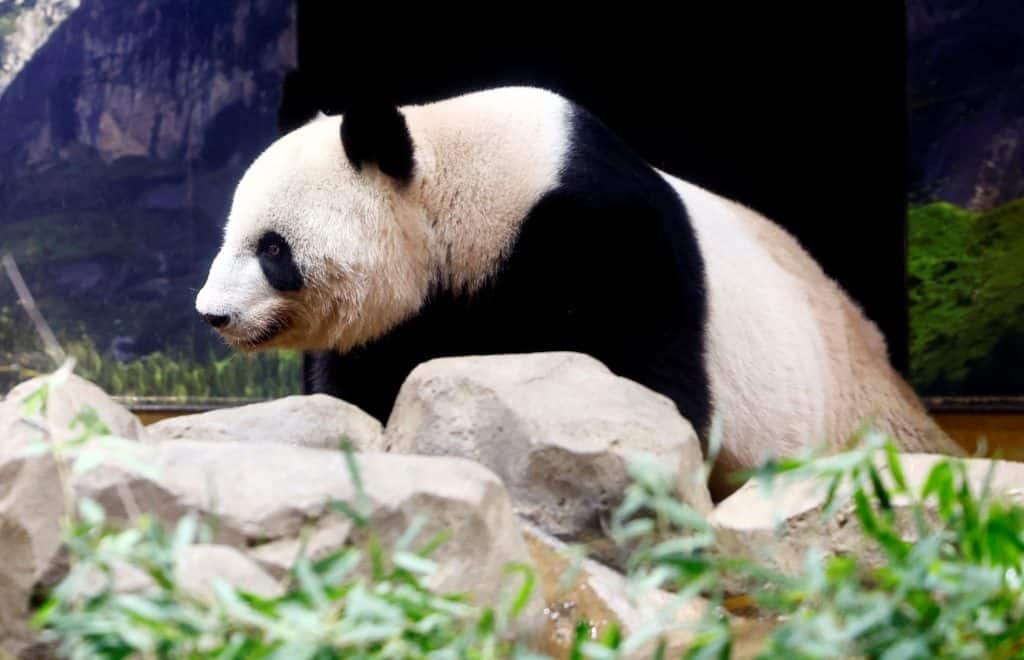
19-year-old giant panda 'Shin Shin' is seen on the last public viewing day for the pandas 'Shin Shin' and 'Ri Ri' at the Ueno Zoological Garden in Tokyo, Japan in 2024. File image/Reuters
The park is doing this in order to keep the public engaged, keep the memories alive and allow visitors to understand what the park will look like without pandas. Staff members wearing realistic panda suits are now occupying the space and demonstrating panda behaviour such as eating bamboo, climbing structures and resting for long stretches.
'Panda love club'
The park is also allowing visitors to feed the ‘human pandas’ by dressing up as zookeepers for the sum of approximately $51 (Rs 4,597). Videos show at least four staff members dressed up as pandas and entertaining visitors, who are also given a tour of the pandas' living areas. They are also given a keeper certificate.
The concept, known as the “Panda Love Club”, was proposed by Manami Wakabayashi, the zoo’s public relations officer, who has raised pandas for decades. The once-a-week event, which lasts around 90 minutes, also includes keeper-led talks about departed pandas and behind-the-scenes tours of the enclosure.
Visitors get to “experience a programme that mimics actual animal care work, such as preparing meals, observing behaviour, filling out daily reports and checking the safety of the exercise area,”
Visitors line up to see giant pandas at Ueno Zoo. File image/Reuters
“This special attraction will allow visitors to learn about the relationship between pandas and care staff … and experience the significance of passing on the lives of giant pandas to the future,” the park was quoted as saying in a statement.
“This special attraction will allow visitors to learn about the relationship between pandas and care staff … and experience the significance of passing on the lives of giant pandas to the future,” the park was quoted as saying in a statement.
Japan’s last remaining pandas, twin sisters Xiao Xiao and Lei Lei, born at Tokyo’s Ueno Zoo, are set to return to China by the end of January, prompting long lines of visitors eager to see them one last time. With tensions between the two nations continuing, it is unlikely that the zoo will receive pandas any time soon.
This isn’t the first time a zoo has taken such drastic measures.
In 2025, a zoo in Zibo City in Shandong province, China, faced mockery after visitors and social media users realised that its “zebras” were actually donkeys painted with black and white stripes. The amusement park’s management later admitted to doing so using dye, but claimed it was a marketing ploy and that the animals were unharmed.
Footage on China’s Douyin app also showed animals at a zoo that were claimed to be tigers, but turned out to be Chow Chow dogs dyed with orange and black markings.
How the internet reacted
Some found the scene downright bizarre, while others were more appreciative.
One Japanese commenter said, “It looks like an avant-garde theatre,” while another stated, “It looks so surreal that I thought it was generated by artificial intelligence.”
A third person added, “It seems that the park is also holding this event to prevent the keepers from losing their know-how. However, it is somehow sad to continue reminiscing about something that is no longer there.”
“It is nice in a way that it prevents the keepers from unemployment,” another added.
With inputs from agencies