






What is the story about?
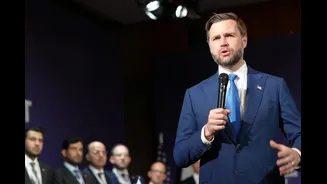
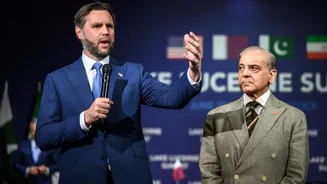
Vice President JD Vance has revealed that Iran has agreed to set up a channel between the IRGC and US Central Command to manage regional disputes.
In an interview with UnHerd, Vance described Iran's desire for a fundamental transformation of its relationship with the United States as the highlight of the talks.
Vance said that “one of the things we wanted to come out with” was a “channel on the Iranian side” to reduce conflict. He said that was achieved during Pakistan- and Qatar-mediated talks in Geneva.
“They were like, ‘OK, fine, we’ll send somebody from the IRGC to go hang out in Doha with somebody from Centcom,’ and that’s how we’re going to settle a lot of these disputes,” said Vance.
This is the first time that the United States and Iran have agreed to a direct, permanent communication channel to de-escalate tensions, reduce conflict, and manage affairs in West Asia. As the two countries do not maintain diplomatic ties,
they communicate indirectly via mediators, but the revelation that they are now moving ahead with a direct channel marks a fundamental shift in the relationship. UnHerd's Sohrab Ahmari described it as quasi-normalisation of US-Iran ties.
ALSO READ — Trump’s Iran deal vs JCPOA: 2 months & $200 bn later, US still far from deal that Obama secured in 2015
That the hardline Islamic Revolutionary Guard Corps (IRGC) will manage the channel on the Iranian side is notable as the organisation has been said to be the most influential body in the country after the death of Ayatollah Ali Khamenei. If the hardliners of the IRGC —an intelligence and armed force parallel to the country's regular military that answers directly to the Supreme Leader— are on board with a decision, it would be unlikely that clerics would be able to oppose it.
While the development marked a fundamental shift, Vance was cautious and said whether Iran’s “rhetorical flexibility is going to be met with action, that’s the big question hanging over all of this”.
Ahmari, who interviewed Vance on board Air Force Two, noted that he heard an Iranian diplomat say in Geneva: “The whole world is tired of this. Inshallah, we’ll get something done here.” He said this suggested a genuine appetite in Iran for a deal to end the war and seek a realignment with the United States.
But Vance also acknowledged that Iranians said many things to placate hardliners in Iran and manage public sentiment.
“The first time we ever sat down with them was in Istanbul, and it almost felt like a performance. They had to get certain things out. They had to attack us for certain things, and it was sort of difficult going. But then it got to a good place where we were able to actually have a conversation. There was a little bit of that element this time too: ‘We didn’t ask for this, but the Iranian nation is great, et cetera, et cetera. But we’re happy to talk about peace,’” said Vance.
The realignment is not just between the United States and Iran but also regional — Saudi Arabia is preparing to host a reconciliation summit with Iran, and Qatar is pursuing its own initiative. Vance said that these channels are a result of US-Iran talks. He said the Arab world appreciates the US-Iran negotiations “because of the conversations they’re having with the Iranians" as well.
"The Emiratis—by far the most hawkish, by far the most pro-Israel country in the [Gulf Cooperation Council]—they’re having conversations with the Iranians that have never happened before, including with the IRGC, about various types of economic incentives—‘Here’s what we’d need to see to make your country investable’—and the Iranians come back and say, ‘Okay, yeah, we’re willing to do all those things,’” said Vance.
But Vance is not willing to launch into a victory dance yet as he still needs to figure out how to get negotiations to the finish line. He, however, maintains that these negotiations are the best chance the United States has had with Iran for a deal.
“They’re certainly talking differently than they have in the past. There’s a whole host of reasons why that’s true. But whether the action will follow, whether the final deal actually meets some of what they’re promising in general terms. That’s what we have to figure out,” said Vance.
In an interview with UnHerd, Vance described Iran's desire for a fundamental transformation of its relationship with the United States as the highlight of the talks.
Vance said that “one of the things we wanted to come out with” was a “channel on the Iranian side” to reduce conflict. He said that was achieved during Pakistan- and Qatar-mediated talks in Geneva.
“They were like, ‘OK, fine, we’ll send somebody from the IRGC to go hang out in Doha with somebody from Centcom,’ and that’s how we’re going to settle a lot of these disputes,” said Vance.
This is the first time that the United States and Iran have agreed to a direct, permanent communication channel to de-escalate tensions, reduce conflict, and manage affairs in West Asia. As the two countries do not maintain diplomatic ties,
ALSO READ — Trump’s Iran deal vs JCPOA: 2 months & $200 bn later, US still far from deal that Obama secured in 2015
That the hardline Islamic Revolutionary Guard Corps (IRGC) will manage the channel on the Iranian side is notable as the organisation has been said to be the most influential body in the country after the death of Ayatollah Ali Khamenei. If the hardliners of the IRGC —an intelligence and armed force parallel to the country's regular military that answers directly to the Supreme Leader— are on board with a decision, it would be unlikely that clerics would be able to oppose it.
Vance remains cautiously optimistic — and acknowledges Iran's limitations
While the development marked a fundamental shift, Vance was cautious and said whether Iran’s “rhetorical flexibility is going to be met with action, that’s the big question hanging over all of this”.
Ahmari, who interviewed Vance on board Air Force Two, noted that he heard an Iranian diplomat say in Geneva: “The whole world is tired of this. Inshallah, we’ll get something done here.” He said this suggested a genuine appetite in Iran for a deal to end the war and seek a realignment with the United States.
But Vance also acknowledged that Iranians said many things to placate hardliners in Iran and manage public sentiment.
“The first time we ever sat down with them was in Istanbul, and it almost felt like a performance. They had to get certain things out. They had to attack us for certain things, and it was sort of difficult going. But then it got to a good place where we were able to actually have a conversation. There was a little bit of that element this time too: ‘We didn’t ask for this, but the Iranian nation is great, et cetera, et cetera. But we’re happy to talk about peace,’” said Vance.
The realignment is not just between the United States and Iran but also regional — Saudi Arabia is preparing to host a reconciliation summit with Iran, and Qatar is pursuing its own initiative. Vance said that these channels are a result of US-Iran talks. He said the Arab world appreciates the US-Iran negotiations “because of the conversations they’re having with the Iranians" as well.
"The Emiratis—by far the most hawkish, by far the most pro-Israel country in the [Gulf Cooperation Council]—they’re having conversations with the Iranians that have never happened before, including with the IRGC, about various types of economic incentives—‘Here’s what we’d need to see to make your country investable’—and the Iranians come back and say, ‘Okay, yeah, we’re willing to do all those things,’” said Vance.
But Vance is not willing to launch into a victory dance yet as he still needs to figure out how to get negotiations to the finish line. He, however, maintains that these negotiations are the best chance the United States has had with Iran for a deal.
“They’re certainly talking differently than they have in the past. There’s a whole host of reasons why that’s true. But whether the action will follow, whether the final deal actually meets some of what they’re promising in general terms. That’s what we have to figure out,” said Vance.