




What is the story about?
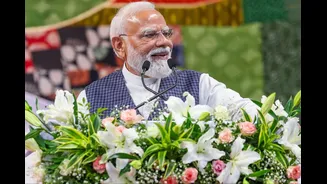
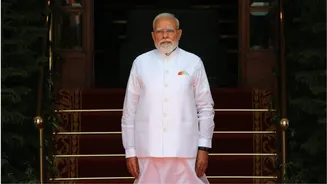
On Wednesday (June 10, 2026), Prime Minister Narendra Modi achieved a unique position in India's democratic history.
Having completed 4,399 consecutive days in office, Modi surpassed Jawaharlal Nehru's record of 4,398 days as an elected prime minister, becoming
the longest continuously serving democratically elected leader since India's independence.
Since first entering office in May 2014, Modi has remained at the helm of the Union government through three successive electoral victories.
The Bharatiya Janata Party (BJP) secured a majority in the Lok Sabha in 2014, returned with a stronger mandate in 2019 and continued in power after the 2024 general election as the leading force within the National Democratic Alliance (NDA).
The result has been a period in which India has had the same prime minister, the same dominant political party at the Centre and broadly consistent policy priorities for more than a decade.
Meanwhile, many countries in South Asia and several advanced democracies have experienced political upheavals, constitutional crises and leadership turnovers.
India's neighbourhood today looks dramatically different from the one Modi inherited when he entered office in 2014.
Perhaps the most dramatic political shift occurred in Bangladesh. In August 2024, widespread student-led demonstrations culminated in the collapse of the government headed by Sheikh Hasina. The protests emerged amid growing discontent over governance issues and eventually forced Hasina to leave the country.
The upheaval created fears of a wider institutional breakdown. To prevent such a scenario, an interim administration was established under Nobel Peace Prize laureate Muhammad Yunus, who assumed the role of Chief Adviser.
The caretaker administration inherited multiple challenges. It was tasked with restoring public order, stabilising an economy facing severe difficulties and implementing reforms within state institutions that many critics viewed as compromised.
The transition period lasted nearly a year and a half before culminating in a landmark election.
On February 17 earlier this year, Tarique Rahman, leader of the Bangladesh Nationalist Party (BNP), took office as prime minister after his party secured a commanding two-thirds majority.
The election marked the conclusion of a prolonged transition period and brought an end to decades in which national politics had largely revolved around competing political dynasties led by women. Bangladesh is now entering a new phase focused on rebuilding and restructuring major institutions.
Much of the current instability can be traced to the removal of former Prime Minister Imran Khan in 2022. Khan's subsequent imprisonment has not diminished his popularity among large sections of the population, creating an environment in which political tensions remain deeply entrenched.
Prime Minister Shehbaz Sharif currently leads a coalition government operating under considerable strain.
Economic challenges have forced the administration to pursue measures linked to successive International Monetary Fund assistance programmes, including spending reductions and revenue-enhancing reforms that have proven politically unpopular.
At the same time, Pakistan continues to confront security concerns and a deeply fragmented political landscape involving civilian politicians, the military establishment and an electorate divided over the country's direction.
As a result, governance remains focused largely on crisis management rather than long-term policy planning.
Since 2012, the Himalayan nation has witnessed 15 government changes, reflecting fragile coalitions, shifting alliances and persistent political rivalries.
The latest upheaval emerged in September 2025 when student-led demonstrations erupted over corruption allegations and economic stagnation. The protests ultimately forced Prime Minister KP Sharma Oli from office.
The political vacuum created an opening for a new generation of leadership.
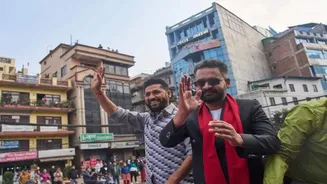
On March 27, Balendra "Balen" Shah, the former mayor of Kathmandu and a one-time rapper, was sworn in as Nepal's youngest prime minister at the age of 35 after his Rastriya Swatantra Party achieved a decisive electoral victory.
Yet Shah's administration entered office facing immediate difficulties.
Oli was arrested the day after the new government took office over his alleged role in a deadly police crackdown during the previous year's unrest. The arrest triggered protests by Oli supporters and intensified political tensions.
Beyond those immediate challenges, Shah must address high youth unemployment, navigate a divided legislature and manage Nepal's delicate balancing act between India and China.
Myanmar continues to face one of the region's most severe crises. The roots of the conflict lie in the February 2021 military coup that removed the elected government led by Aung San Suu Kyi.
The takeover triggered widespread resistance, eventually evolving into a multi-front conflict involving ethnic armed organisations, pro-democracy forces and the military junta known as the Tatmadaw.
Facing mounting battlefield setbacks and growing international isolation, junta chief Min Aung Hlaing initiated a political transition this year.
In April, he formally relinquished his military role and became Myanmar's president following an election that drew widespread criticism and was viewed internationally as lacking credibility.
Despite the change in title, Myanmar remains deeply fractured. Large areas of the country remain beyond the government's effective control. The activation of a military conscription law dating back to 1959 has prompted many young people to leave the country, adding to the humanitarian and economic pressures already facing Myanmar.
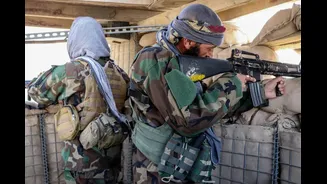
Afghanistan presents a different form of instability. Since the withdrawal of Western forces in August 2021, the country has been governed by the Taliban under the framework of the Islamic Emirate.
Supreme Leader Haibatullah Akhundzada exercises ideological authority from Kandahar, while Prime Minister Mullah Mohammad Hassan Akhund oversees day-to-day governance from Kabul.
Although the Taliban have consolidated military control, no sovereign state has formally recognised their government.
The administration continues to face criticism over restrictions on women and civil rights, while internal divisions persist between ideological hardliners and officials seeking greater engagement with the international community.
The absence of a formal constitutional framework only contributes to uncertainty regarding Afghanistan's long-term governance trajectory.
Sri Lanka has moved beyond the dramatic events of 2022, when economic collapse led to mass protests and the departure of President Gotabaya Rajapaksa.
However, recovery remains incomplete. President Anura Kumara Dissanayake and Prime Minister Harini Amarasuriya, representing the National People's Power coalition, came to office promising anti-corruption reforms and political change.
Their administration has restored a degree of stability, but economic constraints remain significant. Despite earlier commitments to revisit IMF-linked conditions, the government has largely continued with required reforms in order to avoid renewed financial distress.
At the same time, authorities continue to grapple with corruption investigations involving former political leaders, disputes over delayed provincial elections and longstanding ethnic issues affecting Tamil-majority regions.
South Korea entered uncharted territory in December 2024 when President Yoon Suk Yeol declared emergency martial law, alleging threats from political opponents. The move was quickly blocked by the National Assembly, triggering one of the country's most serious constitutional crises.
Yoon was subsequently impeached, removed from office and prosecuted. In February, he was convicted of insurrection and sentenced to life imprisonment.
South Korea is now focused on restoring confidence in public institutions and repairing damage caused by the crisis.
Justin Trudeau's departure from the Liberal Party leadership followed declining approval ratings and growing concerns over housing affordability and inflation. Former central banker Mark Carney succeeded him as prime minister.
However, Carney inherited a divided parliament and faced months of legislative difficulties.
Only after a series of political manoeuvres, electoral gains and parliamentary realignments did his government establish a narrow functional majority in April.
The return of Donald Trump to the White House for a second, non-consecutive term introduced another period of adjustment for American politics. The United States remains deeply polarised, with sharp disagreements over trade, government structure and foreign policy.
Trump's administration has pursued major tariff initiatives, sought reductions in the size of the federal government and reassessed aspects of longstanding security relationships, including those linked to Nato.
These developments have contributed to uncertainty among international partners accustomed to a different policy framework.
The United Kingdom is currently governed by Prime Minister Keir Starmer and the Labour Party. Yet the government continues to operate in the shadow of a turbulent political period that followed the Brexit referendum.
Between 2016 and 2024, Britain had five Conservative prime ministers: David Cameron, Theresa May, Boris Johnson, Liz Truss and Rishi Sunak.
The rapid succession of leaders reflected internal divisions and political instability.
Starmer's administration has therefore been tasked not only with implementing its own agenda but also with addressing structural and fiscal challenges accumulated during years of political turnover.
India’s status as a stabilising force is not accidental, it is driven by distinct pillars developed over the last 12 years of administrative continuity.
While global markets panic over supply chain disruptions and inflation, India has sustained its position as the world's fastest-growing major economy.
The institutional capacity built through the digital public infrastructure (DPI) has streamlined welfare delivery, effectively moving nearly 250 million citizens out of multidimensional poverty and building a robust domestic consumption cushion.
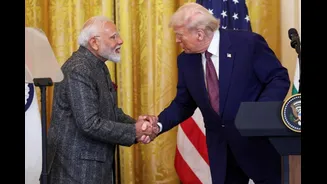
Under Modi’s tenure, India has also effectively institutionalised a policy of "multi-alignment." New Delhi seamlessly navigates its role within the Quad alliance alongside the US and Japan, while concurrently maintaining its independent strategic relationships with the Global South and traditional Eurasian partnerships.
This balanced stance prevents India from being pulled into polarizing global conflicts, keeping its trade and energy corridors secure.
Political stability at home directly translates to diplomatic leverage abroad. Because global partners know exactly who they are dealing with in New Delhi, India has successfully signed more than 30 major bilateral frameworks and elevated its role as a bridge-builder between the West and developing economies.
Having completed 4,399 consecutive days in office, Modi surpassed Jawaharlal Nehru's record of 4,398 days as an elected prime minister, becoming
Since first entering office in May 2014, Modi has remained at the helm of the Union government through three successive electoral victories.
The Bharatiya Janata Party (BJP) secured a majority in the Lok Sabha in 2014, returned with a stronger mandate in 2019 and continued in power after the 2024 general election as the leading force within the National Democratic Alliance (NDA).
The result has been a period in which India has had the same prime minister, the same dominant political party at the Centre and broadly consistent policy priorities for more than a decade.
Meanwhile, many countries in South Asia and several advanced democracies have experienced political upheavals, constitutional crises and leadership turnovers.
India's neighbourhood today looks dramatically different from the one Modi inherited when he entered office in 2014.
Bangladesh
Perhaps the most dramatic political shift occurred in Bangladesh. In August 2024, widespread student-led demonstrations culminated in the collapse of the government headed by Sheikh Hasina. The protests emerged amid growing discontent over governance issues and eventually forced Hasina to leave the country.
The upheaval created fears of a wider institutional breakdown. To prevent such a scenario, an interim administration was established under Nobel Peace Prize laureate Muhammad Yunus, who assumed the role of Chief Adviser.
The caretaker administration inherited multiple challenges. It was tasked with restoring public order, stabilising an economy facing severe difficulties and implementing reforms within state institutions that many critics viewed as compromised.
The transition period lasted nearly a year and a half before culminating in a landmark election.
On February 17 earlier this year, Tarique Rahman, leader of the Bangladesh Nationalist Party (BNP), took office as prime minister after his party secured a commanding two-thirds majority.
The election marked the conclusion of a prolonged transition period and brought an end to decades in which national politics had largely revolved around competing political dynasties led by women. Bangladesh is now entering a new phase focused on rebuilding and restructuring major institutions.
Pakistan
Much of the current instability can be traced to the removal of former Prime Minister Imran Khan in 2022. Khan's subsequent imprisonment has not diminished his popularity among large sections of the population, creating an environment in which political tensions remain deeply entrenched.
Prime Minister Shehbaz Sharif currently leads a coalition government operating under considerable strain.
Economic challenges have forced the administration to pursue measures linked to successive International Monetary Fund assistance programmes, including spending reductions and revenue-enhancing reforms that have proven politically unpopular.
At the same time, Pakistan continues to confront security concerns and a deeply fragmented political landscape involving civilian politicians, the military establishment and an electorate divided over the country's direction.
As a result, governance remains focused largely on crisis management rather than long-term policy planning.
Nepal
Since 2012, the Himalayan nation has witnessed 15 government changes, reflecting fragile coalitions, shifting alliances and persistent political rivalries.
The latest upheaval emerged in September 2025 when student-led demonstrations erupted over corruption allegations and economic stagnation. The protests ultimately forced Prime Minister KP Sharma Oli from office.
The political vacuum created an opening for a new generation of leadership.
On March 27, Balendra "Balen" Shah, the former mayor of Kathmandu and a one-time rapper, was sworn in as Nepal's youngest prime minister at the age of 35 after his Rastriya Swatantra Party achieved a decisive electoral victory.
Yet Shah's administration entered office facing immediate difficulties.
Oli was arrested the day after the new government took office over his alleged role in a deadly police crackdown during the previous year's unrest. The arrest triggered protests by Oli supporters and intensified political tensions.
Beyond those immediate challenges, Shah must address high youth unemployment, navigate a divided legislature and manage Nepal's delicate balancing act between India and China.
Myanmar
Myanmar continues to face one of the region's most severe crises. The roots of the conflict lie in the February 2021 military coup that removed the elected government led by Aung San Suu Kyi.
The takeover triggered widespread resistance, eventually evolving into a multi-front conflict involving ethnic armed organisations, pro-democracy forces and the military junta known as the Tatmadaw.
Facing mounting battlefield setbacks and growing international isolation, junta chief Min Aung Hlaing initiated a political transition this year.
In April, he formally relinquished his military role and became Myanmar's president following an election that drew widespread criticism and was viewed internationally as lacking credibility.
Despite the change in title, Myanmar remains deeply fractured. Large areas of the country remain beyond the government's effective control. The activation of a military conscription law dating back to 1959 has prompted many young people to leave the country, adding to the humanitarian and economic pressures already facing Myanmar.
Afghanistan
Afghanistan presents a different form of instability. Since the withdrawal of Western forces in August 2021, the country has been governed by the Taliban under the framework of the Islamic Emirate.
Supreme Leader Haibatullah Akhundzada exercises ideological authority from Kandahar, while Prime Minister Mullah Mohammad Hassan Akhund oversees day-to-day governance from Kabul.
Although the Taliban have consolidated military control, no sovereign state has formally recognised their government.
The administration continues to face criticism over restrictions on women and civil rights, while internal divisions persist between ideological hardliners and officials seeking greater engagement with the international community.
The absence of a formal constitutional framework only contributes to uncertainty regarding Afghanistan's long-term governance trajectory.
Sri Lanka
Sri Lanka has moved beyond the dramatic events of 2022, when economic collapse led to mass protests and the departure of President Gotabaya Rajapaksa.
However, recovery remains incomplete. President Anura Kumara Dissanayake and Prime Minister Harini Amarasuriya, representing the National People's Power coalition, came to office promising anti-corruption reforms and political change.
Their administration has restored a degree of stability, but economic constraints remain significant. Despite earlier commitments to revisit IMF-linked conditions, the government has largely continued with required reforms in order to avoid renewed financial distress.
At the same time, authorities continue to grapple with corruption investigations involving former political leaders, disputes over delayed provincial elections and longstanding ethnic issues affecting Tamil-majority regions.
South Korea
South Korea entered uncharted territory in December 2024 when President Yoon Suk Yeol declared emergency martial law, alleging threats from political opponents. The move was quickly blocked by the National Assembly, triggering one of the country's most serious constitutional crises.
Yoon was subsequently impeached, removed from office and prosecuted. In February, he was convicted of insurrection and sentenced to life imprisonment.
South Korea is now focused on restoring confidence in public institutions and repairing damage caused by the crisis.
Canada
Justin Trudeau's departure from the Liberal Party leadership followed declining approval ratings and growing concerns over housing affordability and inflation. Former central banker Mark Carney succeeded him as prime minister.
However, Carney inherited a divided parliament and faced months of legislative difficulties.
Only after a series of political manoeuvres, electoral gains and parliamentary realignments did his government establish a narrow functional majority in April.
The United States
The return of Donald Trump to the White House for a second, non-consecutive term introduced another period of adjustment for American politics. The United States remains deeply polarised, with sharp disagreements over trade, government structure and foreign policy.
Trump's administration has pursued major tariff initiatives, sought reductions in the size of the federal government and reassessed aspects of longstanding security relationships, including those linked to Nato.
These developments have contributed to uncertainty among international partners accustomed to a different policy framework.
Britain
The United Kingdom is currently governed by Prime Minister Keir Starmer and the Labour Party. Yet the government continues to operate in the shadow of a turbulent political period that followed the Brexit referendum.
Between 2016 and 2024, Britain had five Conservative prime ministers: David Cameron, Theresa May, Boris Johnson, Liz Truss and Rishi Sunak.
The rapid succession of leaders reflected internal divisions and political instability.
Starmer's administration has therefore been tasked not only with implementing its own agenda but also with addressing structural and fiscal challenges accumulated during years of political turnover.
How India has been the stabilising force
India’s status as a stabilising force is not accidental, it is driven by distinct pillars developed over the last 12 years of administrative continuity.
While global markets panic over supply chain disruptions and inflation, India has sustained its position as the world's fastest-growing major economy.
The institutional capacity built through the digital public infrastructure (DPI) has streamlined welfare delivery, effectively moving nearly 250 million citizens out of multidimensional poverty and building a robust domestic consumption cushion.
Under Modi’s tenure, India has also effectively institutionalised a policy of "multi-alignment." New Delhi seamlessly navigates its role within the Quad alliance alongside the US and Japan, while concurrently maintaining its independent strategic relationships with the Global South and traditional Eurasian partnerships.
This balanced stance prevents India from being pulled into polarizing global conflicts, keeping its trade and energy corridors secure.
Political stability at home directly translates to diplomatic leverage abroad. Because global partners know exactly who they are dealing with in New Delhi, India has successfully signed more than 30 major bilateral frameworks and elevated its role as a bridge-builder between the West and developing economies.