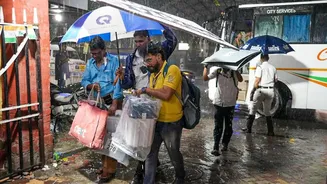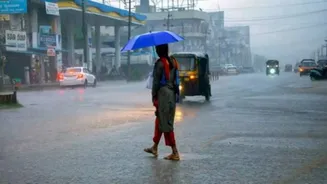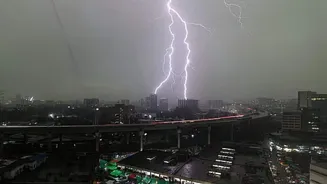









At least 14 people have been killed and dozens injured across Bangladesh after severe pre-monsoon thunderstorms, locally known as Kalbaishakhi or Nor’westers, swept through several districts late Sunday and early Monday.
While the storms brought relief from an intense heatwave, they also caused immense destruction through lightning strikes and falling trees.
Deaths reported across seven districts
The fatalities were reported from at least seven districts, with most victims caught outdoors while working in fields or travelling through rural areas.
In Gaibandha, five people were killed, including farmers and children moving cattle feed. Jamalpur reported three deaths after a tree collapsed onto a home in Melandaha upazila, killing a mother and her two daughters.
Elsewhere, Thakurgaon saw two labourers die while returning from fieldwork, while Sirajganj recorded two fatalities due to lightning strikes during agricultural activity. A 22-year-old tea garden worker was killed in Panchagarh, and isolated lightning deaths were also reported from Natore and Bogura.
Lightning remains the deadliest factor
Although Kalbaishakhi storms are a seasonal feature, lightning continues to be the leading cause of death during these events. Officials say the combination of open-field work and sudden weather changes leaves rural populations particularly exposed.
Despite improved early warning systems, the gap lies in response on the ground. The Bangladesh Meteorological Department (BMD) now provides alerts up to six hours in advance, but many people still remain outdoors during warnings.
Several long-term environmental factors are worsening the impact of lightning strikes. Deforestation has reduced natural lightning conductors such as tall trees, leaving people more exposed in open fields.
At the same time, rising temperatures and humidity during the pre-monsoon months are creating more unstable atmospheric conditions, increasing both the frequency and intensity of thunderstorms.
Relief in Dhaka, warnings ahead
In the capital Dhaka, the storms caused temporary flooding and power disruptions, though no deaths were reported. Two university students were briefly hospitalised after a nearby lightning strike but are now in stable condition.
The BMD has forecast continued scattered rainfall and thunderstorms over the coming days, which is expected to ease the ongoing heatwave. Meanwhile, disaster authorities have reiterated safety guidelines, urging people to follow the “30-30 rule. which means ”seek shelter if lightning is seen and thunder is heard within 30 seconds, and remain indoors for at least 30 minutes after the last thunderclap.