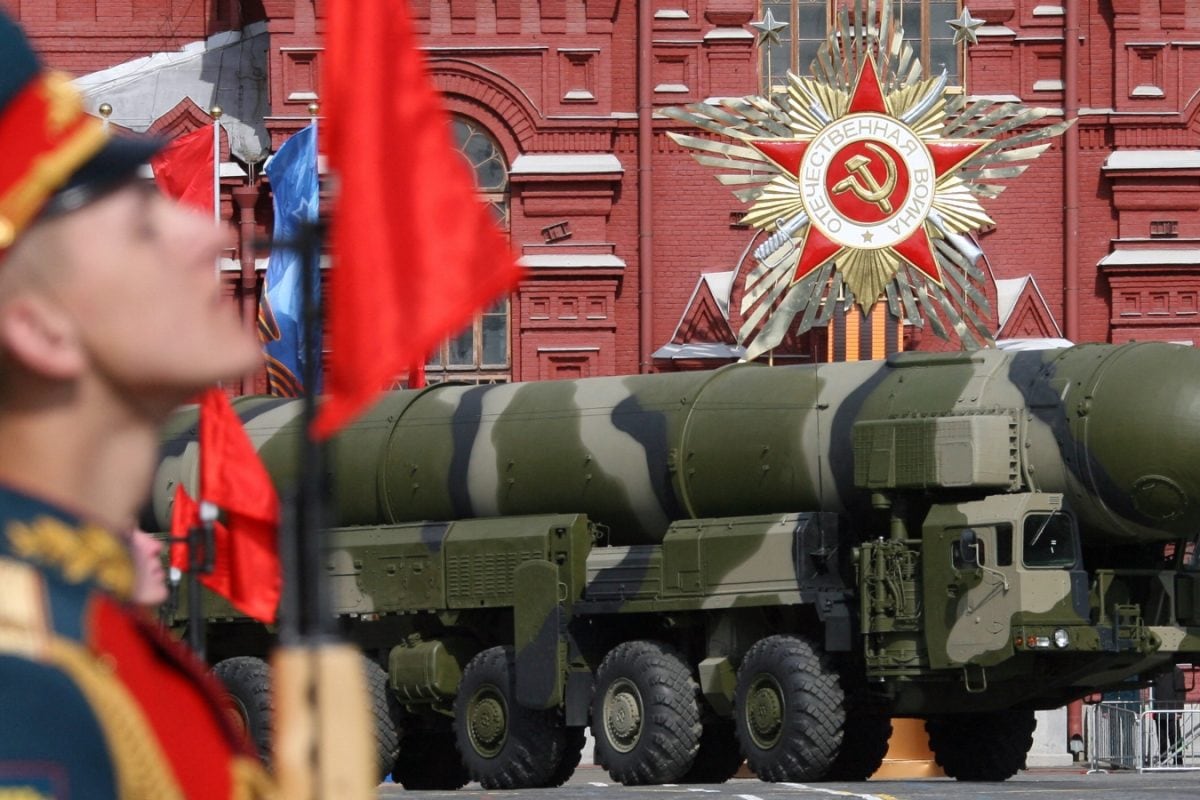
Delcy Rodríguez was sworn in as Venezuela’s interim president to provide stability to a country long governed by a civil‑military arrangement rooted in the leftist, populist ‘Chavismo’ ideology associated with former President Hugo Chávez, though how events unfold remains uncertain. Chavismo ideology implies confrontation with Washington, resistance to US influence and alliances with Washington’s adversaries, Russia, Cuba, Iran and China. The US has now demanded that advisors from these countries be returned.
Chavez died from cancer in March 2013, nominating Maduro as his successor. It was Chavismo ideology which pushed the US to consider Venezuela as a security threat, a narco-state and a failed democracy. Chavez nationalised the oil industry in 2007, seizing assets of US companies.
Delcy Rodriguez and her brother, Jorge Rodríguez, President of the National Assembly, both close aides of Maduro, represent the civil portion of the regime, while the defence minister, Vladimir Padrino López, and the interior minister, Diosdado Cabello, represent military interests. Both are members of the armed forces, with Cabello overseeing justice and peace, including police, counterintelligence forces and the ‘colectivos’, which are armed groups, linked to the state, that have struck fear amongst Venezuelans.
In addition, there are numerous other armed groups and organisations in Venezuela who have their own interests and could react violently depending on how the situation emerges in the coming days. Maduro survived by ensuring that the military controls key institutions and also has a role in exploiting resources, including oil, gold, drugs and mining.
Other groups, including the ‘colectivos’, all of whom are outside the military, have some hold over natural resources and illicit trade. Many of these groups are armed and also control significant territory, areas where the police and military are banned from entering. They have already begun displaying their power on the streets. There are also guerrilla political groups who prefer capturing local state infrastructure and establishing parallel authority to control illicit markets rather than fighting for political power.
Delcy has to balance ties with the US as well as diverse power structures within the country to safeguard its unity and integrity. She is displaying a conciliatory tone towards the US by inviting it ‘to work together on an agenda of cooperation.’ She has currently been accepted by heads of the military and its associate groups. It should be noted that Chavismo runs deep in Venezuela, especially within the top leadership, and hence Delcy has to traverse carefully.
Hatred for the US is visible within the country. There are reports that the Colectivos are hunting US citizens within Venezuela as retaliation for the arrest of their president. The US has warned its citizens to immediately leave the country.
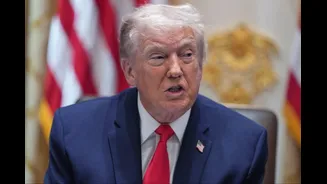
Trump, on the other hand, has been applying pressure, announcing threats and placing demands which could work against Delcy’s attempts at stabilisation. His words include, ‘We will run Venezuela,’ ‘control the purse strings of Venezuela,’ and that they will be ‘turning over 30 and 50 million barrels of high-quality, sanctioned oil to the US,’ which ‘will be sold at its market price, and that money will be controlled by me [Trump].’ He has also stated that Delcy would ‘pay a very big price’ if she doesn’t ‘do what’s right’ and cooperate with the US.
The Venezuelan armed forces are about 125,000 strong, though weakened by a poor economy. The country also has a total of 140 different police forces. There is mistrust between some strong police groups and the army, while there is cooperation with some. They avoid interfering in each other’s areas of control. All institutions benefited from corruption within the regime.
Delcy has to manage these forces within the state to ensure that the country does not descend into chaos. She needs cooperation of all groups, none of which would desire a drop in their current power status, exactly the opposite of what the US insists. Trump’s intent to control the oil sector as well as other resources would involve a direct clash with these illegal state institutions.
The US has no boots on the ground and possibly has no plans for it. However, in case Trump continues with his inflexible demands, including claiming that he is the de facto ruler of the country, the internal scenario could take a different route, adding to insecurity, compelling the US to deploy troops.
In such a case, there could be clashes between those whose powers have been trampled and US forces, commencing a conflict as in other parts of the world where the US attempted regime change.
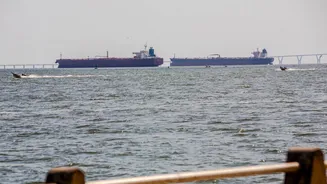
With the US continuing its blockade as also threatening to take over oil sales ‘indefinitely’ the economy is heading for a freefall. This could result in local unrest further destabilising the country and its economy. If the current government is to stabilise the country, it needs the US to lift sanctions and the blockade and let the nation recommence its oil exports.
Delcy was always open to a free economy and would prefer doing so but needs support to be able to achieve it. Common Venezuelans have thus far felt no change from Maduro’s regime, as, except for him, all others are the same. While some political prisoners are being released, the colectivos roam the streets threatening residents, while the police continue with their roadblocks. Nothing major appears to have changed for the moment.
It is only a stable Venezuela which would be able to meet Trump’s intent of re-permitting US companies to enter the oil market and ensuring they no longer feel threatened. Instability, compelling the US to push boots on the ground, would be the reverse. For this, Delcy needs to be supported, and the current civil-military arrangement needs to continue and be dismantled steadily with time. Elections should not be rushed.
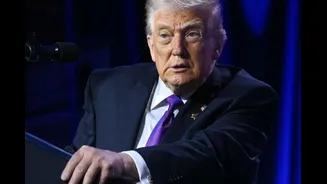
But Trump, who believes he can do what he desires and also say what he wishes, including threatening the country, is adding to the confusion. What is required at this stage is maturity, and that is exactly what Trump lacks. If Venezuela descends into chaos, Trump will be the single individual responsible.
(The author is a former Indian Army officer, strategic analyst and columnist. Views expressed in the above piece are personal and solely those of the author. They do not necessarily reflect Firstpost’s views.)