







What is the story about?
India and Bangladesh on Thursday commenced talks on renewing the Ganges Water Sharing Treaty, which is set to expire in December this year, 30 years after it was signed. In light of this, officials told
The Times of India
that both nations started measuring water levels in the Ganga and Padma rivers.
The officials noted that the measurements will be taken every 10 days till May 31. CWC deputy director Saurabh Kumar and CWC assistant director Sunny Arora are in Bangladesh, while a four-member Bangladeshi team is in India, the officials told TOI.
Meanwhile, senior Bangladesh water resource ministry official Shibber Hossain said "special attention" was being given to the Indian team's security since anti-India sentiments have been brewing in a turbulent Bangladesh. According to
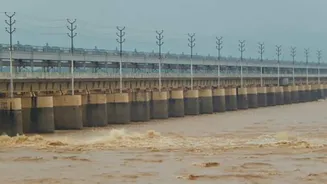
The Dhaka Tribune, water measurement began at a point 3,500 feet upstream of the Hardinge Bridge on the Padma River in Bangladesh and also at the Farakka point on the Ganga River in India.
The treaty was signed by India and Bangladesh in 1996, opening a new gateway for fruitful bilateral cooperation between the two nations. It is pertinent to note that both countries share 54 transboundary rivers that drain through Bangladesh, of which the Ganges is highly seasonal.
In 1975, India constructed a Barrage across the Ganges at Farakka for diverting the flow of water to the Hooghly River and to ensure the flushing of the Calcutta Por, thus affecting Bangladesh’s share of the Ganges waters.
While the need for the cooperative development of the water resources of the Ganges was expressed by India in 1953, all bilateral meetings on the matter till 1970 remained inconclusive. Following the liberation of Bangladesh from Pakistan in 1971, the prospects of cooperative development greatly improved.
A decision was then taken to establish the Indo-Bangladesh Joint River Commission (JRC) to undertake joint action on water sharing of the two rivers.
The officials noted that the measurements will be taken every 10 days till May 31. CWC deputy director Saurabh Kumar and CWC assistant director Sunny Arora are in Bangladesh, while a four-member Bangladeshi team is in India, the officials told TOI.
Meanwhile, senior Bangladesh water resource ministry official Shibber Hossain said "special attention" was being given to the Indian team's security since anti-India sentiments have been brewing in a turbulent Bangladesh. According to
About the treaty
The treaty was signed by India and Bangladesh in 1996, opening a new gateway for fruitful bilateral cooperation between the two nations. It is pertinent to note that both countries share 54 transboundary rivers that drain through Bangladesh, of which the Ganges is highly seasonal.
In 1975, India constructed a Barrage across the Ganges at Farakka for diverting the flow of water to the Hooghly River and to ensure the flushing of the Calcutta Por, thus affecting Bangladesh’s share of the Ganges waters.
While the need for the cooperative development of the water resources of the Ganges was expressed by India in 1953, all bilateral meetings on the matter till 1970 remained inconclusive. Following the liberation of Bangladesh from Pakistan in 1971, the prospects of cooperative development greatly improved.
A decision was then taken to establish the Indo-Bangladesh Joint River Commission (JRC) to undertake joint action on water sharing of the two rivers.