
India’s merchandise trade deficit widened slightly to $25.04 billion in December, driven by higher imports, while exports to the world's largest consumer market remained firm despite tariff hikes.
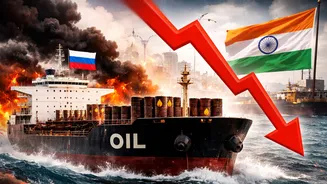
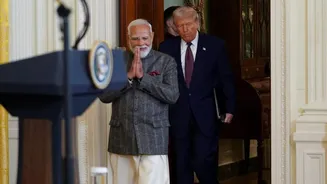
US President Donald Trump’s move to double tariffs to 50 per cent on certain Indian goods from late August weighed on shipments of textiles, chemicals and some food items, though overall exports have since stabilised.
"US exports have grown on-year in the first nine months of the (fiscal) year," Commerce Secretary Rajesh Agrawal told reporters, adding that total exports could exceed $850 billion in the current fiscal year ending in March.
India, keen to position itself as a global export hub, has stepped up efforts to diversify its markets and product mix to cushion the impact of US tariffs.
Rejigging China ties, widening the map
The data also highlights a shift in India’s trade geography. China emerged as one of the fastest-growing export destinations. India's trade with China stood at $110.20 billion between April and December of 2025, compared to $105.31 billion with the US.
Alongside China, exports to the UAE, Hong Kong, Spain and other emerging markets posted strong growth, underscoring India’s broader push to diversify partners.
Africa, in particular, is increasingly being positioned as a key growth market for Indian pharmaceuticals, engineering goods and consumer products, helping reduce reliance on any single market such as the US.
The numbers point to a quiet but important recalibration of India’s trade strategy. Instead of reacting defensively to tariffs, New Delhi appears to be spreading risk with Asia, the Middle East and Africa.