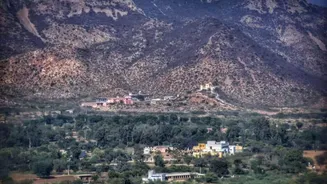








In a surprising turn of events that has gripped environmentalists, lawyers and policymakers alike, the Supreme Court has effectively reversed a long-standing position on how India’s ancient Aravalli hills should be defined, and that shift is bringing old debates back into the spotlight.
On November 20, the Supreme Court accepted the Ministry of Environment, Forest and Climate Change’s recommendation to adopt a 100-metre elevation benchmark as the uniform definition of “Aravalli hills and ranges”. The ministry argued this benchmark would help regulate mining activities across multiple states. But for many critics, this move feels like a departure from the court’s own earlier stance.
Looking back: What SC said in 2010
Back in 2010, the story was very different.
At that time, the apex court was hearing cases on rampant mining in the Aravallis, particularly in Rajasthan. The state of Rajasthan had floated a definition that treated “only peaks/parts of hills that are 100 metres above the ground level” as Aravalli. The Supreme Court was not convinced.
In its February 19, 2010 order, the court asked the Forest Survey of India (FSI)—in cooperation with the Central Empowered Committee (CEC)—to conduct a comprehensive assessment of the entire Aravalli range without limiting it to only the areas above 100 metres.
The FSI’s work led to a three-degree slope methodology that mapped hills based on terrain characteristics and elevation, rather than a simple height cutoff. This approach acknowledged that the Aravalli range includes many lower hills and rugged landforms that are ecologically significant.
The 2025 pivot
Fast-forward to this year, and the Supreme Court has now endorsed the same 100-metre rule it once rejected, something critics argue undermines years of judicial oversight and environmental science.
The environment ministry told the court that Rajasthan and other states agreed to the new definition, and the bench accepted the recommendation despite recorded dissent.
The shift has led to resufacing of fears about the future of large parts of the Aravalli hills, long viewed as vital for groundwater recharge, biodiversity, climate regulation and as a natural barrier to desert winds. While the government maintains the new criteria are meant to clarify protections and assist regulatory enforcement, opponents say it could leave lower hills vulnerable to mining and development.
Environmental lawyers and activists are now revisiting archival judgments and scientific reports, questioning whether this evolution in legal reasoning serves ecology, economics, or both.