
The system, which is designed to select applicants at random, will now prioritise those who are higher skilled and are paid more. The change was announced by the US Department of Homeland Security (DHS) and will apply from the 2027 financial year H-1B season.
Washington earlier this year announced a $100,000 (Rs. 89.76 lakh) fee on H-1B visas, which sent companies such as Microsoft and Google into a tizzy and left thousands of Indian workers scrambling to return to America.
The US government has also recently decided to conduct checks of the social media and online presence of all H-1B and H-4 applicants. This has led to several H-1B visa interviews being postponed. It comes in the backdrop of the Donald Trump administration continuing to crack down on both legal and illegal immigration to America.
But what do we know? Will it hurt Indians?
Let’s take a closer look.
What we know
First, let’s take a brief look at H-1B visas.
The United States issues 65,000 H-1B visas every year, with an extra 20,000 being earmarked for applicants holding advanced degrees from US institutions. However, the demand for H-1B visas usually exceeds the annual cap. This is when the US Citizenship and Immigration Services (USCIS) holds a lottery. Indians comprise nearly 70 to 75 per cent of all H-1B visas issued every year.
Until now, those applying under the H-1B visa lottery programme had to rely on the luck of the draw. However, the system will now change from random chance to a weighted method where applicants will be assessed on how much they earn and what skills they have.
The rule will come into effect on February 27, 2026.
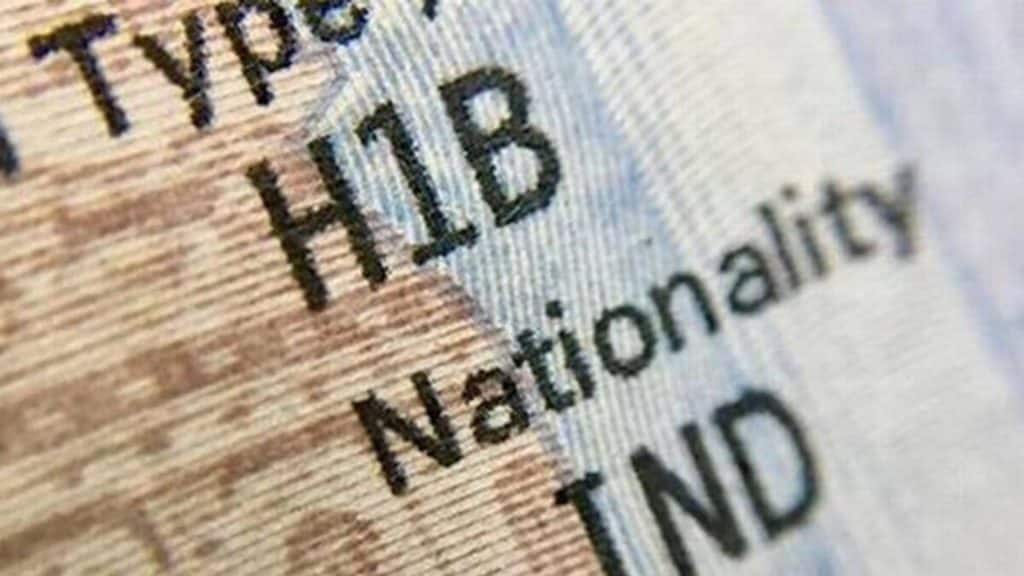
The United States issues 65,000 H-1B visas every year, with an extra 20,000 being earmarked for applicants holding advanced degrees from US institutions Reuters
Registrations for wage level IV will be entered into the lottery four times, level III three times, level II twice, and level I once. Each beneficiary will still count only once towards the annual quota, but higher wage offers will materially increase the probability of selection.
Data show that 90 per cent of H-1B applications for international students are at level I or level II wages. Level IV is considered the highest, where applicants “generally have management and/or supervisory responsibilities.”
“This weighted selection process will generally favour the allocation of H-1B visas to higher-skilled and higher-paid aliens, while maintaining the opportunity for employers to secure H-1B workers at all wage levels,” the DHS said in the final rule.
“The new rule replaces the random lottery for selecting visa recipients with a process that gives greater weight to those with higher skills,” the DHS said. “Pure randomisation does not serve the ends of the H-1B programme,” it added.
This will benefit those who have specialised skills and are applying for prominent positions with bigger pay packets. The DHS has said the change was aimed at addressing concerns that the system was being misused by US employers to hire foreign workers on the cheap, which disproportionately impacted US workers.
“The existing random selection process of H-1B registrations was exploited and abused by US employers who were primarily seeking to import foreign workers at lower wages than they would pay American workers,” Matthew Tragesser, a spokesman for US Citizenship and Immigration Services, said. The DHS has insisted the changes in the lottery will not do away with H-1B visas for lower-wage positions.
It said the move is “in line with other key changes the administration has made, such as the Presidential Proclamation that requires employers to pay an additional $100,000 (Rs. 89.76 lakh) per visa as a condition of eligibility.”
Will it hurt Indians?
The change will likely disproportionately hurt both Indian professionals who have recently graduated and employers, particularly those in smaller companies. Even big firms such as Tata Consultancy Services (TCS), Infosys and Wipro in the US could be forced to re-examine their hiring strategies.
Many companies, particularly in the tech and information technology sector, hire thousands of Indians every year. However, many of these jobs are at lower or entry levels. Amazon, Tata Consultancy Services, Microsoft, Apple and Google are some of the biggest users of the H-1B visa. Amazon, owned by Jeff Bezos, received 10,000 H-1B visas this year, the most for any company. California is home to the largest number of H-1B workers in the US.
The new system will now favour people in more senior positions who have bigger pay packets, such as senior engineers and those in specialised roles.
But experts do not think this change is for the better.
“Unfortunately, it will still be a lottery, and weighted by seniority instead of higher-skilled occupations,” Jeremy Neufeld, Immigration Policy Director at the Institute of Progress, was quoted as saying by The Times of India.
“An acupuncturist making $68,000 (Rs. 61.04 lakh) in Ohio (Level IV) will get four times the chances of winning as a paediatric surgeon making $260,000 (Rs. 233.38 lakh) helping children in the Pennsylvania Rust Belt (Level I). An IT worker doing tech support in Phoenix, Arizona, making $95,000 (Rs. 85.27 lakh) (Level II) will get twice as many chances as an early-career computer hardware engineer at the new TSMC semiconductor fab making $130,000 (Rs. 116.69 lakh) (Level I). An HR specialist making $85,000 (Rs. 76.30 lakh) in Huntsville, Alabama (Level III) will get 1.5 times the chance as an aerospace engineer down the street making $140,000 (Rs. 125.66 lakh) (Level II).”
Even big firms such as Tata Consultancy Services (TCS), Infosys and Wipro in the US could be forced to re-examine their hiring strategies. Reuters
That is not the only change. Employers will now have to submit wage levels, job classification codes and work locations while applying for H-1B visas. They will also have to submit documents to back up their claims at the petition stage.
USCIS has also been granted greater authority to deny or revoke petitions if it finds firms are trying to manipulate wages, roles or locations to improve lottery odds. DHS has said this is aimed at stopping companies from trying to work around the system and improving the integrity of the scheme.
“The new weighted selection will better serve Congress’ intent for the H-1B programme and strengthen America’s competitiveness by incentivising American employers to petition for higher-paid, higher-skilled foreign workers,” Tragesser added.
With inputs from agencies