







What is the story about?
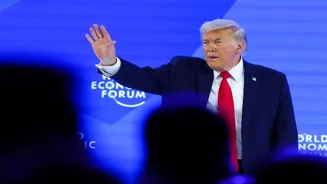
President Donald Trump on Wednesday said that the United States would not “become a nation of renters,” using a high-profile speech at the World Economic Forum to underline housing affordability as a defining economic and political issue ahead of the November midterm elections.
Addressing an audience of global business leaders and policymakers in Davos, Trump framed home ownership as a core pillar of American society, saying that it had slipped out of reach for millions due to a combination of high interest rates and rising home prices.
“Home ownership has always been a symbol of health and vigour of American society,” Trump said. “But that goal fell out of reach for millions and millions of people in the Biden era because interest rates went up so high.”
Housing affordability has emerged as a key voter concern in the US, particularly among younger households and first-time buyers squeezed by elevated mortgage rates and limited supply.
Trump pointed to an executive order he signed earlier this week aimed at limiting institutional purchases of single-family homes. While Trump described the move as a ban, the order does not immediately impose new restrictions. Instead, it initiates a multi-step process that could eventually lead to tighter rules on companies that own large housing portfolios.
Trump said that his housing agenda would unsettle Wall Street banks and large investment firms, even as he said he would urge Congress to make restrictions on institutional investors permanent and push for legislation capping credit card interest rates at 10 per cent for a year.
“Many of you are here. Many of you are good friends of mine. Many of you are supporters. Sorry to do this,” Trump said. “I’m so sorry, but you’ve driven up housing prices by purchasing hundreds of single family homes.”
“Homes are built for people, not for corporations,” he added. “And America will not become a nation of renters. We’re not going to do that.”
At the same time, Trump struck a careful note, saying he did not want policies that would erase the wealth gains of existing homeowners, many of whom have benefited from years of rising property values.
Beyond housing, Trump also talked about a plan to ask Congress to cap credit card interest rates at 10 per cent for a year, a move he argued would help households save for down payments.
“Surging credit card debt is one of the biggest barriers to saving for a down payment,” Trump said, arguing that many Americans do not realise they are paying interest rates as high as 28 per cent until they fall behind on payments.
The proposal has faced sharp criticism from Wall Street. JPMorgan Chase chief executive Jamie Dimon warned on the sidelines of Davos that such a cap could spell “economic disaster” by restricting access to credit for a large share of Americans.
Trump brushed off the criticism, acknowledging the discomfort it would cause banks and institutional investors while insisting the policy would benefit ordinary households.
Trump also reiterated plans to push Congress to make restrictions on institutional homebuyers permanent and floated other measures, including allowing savers to tap a portion of their 401(k) retirement accounts for home down payments. Critics have warned that such steps could undermine retirement security, but Trump framed them as necessary to break what he described as a cycle of debt and exclusion from home ownership.
While much of Trump’s Davos appearance also touched on his broader foreign policy interests, including renewed remarks about Greenland, the housing message was aimed at voters back home rather than the global elite in the room.
Addressing an audience of global business leaders and policymakers in Davos, Trump framed home ownership as a core pillar of American society, saying that it had slipped out of reach for millions due to a combination of high interest rates and rising home prices.
“Home ownership has always been a symbol of health and vigour of American society,” Trump said. “But that goal fell out of reach for millions and millions of people in the Biden era because interest rates went up so high.”
A growing voter concern ahead of midterms
Housing affordability has emerged as a key voter concern in the US, particularly among younger households and first-time buyers squeezed by elevated mortgage rates and limited supply.
Trump pointed to an executive order he signed earlier this week aimed at limiting institutional purchases of single-family homes. While Trump described the move as a ban, the order does not immediately impose new restrictions. Instead, it initiates a multi-step process that could eventually lead to tighter rules on companies that own large housing portfolios.
Trump said that his housing agenda would unsettle Wall Street banks and large investment firms, even as he said he would urge Congress to make restrictions on institutional investors permanent and push for legislation capping credit card interest rates at 10 per cent for a year.
“Many of you are here. Many of you are good friends of mine. Many of you are supporters. Sorry to do this,” Trump said. “I’m so sorry, but you’ve driven up housing prices by purchasing hundreds of single family homes.”
“Homes are built for people, not for corporations,” he added. “And America will not become a nation of renters. We’re not going to do that.”
Balancing affordability with homeowner wealth
At the same time, Trump struck a careful note, saying he did not want policies that would erase the wealth gains of existing homeowners, many of whom have benefited from years of rising property values.
Beyond housing, Trump also talked about a plan to ask Congress to cap credit card interest rates at 10 per cent for a year, a move he argued would help households save for down payments.
“Surging credit card debt is one of the biggest barriers to saving for a down payment,” Trump said, arguing that many Americans do not realise they are paying interest rates as high as 28 per cent until they fall behind on payments.
The proposal has faced sharp criticism from Wall Street. JPMorgan Chase chief executive Jamie Dimon warned on the sidelines of Davos that such a cap could spell “economic disaster” by restricting access to credit for a large share of Americans.
Trump brushed off the criticism, acknowledging the discomfort it would cause banks and institutional investors while insisting the policy would benefit ordinary households.
Trump also reiterated plans to push Congress to make restrictions on institutional homebuyers permanent and floated other measures, including allowing savers to tap a portion of their 401(k) retirement accounts for home down payments. Critics have warned that such steps could undermine retirement security, but Trump framed them as necessary to break what he described as a cycle of debt and exclusion from home ownership.
While much of Trump’s Davos appearance also touched on his broader foreign policy interests, including renewed remarks about Greenland, the housing message was aimed at voters back home rather than the global elite in the room.