






What is the story about?
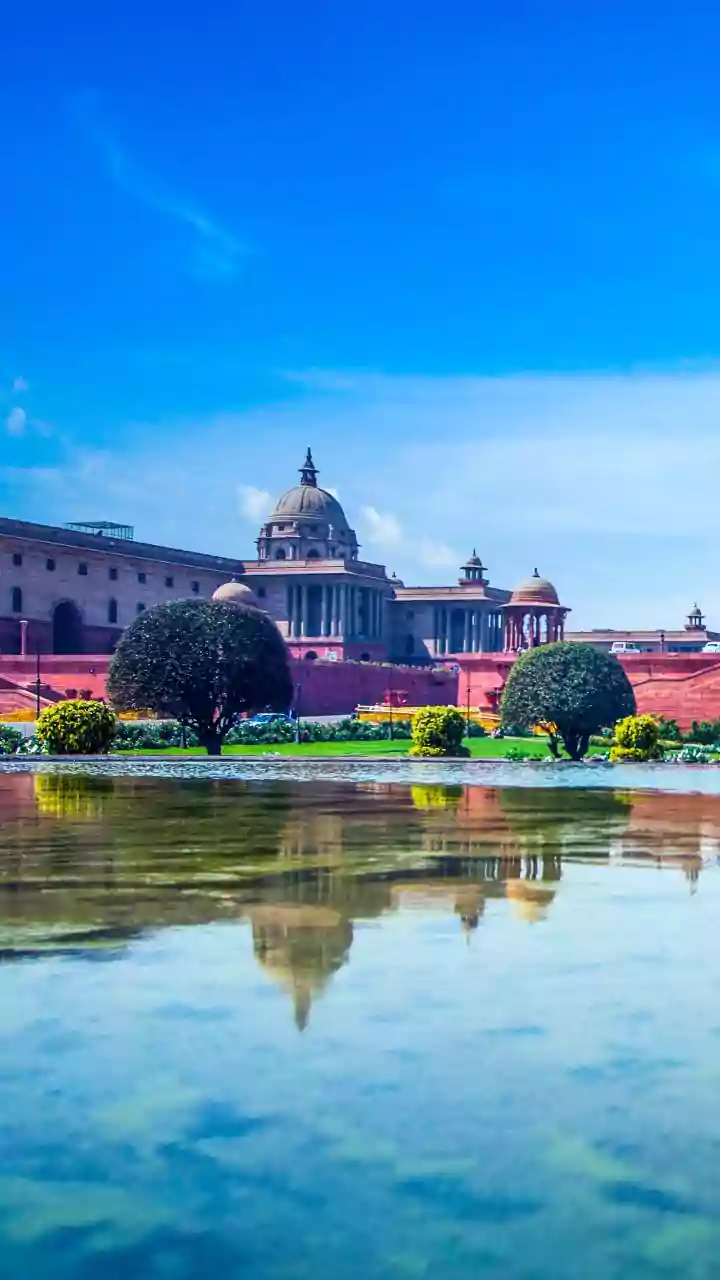
United States Secretary of State Marco Rubio is set to arrive in India on Saturday (May 23, 2026) for a four-day visit that will take him across Kolkata, Agra, Jaipur and New Delhi, with discussions expected to focus on energy security, trade and defence.
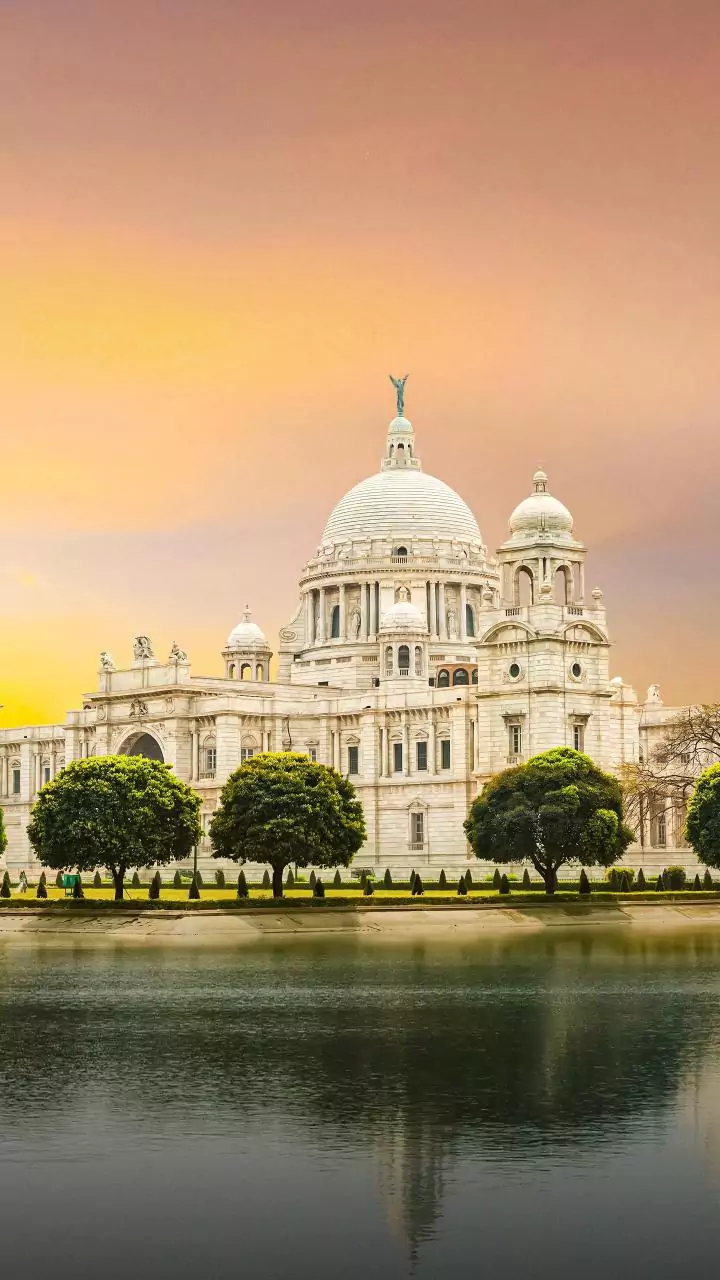
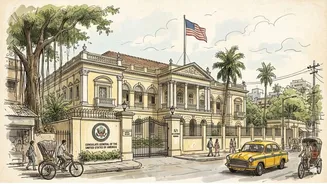
The eastern Indian metropolis of Kolkata houses one of the oldest functioning American diplomatic missions anywhere in the world.
Long before India and the United States emerged as strategic partners in the Indo-Pacific, long before the modern Indian republic even existed, the US established its first diplomatic foothold in the subcontinent in colonial Calcutta in the 18th century.
Rubio’s stop in Kolkata also comes as the US prepares for the 250th anniversary of its independence.
The US Consulate General in Kolkata is the oldest American mission in India and the US State Department’s second-oldest continuously operating consular post globally.
The story of the Kolkata consulate began barely a decade after the United States emerged as an independent nation.
In November 1792, then-US President George Washington nominated Benjamin Joy of Newburyport, Massachusetts, as the first American Consul to Calcutta.
The appointment carried the backing of America’s first Secretary of State, Thomas Jefferson, who would later become the country’s third president. The US Senate approved the nomination on November 21, 1792.
However, establishing an American diplomatic presence in British-controlled India proved difficult from the very beginning.
Travel between North America and South Asia in the late 18th century was an arduous undertaking. Joy’s journey to Calcutta took several months across dangerous maritime trade routes before he finally arrived in April 1794.
Even after reaching India, Joy encountered resistance from the British East India Company, which dominated trade and administration in Bengal at the time. The company refused to formally acknowledge his position as an American consul, wary of any foreign commercial challenge to British interests in the region.
Historical records from the consulate note that Joy “was never recognised as Consul by the British East India Company but was permitted to ‘reside here as a Commercial Agent subject to the Civil and Criminal Jurisdiction of this Country…’.”
Despite those restrictions, the arrival of Benjamin Joy marked the beginning of formal American engagement with India. Although ill health eventually forced him to leave the region, the mission he established evolved into one of Washington’s most enduring diplomatic presences overseas.
Today, the US Consulate General in Kolkata describes its mission as one that seeks “to serve US interests and strengthen mutual understanding by working in partnership with all communities in Kolkata’s consular district.”
The mission also states, “We broaden and deepen shared values and common interests to promote good governance, stability, economic growth and human well-being.”
The consulate has listed its core institutional values as, “Excellence, equality, integrity, mutual respect.”
In the decades following Joy’s arrival, the American mission in Calcutta mainly handled maritime and commercial matters linked to shipping, textiles, spices and indigo.
But by the early 19th century, the consulate became associated with one of the most remarkable trading enterprises of the colonial era — the shipment of natural ice from the United States to tropical India.
Before refrigeration technology transformed food storage and transport, ice was considered a luxury commodity in warm regions such as Bengal.
American businessman Frederic Tudor, later known as Boston’s “Ice King,” developed a commercial system that transported frozen blocks harvested from freshwater lakes in New England across oceans to South Asia.
On May 12, 1833, the ship Tuscany departed Boston carrying around 180 tonnes of ice cut from frozen ponds, including Walden Pond. The cargo was insulated using sawdust to slow melting during the voyage.
After travelling for nearly four months across the Atlantic and Indian Oceans, the vessel reached Calcutta on September 6, 1833. Remarkably, more than 100 tonnes of ice survived the journey.
The arrival of the shipment reportedly caused amazement across the city. Contemporary accounts cited in historical records describe locals gathering near the docks to witness the strange frozen cargo.
One individual reportedly believed the ice had burned him upon contact, while another asked whether ice “grew on trees” in America.
The success of the enterprise quickly transformed the trade into a profitable commercial activity.
Colonial Britain's Lord William Bentinck, the Governor-General of India at the time, granted special concessions to American ice ships. These included permission for nighttime unloading, faster customs processing and priority docking arrangements.
The trade also received support from influential Indian businessman Dwarkanath Tagore, grandfather of Nobel laureate Rabindranath Tagore. Tagore reportedly assisted in financing and organising local distribution systems for the imported ice.
For nearly four decades, the ice trade flourished in Calcutta. Along with ice, American merchants also introduced imported apples, butter and ice cream to elite colonial society in Bengal.
The business eventually declined in the late 19th century after artificial refrigeration and locally produced ice became commercially viable.
As British colonial influence expanded across Asia during the 19th century, the strategic role of the Calcutta mission also widened considerably.
By the 1860s, the American diplomatic outpost had been elevated to a Consulate General with authority extending beyond eastern India.
The mission oversaw several consular agencies across South and Southeast Asia, including Aden in present-day Yemen, Rangoon and Moulmein in Burma, and Chittagong and Akyab in regions that now fall within Bangladesh and Myanmar.
The mission’s location in Calcutta — then one of the most important commercial and administrative centres of the British Empire in Asia — gave it major regional relevance for trade, shipping and diplomacy.
The 20th century, however, brought new political complexities.
During the Vietnam War era, the US mission found itself at the centre of ideological tensions in West Bengal, which was governed by Left-wing political forces strongly opposed to American military involvement in Southeast Asia.
In a symbolic move reflecting those sentiments, authorities renamed Harrington Street — where the consulate stood — as Ho Chi Minh Sarani, after Vietnamese revolutionary leader Ho Chi Minh.
The diplomatic mission later faced a major security crisis in January 2002, when terrorists carried out a motorcycle-borne attack outside the American Center on Jawaharlal Nehru Road.
The assault killed five security personnel and prompted significant upgrades to security arrangements around the consulate and related facilities.
Despite the attack, the American Center continued functioning as a key outreach institution for the United States in eastern India. The centre hosts cultural programmes, educational exchanges and public diplomacy initiatives while also maintaining a library accessible to the public.
Operating from its secure compound on Ho Chi Minh Sarani currently under Consul General Kathy Giles-Diaz, the mission oversees US interests across 11 Indian states: West Bengal, Bihar, Jharkhand, Sikkim, Arunachal Pradesh, Assam, Manipur, Meghalaya, Mizoram, Nagaland and Tripura.
The region under the consulate’s jurisdiction represents a substantial portion of India’s population and includes some of the country’s most geopolitically sensitive areas.
Several northeastern states border China, Myanmar, Bangladesh and Bhutan, placing the mission close to critical trade routes and strategic corridors.
The consulate today handles a broad portfolio of responsibilities, including diplomatic engagement, emergency services for American citizens, passport-related work and assistance with reports of birth abroad.
Rubio’s visit comes as India, the United States, Japan and Australia cooperate through the Quad framework. Foreign ministers from the four countries are scheduled to meet in New Delhi on May 26.
Japanese Foreign Minister Toshimitsu Motegi is expected to travel to India for the meeting, which reports suggest will focus heavily on critical mineral supply chains and efforts to reduce strategic dependence on China.
The Quad discussions are taking place amid growing concerns over economic security, access to rare earth resources and the resilience of global supply chains.
Rubio’s broader India visit also follows continued trade discussions between Washington and New Delhi after bilateral ties experienced friction over tariffs imposed by the United States last year.
Many of those tariffs were later rolled back as both sides resumed negotiations aimed at preventing further trade disputes.
Relations between US President Donald Trump and Prime Minister Narendra Modi had been warm during Trump’s first term, although economic disagreements later created tensions between the two governments.
During an April conversation, Trump and Modi discussed the importance of maintaining security in the Strait of Hormuz, a critical maritime passage through which nearly 40 per cent of India’s crude oil imports move, that has currently been affected by
the conflict in West Asia.
With inputs from agencies
The eastern Indian metropolis of Kolkata houses one of the oldest functioning American diplomatic missions anywhere in the world.
Long before India and the United States emerged as strategic partners in the Indo-Pacific, long before the modern Indian republic even existed, the US established its first diplomatic foothold in the subcontinent in colonial Calcutta in the 18th century.
Rubio’s stop in Kolkata also comes as the US prepares for the 250th anniversary of its independence.
The US Consulate General in Kolkata is the oldest American mission in India and the US State Department’s second-oldest continuously operating consular post globally.
How American diplomacy with India began in Kolkata
The story of the Kolkata consulate began barely a decade after the United States emerged as an independent nation.
In November 1792, then-US President George Washington nominated Benjamin Joy of Newburyport, Massachusetts, as the first American Consul to Calcutta.
The appointment carried the backing of America’s first Secretary of State, Thomas Jefferson, who would later become the country’s third president. The US Senate approved the nomination on November 21, 1792.
However, establishing an American diplomatic presence in British-controlled India proved difficult from the very beginning.
Travel between North America and South Asia in the late 18th century was an arduous undertaking. Joy’s journey to Calcutta took several months across dangerous maritime trade routes before he finally arrived in April 1794.
Even after reaching India, Joy encountered resistance from the British East India Company, which dominated trade and administration in Bengal at the time. The company refused to formally acknowledge his position as an American consul, wary of any foreign commercial challenge to British interests in the region.
Historical records from the consulate note that Joy “was never recognised as Consul by the British East India Company but was permitted to ‘reside here as a Commercial Agent subject to the Civil and Criminal Jurisdiction of this Country…’.”
Despite those restrictions, the arrival of Benjamin Joy marked the beginning of formal American engagement with India. Although ill health eventually forced him to leave the region, the mission he established evolved into one of Washington’s most enduring diplomatic presences overseas.
Today, the US Consulate General in Kolkata describes its mission as one that seeks “to serve US interests and strengthen mutual understanding by working in partnership with all communities in Kolkata’s consular district.”
The mission also states, “We broaden and deepen shared values and common interests to promote good governance, stability, economic growth and human well-being.”
The consulate has listed its core institutional values as, “Excellence, equality, integrity, mutual respect.”
The extraordinary American ice trade in Kolkata
In the decades following Joy’s arrival, the American mission in Calcutta mainly handled maritime and commercial matters linked to shipping, textiles, spices and indigo.
But by the early 19th century, the consulate became associated with one of the most remarkable trading enterprises of the colonial era — the shipment of natural ice from the United States to tropical India.
Before refrigeration technology transformed food storage and transport, ice was considered a luxury commodity in warm regions such as Bengal.
American businessman Frederic Tudor, later known as Boston’s “Ice King,” developed a commercial system that transported frozen blocks harvested from freshwater lakes in New England across oceans to South Asia.
On May 12, 1833, the ship Tuscany departed Boston carrying around 180 tonnes of ice cut from frozen ponds, including Walden Pond. The cargo was insulated using sawdust to slow melting during the voyage.
After travelling for nearly four months across the Atlantic and Indian Oceans, the vessel reached Calcutta on September 6, 1833. Remarkably, more than 100 tonnes of ice survived the journey.
The arrival of the shipment reportedly caused amazement across the city. Contemporary accounts cited in historical records describe locals gathering near the docks to witness the strange frozen cargo.
One individual reportedly believed the ice had burned him upon contact, while another asked whether ice “grew on trees” in America.
The success of the enterprise quickly transformed the trade into a profitable commercial activity.
Colonial Britain's Lord William Bentinck, the Governor-General of India at the time, granted special concessions to American ice ships. These included permission for nighttime unloading, faster customs processing and priority docking arrangements.
The trade also received support from influential Indian businessman Dwarkanath Tagore, grandfather of Nobel laureate Rabindranath Tagore. Tagore reportedly assisted in financing and organising local distribution systems for the imported ice.
For nearly four decades, the ice trade flourished in Calcutta. Along with ice, American merchants also introduced imported apples, butter and ice cream to elite colonial society in Bengal.
The business eventually declined in the late 19th century after artificial refrigeration and locally produced ice became commercially viable.
How the Calcutta mission expanded amid security crises
As British colonial influence expanded across Asia during the 19th century, the strategic role of the Calcutta mission also widened considerably.
By the 1860s, the American diplomatic outpost had been elevated to a Consulate General with authority extending beyond eastern India.
The mission oversaw several consular agencies across South and Southeast Asia, including Aden in present-day Yemen, Rangoon and Moulmein in Burma, and Chittagong and Akyab in regions that now fall within Bangladesh and Myanmar.
The mission’s location in Calcutta — then one of the most important commercial and administrative centres of the British Empire in Asia — gave it major regional relevance for trade, shipping and diplomacy.
The 20th century, however, brought new political complexities.
During the Vietnam War era, the US mission found itself at the centre of ideological tensions in West Bengal, which was governed by Left-wing political forces strongly opposed to American military involvement in Southeast Asia.
In a symbolic move reflecting those sentiments, authorities renamed Harrington Street — where the consulate stood — as Ho Chi Minh Sarani, after Vietnamese revolutionary leader Ho Chi Minh.
The diplomatic mission later faced a major security crisis in January 2002, when terrorists carried out a motorcycle-borne attack outside the American Center on Jawaharlal Nehru Road.
The assault killed five security personnel and prompted significant upgrades to security arrangements around the consulate and related facilities.
Despite the attack, the American Center continued functioning as a key outreach institution for the United States in eastern India. The centre hosts cultural programmes, educational exchanges and public diplomacy initiatives while also maintaining a library accessible to the public.
Why the Kolkata Consulate still matters strategically today
Operating from its secure compound on Ho Chi Minh Sarani currently under Consul General Kathy Giles-Diaz, the mission oversees US interests across 11 Indian states: West Bengal, Bihar, Jharkhand, Sikkim, Arunachal Pradesh, Assam, Manipur, Meghalaya, Mizoram, Nagaland and Tripura.
The region under the consulate’s jurisdiction represents a substantial portion of India’s population and includes some of the country’s most geopolitically sensitive areas.
Several northeastern states border China, Myanmar, Bangladesh and Bhutan, placing the mission close to critical trade routes and strategic corridors.
The consulate today handles a broad portfolio of responsibilities, including diplomatic engagement, emergency services for American citizens, passport-related work and assistance with reports of birth abroad.
Rubio in India, the agenda
Rubio’s visit comes as India, the United States, Japan and Australia cooperate through the Quad framework. Foreign ministers from the four countries are scheduled to meet in New Delhi on May 26.
Japanese Foreign Minister Toshimitsu Motegi is expected to travel to India for the meeting, which reports suggest will focus heavily on critical mineral supply chains and efforts to reduce strategic dependence on China.
The Quad discussions are taking place amid growing concerns over economic security, access to rare earth resources and the resilience of global supply chains.
Rubio’s broader India visit also follows continued trade discussions between Washington and New Delhi after bilateral ties experienced friction over tariffs imposed by the United States last year.
Many of those tariffs were later rolled back as both sides resumed negotiations aimed at preventing further trade disputes.
Relations between US President Donald Trump and Prime Minister Narendra Modi had been warm during Trump’s first term, although economic disagreements later created tensions between the two governments.
During an April conversation, Trump and Modi discussed the importance of maintaining security in the Strait of Hormuz, a critical maritime passage through which nearly 40 per cent of India’s crude oil imports move, that has currently been affected by
With inputs from agencies