
Several factors signal a shift toward neo-imperialism. Among these is the resurrection of the Monroe Doctrine, which was enunciated in 1823. This Doctrine essentially closed the Western Hemisphere to European control and asserted American influence over it. It warned European powers against further interference in the Americas, stating the US would stay out of European conflicts in return. The US administration has explicitly cited a “Trump Corollary” to the 1823 Monroe Doctrine to justify its expansion of military presence in the Western Hemisphere. In fact, Trump has renamed the Monroe Doctrine the “Donroe Doctrine” after the Venezuela raid.
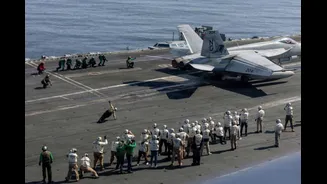
Following months of escalating pressure, US special forces (including Delta Force and the 160th SOAR) conducted a “smash-and-grab” raid on January 3, 2026, capturing Maduro. At least 80 people were reportedly killed during the strikes. Maduro was brought to the Metropolitan Detention Centre in Brooklyn to face charges of narco-terrorism and drug trafficking.
The Trump administration and its supporters justified the operation on several grounds. Officials described the mission as a counter-narcotics action. Maduro and his wife, Cilia Flores, were indicted in the US on charges related to “narcoterrorism” and drug trafficking. The administration claimed Venezuela posed an “imminent threat” by allegedly co-ordinating with groups like Hezbollah and foreign adversaries to pump drugs and weapons into the US.
President Trump declared the US would “run” Venezuela for an unspecified transition period. However, Secretary of State Marco Rubio later clarified that the US would not govern but would use a “quarantine” oil embargo to coerce the remaining leaders. Trump also stated the US would seize control of Venezuela’s oil reserves—the world’s largest—to “reimburse” the US for damages and allow American oil companies to refurbish the infrastructure.
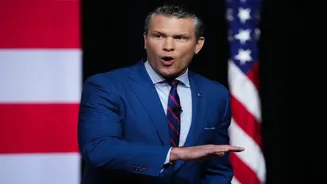
The operation has sparked considerable opposition in the US as it was launched without congressional briefing or international mandate, which legal experts describe as a “grave precedent” and “naked imperialism”. Democratic Party leaders, such as Hakeem Jeffries, labelled the operation an “unconstitutional act of war”, arguing that such large-scale military actions require congressional authorisation under the War Powers Act. President Trump argued he had the “inherent constitutional authority” to order the strike without prior congressional approval. While many Republicans celebrated the raid, some, like Representatives Thomas Massie and Marjorie Taylor Greene, criticised it as a return to the “Washington playbook” of regime change that does not serve the American people.
Many countries and legal experts have denounced the use of unilateral military force, citing a breach of the UN Charter. The US operation violates Article 2(4) because it involved the use of force on sovereign territory without host government consent, a self-defence rationale, or UN Security Council authorisation. UN Secretary-General António Guterres expressed deep alarm over the US intervention in Venezuela, stating the operation sets a “dangerous precedent” and that international law appears not to have been respected. Sadly, the UN is virtually powerless to restrict US actions due to the veto power held by permanent Security Council members and is “effectively irrelevant” in preventing such interventions. Both the Russian invasion of Ukraine and the United States’ military operation in Venezuela are violations of the UN Charter.
Donald Trump’s actions and statements have consistently indicated a deep scepticism and disregard for the United Nations, driven by his “America First” agenda. His administration has pursued a policy of weakening international institutions through funding cuts and withdrawals from key bodies. In his first term, Trump had expressed contempt for the United Nations, characterising it as an “irrelevant” and “failed experiment”. His second-term approach has moved beyond mere criticism to active disruption of the international rules-based order.
In his September 23, 2025, speech to the 80th UN General Assembly, Trump mocked the UN, stating the only things he got from it were a “bad escalator and a bad teleprompter”. His administration has clawed back approximately $1 billion from the UN budget and has yet to pay the United States’ 22 per cent share of the regular budget. The US officially announced its withdrawal from UNESCO, set to take effect on December 31, 2026. He has cut foreign aid to numerous UN humanitarian initiatives and officially initiated the withdrawal of the United States from the World Health Organization (WHO) on January 20, 2026, during his first day in office in his second term.
Venezuela’s regional neighbours Brazil, Colombia, Mexico, Chile, and Uruguay issued a joint statement rejecting the operation as a “dangerous precedent” that threatens regional peace. Colombian President Gustavo Petro and Brazilian President Lula da Silva specifically described it as an act of aggression and a violation of sovereignty.
Cuba and Nicaragua, Venezuela’s allies, described the action as “state terrorism” and a “criminal attack”. For his part, President Donald Trump significantly escalated threats against Cuba and Nicaragua, framing them alongside Venezuela as part of a “Troika of Tyranny”. The invocation of the Monroe Doctrine and the “Trump Corollary” signals a readiness to use lethal force against regional adversaries to restore US pre-eminence.
China strongly condemned the “hegemonic acts” and “blatant use of force”, demanding Maduro’s immediate release. Russia labelled the strikes “armed aggression” and expressed firm solidarity with the Venezuelan people. Iran called it a “flagrant violation” of territorial integrity. South Africa viewed the action as a “manifest violation” of the UN Charter and called for an urgent Security Council meeting. Belarus, North Korea, and Slovakia also explicitly rejected the US military intervention.
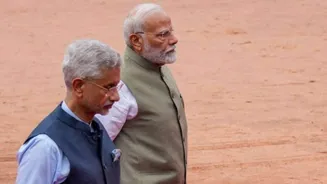
India is adopting a policy of “diplomatic tightrope walking”. This strategy prioritises maintaining strategic autonomy while navigating complex relations with the second Trump administration. India’s official response on January 4, 2026, expressed “deep concern” about the situation but conspicuously avoided naming the United States or condemning the action. This approach aims to avoid antagonising the Trump administration while India navigates ongoing stresses in bilateral ties, including high US tariffs and stalled trade deal negotiations. As the 2026 chair of BRICS, India faces pressure to align with partners like China and Brazil, who have strongly condemned the US action as a violation of international law. To maintain its role as a leader of the Global South, India needs to balance these expectations against its strategic need for a stable partnership with Washington.
In conclusion, President Trump’s Operation Absolute Resolve, which was a “large-scale strike” in Venezuela and the capture of President Nicolás Maduro, has significantly heightened global tensions. The operation is being viewed as a major rejection of multilateral rules, signalling a return to a “spheres of influence” world order. This move may embolden Russia and China to pursue their own regional territorial ambitions—such as in Ukraine or Taiwan—under the assumption that international legal constraints no longer apply to great powers. This action by the US further hollows out the credibility of international institutions, signalling that global rules apply only when they align with the interests of powerful states. Such actions replace a rules-based international order with one governed by power, increasing global mistrust and the long-term potential for conflict.
(The writer is a retired Indian diplomat and had previously served as Ambassador in Kuwait and Morocco and as Consul General in New York. Views expressed in the above piece are personal and solely those of the author. They do not necessarily reflect Firstpost’s views.)