





What is the story about?
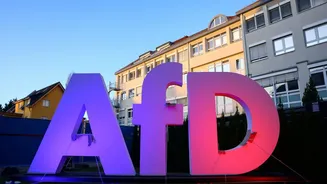
Germany's far-right Alternative for Germany party has reportedly intensified its contacts with US President Donald Trump's administration, and his Make America Great Again Movement (Maga), as it attempts to safeguard itself from a ban and a political wall of German Chancellor Friedrich Merz. According to a report by The Financial Times, dozens of officials from the German far-right party have travelled to the US in recent months to meet senior Republicans.
These visits have aimed to seek common cause over policies such as curbing immigration and jointly combating European efforts to regulate social media. As per the report, about 20 party figures flew to New York in December to attend a gala organised by the New York Young Republican Club, where the AfD’s foreign policy spokesperson, Markus Frohnmaier, was honoured with an award.
While speaking at the event, Dovid Holtzman, a representative of the Republican club, urged German Chancellor Friedrich Merz to “tear down” his country’s political “firewall” aimed at keeping the far-right from power. Meanwhile, Frohnmaier called on American and German “patriots” to ally to “reclaim our culture”. He also announced plans to invite US officials, members of Congress and lobbying groups to Berlin in February.
While speaking to The Financial Times, Frohnmaier said that the German party had experienced “difficulties” in building constructive dialogue during former US President Joe Biden's time in the office. However, he maintained that Trump’s return to office last year meant there were now “many overlaps in terms of substance”, from migration policy to freedom of expression and the role of family in society.
Some of the other AfD members on the December trip included Kay Gottschalk, the AfD’s spokesman on finance, who met Anna Paulina Luna, a Florida Republican and congresswoman who has courted ties with the European far-right, in Washington. After their meeting, Luna accused German mainstream parties of trying to “smear, intimidate and even de-bank” the AfD. She praised the far-right group for “actually working to strengthen ties with the United States and restore a healthy relationship between our governments”.
It is pertinent to note that both the Trump administration and the AfD share a similar ideology. This can be reflected by the fact that the Trump administration is strongly opposed to the EU’s Digital Services Act, which forces internet companies to better police illegal content.
Over the years, the far-right party's popularity grew significantly in Germany. The AfD, which claimed a record second place in February’s parliamentary elections and now regularly tops opinion polls, was last year officially classified by Germany’s domestic intelligence agency as right-wing extremist. However, the move triggered a vigorous political debate about whether Germany’s government or parliament should ask the constitutional court to consider outlawing the party.
But not all far-right parties are courting the Trump administration. The prime example of this is France’s Marine Le Pen and her Rassemblement National party, which has been more cautious, in part because of the tradition of anti-Americanism in French politics.
These visits have aimed to seek common cause over policies such as curbing immigration and jointly combating European efforts to regulate social media. As per the report, about 20 party figures flew to New York in December to attend a gala organised by the New York Young Republican Club, where the AfD’s foreign policy spokesperson, Markus Frohnmaier, was honoured with an award.
While speaking at the event, Dovid Holtzman, a representative of the Republican club, urged German Chancellor Friedrich Merz to “tear down” his country’s political “firewall” aimed at keeping the far-right from power. Meanwhile, Frohnmaier called on American and German “patriots” to ally to “reclaim our culture”. He also announced plans to invite US officials, members of Congress and lobbying groups to Berlin in February.
AfD attempts to break into Merz's firewall
While speaking to The Financial Times, Frohnmaier said that the German party had experienced “difficulties” in building constructive dialogue during former US President Joe Biden's time in the office. However, he maintained that Trump’s return to office last year meant there were now “many overlaps in terms of substance”, from migration policy to freedom of expression and the role of family in society.
Some of the other AfD members on the December trip included Kay Gottschalk, the AfD’s spokesman on finance, who met Anna Paulina Luna, a Florida Republican and congresswoman who has courted ties with the European far-right, in Washington. After their meeting, Luna accused German mainstream parties of trying to “smear, intimidate and even de-bank” the AfD. She praised the far-right group for “actually working to strengthen ties with the United States and restore a healthy relationship between our governments”.
It is pertinent to note that both the Trump administration and the AfD share a similar ideology. This can be reflected by the fact that the Trump administration is strongly opposed to the EU’s Digital Services Act, which forces internet companies to better police illegal content.
Over the years, the far-right party's popularity grew significantly in Germany. The AfD, which claimed a record second place in February’s parliamentary elections and now regularly tops opinion polls, was last year officially classified by Germany’s domestic intelligence agency as right-wing extremist. However, the move triggered a vigorous political debate about whether Germany’s government or parliament should ask the constitutional court to consider outlawing the party.
But not all far-right parties are courting the Trump administration. The prime example of this is France’s Marine Le Pen and her Rassemblement National party, which has been more cautious, in part because of the tradition of anti-Americanism in French politics.