
Of all the things Finance Minister Nirmala Sitharaman unveiled today, perhaps nothing left some investors more shaken than the hike in the securities transaction tax (STT).
The government has announced that it will increase the securities transaction tax (STT) on futures from 0.02 to 0.05 per cent. Meanwhile, STT on options premium and exercise of options will be increased from 0.10 per cent to 0.15 per cent and 0.125 per cent to 0.15 per cent, respectively.
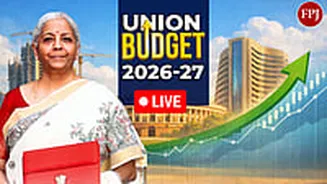
“To provide reasonable course correction in the F&O segment in the capital market and generate additional revenues for the government, it is proposed to raise the STT on futures to 0.05 per cent from the present 0.02 per cent. STT on options premium and exercise of options is proposed to be raised to 0.15 per cent from the present rate of 0.1 per cent and 0.125 per cent, respectively,” said Sitharaman while presenting the Union Budget 2026–27.
The revised rates will take effect from April 1, 2026.
But what is the STT? Why has the development made investors jittery?
STT hike explained
First, let’s take a closer look at the STT. The securities transaction tax (STT) is a direct tax levied on those who trade on recognised stock exchanges. It applies to equities, futures and options regardless of whether the person trading makes a profit or a loss. It is collected by brokers and exchanges at the time the transaction is executed.
The STT was initially introduced in October 2004 to replace long-term capital gains. However, despite LTCG being reintroduced in 2018, the STT remains on the books of the government.
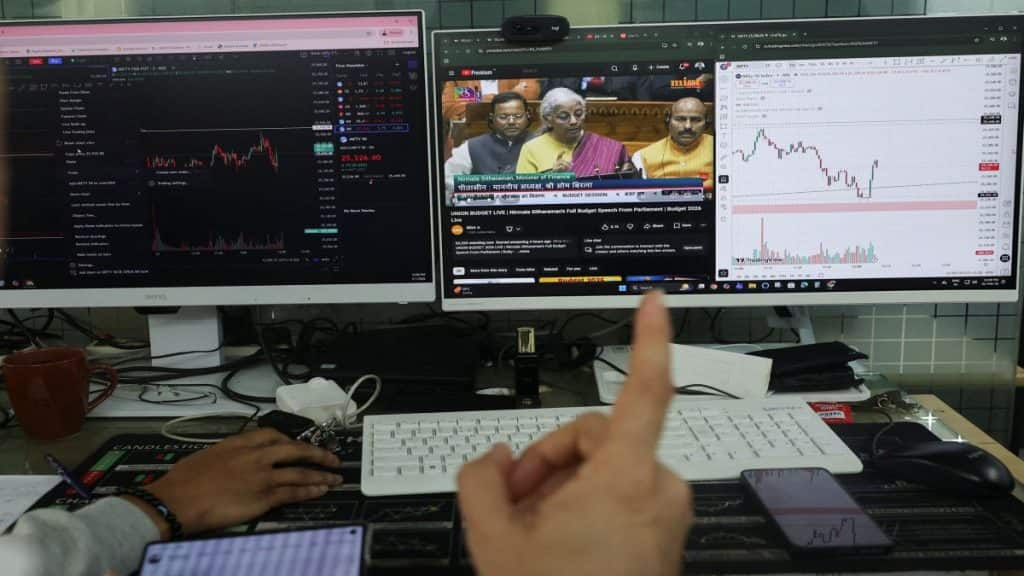
Stock traders watch Finance Minister Nirmala Sitharaman present the Budget as they trade at their terminals at an office in Mumbai. Reuters
When it comes to buying and selling equities, an STT of 0.01 per cent is levied on each transaction. When it comes to only selling equities intraday, an STT of 0.025 per cent is levied on each transaction.
Futures and options (F&O) deal with contracts rather than shares. The former is essentially a promise to buy or sell a certain product at a later price, while the latter gives the right to buy or sell on a future date.
It is essentially a bet on whether a product will be at a higher or lower price on the day you buy or sell. While it has the capacity to make those that succeed massive amounts of money, it is also far riskier and can result in people being completely wiped out.
Why did the government do so?
Sitharaman has said the move is aimed at curbing high-risk speculative trade and discouraging gullible investors who were losing huge amounts of money in the derivatives market. According to the Securities and Exchange Board of India (SEBI), nine out of 10 retail F&O traders lose money. However, it also wants traders to focus on equities rather than this riskier derivatives market.
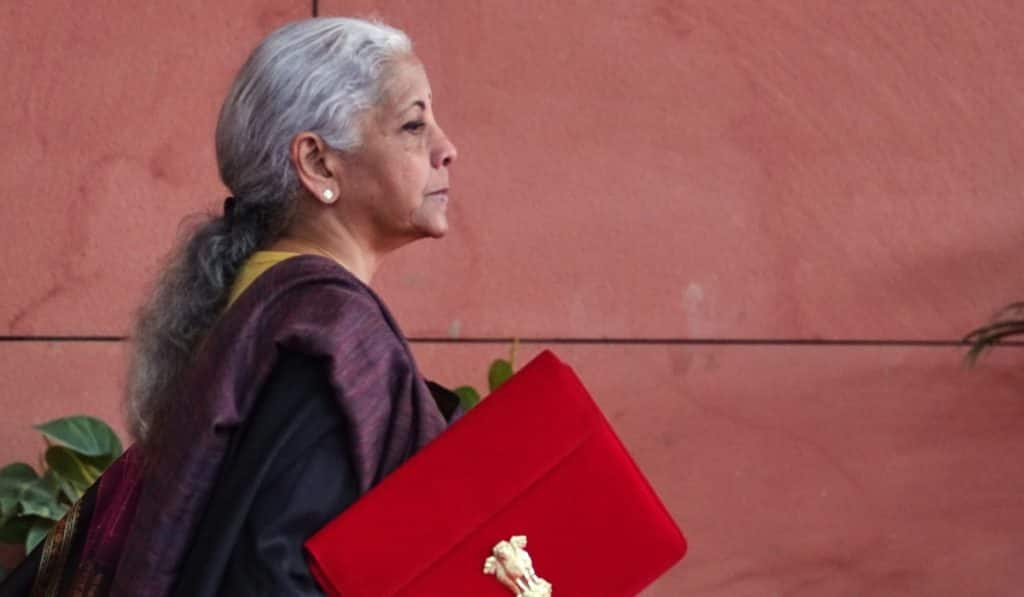
NIrmala Sitharaman has said the move is aimed at curbing high-risk speculative trade and discouraging gullible investors who were losing huge amounts of money in the derivatives market. AP
The government is also looking to bolster its tax revenue with this move. The government expects to collect Rs 73,700 crore through STT in FY27. It is likely to mop up Rs 63,670 crore in the current fiscal, lower than the previous estimate of Rs 78,000 crore.
However, the market didn’t take the news well. Sitharaman’s announcement resulted in equity markets falling, with the benchmark Sensex losing over 2,000 points and the Nifty 50 slipping below the 24,600 level. The BSE Sensex ended the day down around 1,546 points, settling near 80,722.9 — a drop of about 1.9 per cent — while the NSE Nifty 50 closed at approximately 24,825.45, down roughly 495 points or 1.96 per cent. This was the worst Budget Day performance by the equity markets in six years.
What do experts say?
Experts say that it will largely hit traders, hedgers and arbitrageurs rather than retail investors. This is because the cost of executing these contracts, which can be done several times a day, will add up.
“The steep increase in STT on futures and options is likely to raise impact costs for traders, hedgers and arbitrageurs,” Shripal Shah, Managing Director and Chief Executive at Kotak Securities, said.
They also say it will likely weigh on the equity markets, at least in the short term. “This will have a medium impact on trading volumes, but it’s an ill-timed move, given the current market sentiment,” Rajesh Baheti, Managing Director of Crosseas Capital Services Pvt. Ltd, told Mint.
“The STT hike on derivatives may weigh on trading volumes and near-term sentiment amid volatile markets. Offsetting this, the rationalisation of buyback taxation, with proceeds now taxed as capital gains in shareholders’ hands, improves transparency and capital-allocation efficiency, making the Budget incrementally positive for long-term equity investors despite limited short-term triggers,” Aditya Agrawal, CFA, Chief Investment Officer at Avisa Wealth Creators, told
Others question whether this will have the effect the government intended.
“Futures are a margined, risk-managed product and not typically the primary source of retail excess, which raises questions on whether higher STT will deliver the desired outcome or instead weigh on liquidity,” added Pranav Haridasan, Managing Director and Chief Executive Officer at Axis Securities.
They say it could also affect foreign institutional investors (FIIs) and foreign portfolio investors (FPIs), who may redirect their funds to other emerging markets.
“In this context, a higher STT further reduces post-tax returns, making India relatively less competitive for short-term and derivative-oriented foreign flows. However, for long-only, fundamentally driven FPIs, the STT hike is unlikely to be a deal-breaker. Their investment decisions are more influenced by earnings visibility, currency stability and policy predictability,” Aakash Shah, Technical Research Analyst at Choice Equity Broking, told Mint.
“At a time when India needs to deepen market liquidity and attract global flows, raising frictional trading costs sends the opposite signal,” said Jimeet Modi, Founder and Chief Executive at SAMCO Group.
It remains to be seen how the equity market will react tomorrow and how things play out in the long term.
With inputs from agencies