






What is the story about?
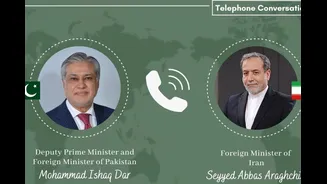
Iran on Monday said it is working with mediators Qatar, Pakistan, and Oman to prevent any further escalation in the ongoing war with the United States.
"The role of the mediators is to continue their efforts to prevent an escalation of tensions," said Foreign Ministry Spokesman Esmaeil Baqaei, according to AFP.
The development comes as Iran and the United States are locked in a cycle of tit-for-tat strikes across West Asia. Iran on Monday launched strikes aimed at American troops, bases, and assets across the region after the United States attacked Iran overnight.
The cyclic violence has cast a shadow over the ceasefire that the two sides agreed to last month after signing an interim peace deal.
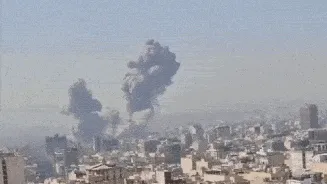
In the latest barrage, the Islamic Revolutionary Guards Corps (IRGC) said it struck US ammunition depots and radar facilities in Jordan, Bahrain, Kuwait, and Oman.
The tit-for-tat strikes began when the United States said it conducted 140 strikes on Saturday night, followed by another round on Sunday, in response to an Iranian attack on a Cypriot-flagged ship on Saturday. The US targets included air defence systems, coastal radars, missile and drone capabilities, and small boats
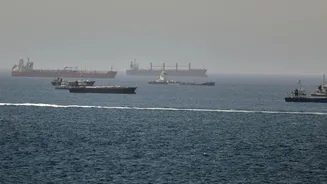
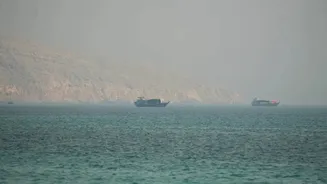
In recent weeks, Iran has attacked ships in the Persian Gulf that have not followed its conditions for transit in the area. Iran has stated that ships could only cross the Strait of Hormuz from the designated route that runs through its territorial waters. It has stated that a ship sailing on any other route would lose the right to safe passage. It has also asserted its sovereign control over the Strait.
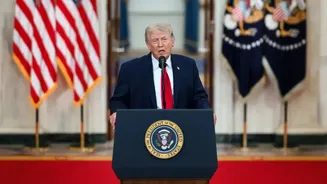
Even though Trump has said that he considers the interim deal with the United States to be over, the two sides have continued to engage in dialogue through mediators and have not formally quit the memorandum of understanding (MoU) they signed.
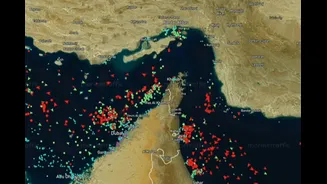
As the Strait has been blocked again from the fighting, Brent crude oil prices rose more than 3 per cent on Monday — 20 per cent of the world's oil and gas passes through the Strait.
"The role of the mediators is to continue their efforts to prevent an escalation of tensions," said Foreign Ministry Spokesman Esmaeil Baqaei, according to AFP.
The development comes as Iran and the United States are locked in a cycle of tit-for-tat strikes across West Asia. Iran on Monday launched strikes aimed at American troops, bases, and assets across the region after the United States attacked Iran overnight.
The cyclic violence has cast a shadow over the ceasefire that the two sides agreed to last month after signing an interim peace deal.
In the latest barrage, the Islamic Revolutionary Guards Corps (IRGC) said it struck US ammunition depots and radar facilities in Jordan, Bahrain, Kuwait, and Oman.
The tit-for-tat strikes began when the United States said it conducted 140 strikes on Saturday night, followed by another round on Sunday, in response to an Iranian attack on a Cypriot-flagged ship on Saturday. The US targets included air defence systems, coastal radars, missile and drone capabilities, and small boats
In recent weeks, Iran has attacked ships in the Persian Gulf that have not followed its conditions for transit in the area. Iran has stated that ships could only cross the Strait of Hormuz from the designated route that runs through its territorial waters. It has stated that a ship sailing on any other route would lose the right to safe passage. It has also asserted its sovereign control over the Strait.
Even though Trump has said that he considers the interim deal with the United States to be over, the two sides have continued to engage in dialogue through mediators and have not formally quit the memorandum of understanding (MoU) they signed.
As the Strait has been blocked again from the fighting, Brent crude oil prices rose more than 3 per cent on Monday — 20 per cent of the world's oil and gas passes through the Strait.