





What is the story about?
Google is expanding its account security toolkit with a new selfie video verification feature that lets users prove their identity using facial biometrics when they are unable to access their accounts through conventional methods. The capability is designed as an additional recovery option rather than a replacement for existing authentication methods and arrives as technology companies increasingly move towards password-free sign-ins while grappling with the rapid rise of AI-powered identity fraud.
The feature is rolling out to eligible Google accounts and offers another way to regain access if users lose their trusted device or encounter difficulties signing in. It complements Google's existing authentication measures, including passkeys and recovery contacts, as the company continues to broaden the ways users can securely verify their identity.
The launch also reflects a wider shift across the technology industry. As generative AI makes it easier to create convincing fake images and videos, companies handling financial information, online identities and sensitive personal data are investing more heavily in biometric verification and "liveness" detection to distinguish real users from sophisticated impersonation attempts.
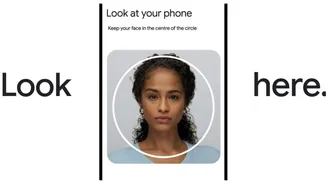
Setting up the new verification method requires users to record a short selfie video using their device's front-facing camera. During enrolment, Google guides users through a series of simple head movements so the system can capture multiple facial angles rather than relying on a single still image.
If a user later becomes locked out of their account, they can record another selfie video to verify their identity. Google compares the new recording with the previously enrolled version before deciding whether to restore account access.
According to the company, the process includes safeguards designed to ensure that the person in front of the camera is physically present. In a blog post announcing the feature, Google said: "When you use a selfie to sign in, we use multiple layers of security to help prevent impersonation attempts like fake photos and videos (i.e., deep fakes)."
The company added that it compares the new recording against the saved selfie video while asking users to perform simple movements to demonstrate that the footage is live. Google also says its existing security systems continue to monitor for suspicious login attempts during the verification process.
Privacy remains a central concern whenever companies collect biometric information, and Google has sought to address those questions alongside the launch. The company says selfie videos are stored in encrypted form with the user's consent and are used only for account sign-in unless the user explicitly agrees to additional uses. Users can also delete the stored video from their Google Account whenever they choose.
Rather than replacing passwords, passkeys or two-factor authentication, the selfie video feature serves as another recovery pathway for users who might otherwise struggle to regain access to their accounts. That could prove particularly useful when trusted devices are lost, damaged or unavailable.
The approach also reflects the changing nature of online security. Traditional verification methods such as passwords remain vulnerable to phishing, while one-time passcodes can be intercepted through increasingly sophisticated scams. Biometric verification tied to liveness detection offers an additional layer that is harder to replicate using static photographs or AI-generated videos.
However, the move is also likely to renew scrutiny around biometric data collection. Regulators in several jurisdictions have intensified their focus on how companies gather, store and process facial recognition data, particularly as AI technologies become more capable of analysing and generating realistic human faces.
Google argues that user control remains central to the system. Selfie videos are encrypted while stored, can be removed at any time, and are intended solely to support account recovery unless users choose otherwise.
The latest addition underscores Google's broader strategy of reducing dependence on passwords while making account recovery more resilient against evolving cyber threats. Whether selfie video authentication becomes a widely adopted security tool may ultimately depend on how comfortable users are with entrusting their facial biometrics to online platforms in exchange for stronger protection against fraud.
The feature is rolling out to eligible Google accounts and offers another way to regain access if users lose their trusted device or encounter difficulties signing in. It complements Google's existing authentication measures, including passkeys and recovery contacts, as the company continues to broaden the ways users can securely verify their identity.
The launch also reflects a wider shift across the technology industry. As generative AI makes it easier to create convincing fake images and videos, companies handling financial information, online identities and sensitive personal data are investing more heavily in biometric verification and "liveness" detection to distinguish real users from sophisticated impersonation attempts.
How to set up?
Setting up the new verification method requires users to record a short selfie video using their device's front-facing camera. During enrolment, Google guides users through a series of simple head movements so the system can capture multiple facial angles rather than relying on a single still image.
If a user later becomes locked out of their account, they can record another selfie video to verify their identity. Google compares the new recording with the previously enrolled version before deciding whether to restore account access.
According to the company, the process includes safeguards designed to ensure that the person in front of the camera is physically present. In a blog post announcing the feature, Google said: "When you use a selfie to sign in, we use multiple layers of security to help prevent impersonation attempts like fake photos and videos (i.e., deep fakes)."
The company added that it compares the new recording against the saved selfie video while asking users to perform simple movements to demonstrate that the footage is live. Google also says its existing security systems continue to monitor for suspicious login attempts during the verification process.
Privacy remains a central concern whenever companies collect biometric information, and Google has sought to address those questions alongside the launch. The company says selfie videos are stored in encrypted form with the user's consent and are used only for account sign-in unless the user explicitly agrees to additional uses. Users can also delete the stored video from their Google Account whenever they choose.
Is it better than the current measures?
Rather than replacing passwords, passkeys or two-factor authentication, the selfie video feature serves as another recovery pathway for users who might otherwise struggle to regain access to their accounts. That could prove particularly useful when trusted devices are lost, damaged or unavailable.
The approach also reflects the changing nature of online security. Traditional verification methods such as passwords remain vulnerable to phishing, while one-time passcodes can be intercepted through increasingly sophisticated scams. Biometric verification tied to liveness detection offers an additional layer that is harder to replicate using static photographs or AI-generated videos.
However, the move is also likely to renew scrutiny around biometric data collection. Regulators in several jurisdictions have intensified their focus on how companies gather, store and process facial recognition data, particularly as AI technologies become more capable of analysing and generating realistic human faces.
Google argues that user control remains central to the system. Selfie videos are encrypted while stored, can be removed at any time, and are intended solely to support account recovery unless users choose otherwise.
The latest addition underscores Google's broader strategy of reducing dependence on passwords while making account recovery more resilient against evolving cyber threats. Whether selfie video authentication becomes a widely adopted security tool may ultimately depend on how comfortable users are with entrusting their facial biometrics to online platforms in exchange for stronger protection against fraud.