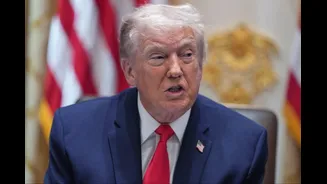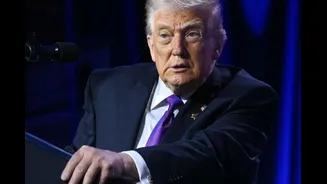

The latest escalation came on Wednesday when US President Donald Trump urged Iran to agree to a new nuclear deal while warning that failure to do so would invite consequences far more severe than previous military action.
“Hopefully Iran will quickly ‘Come to the Table’ and negotiate a fair and equitable deal - NO NUCLEAR WEAPONS - one that is good for all parties. Time is running out, it is truly of the essence!” Trump wrote on social media.
Trump referenced earlier US and Israeli strikes on Iranian nuclear facilities carried out in June 2025, reminding Tehran that previous warnings had already been followed by military action.
“The next attack will be far worse! Don’t make that happen again,” Trump said in another post, adding that a US “armada” was moving toward Iran.
In separate remarks, Trump described the deployment as a “big flotilla” heading into the region, signalling that Washington was prepared to escalate pressure if Iran failed to alter course.
He has also repeatedly stated that the United States would intervene militarily if Tehran resumed nuclear activities after last year’s airstrikes or continued violent suppression of civilian protests.
Earlier this month, Trump had also issued a message directed at Iranians protesting against the regime, stating that “help is on its way”.
Despite the forceful rhetoric, a US official told Reuters that Trump had not yet reached a final decision on whether to authorise a new strike, noting that Iran’s weakened internal position could be used to extract concessions through negotiations rather than immediate military action.
How Iran has responded
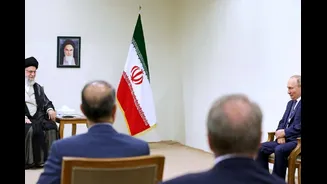
Ali Shamkhani, an adviser to Iran’s Supreme Leader Ayatollah Ali Khamenei, said that any American attack would prompt Iran to strike not only US targets but also Israel and any states that assist them.
Foreign Minister Abbas Araqchi reinforced that position, writing on X that Iran’s armed forces “are prepared - with their fingers on the trigger - to immediately and powerfully respond to ANY aggression.”
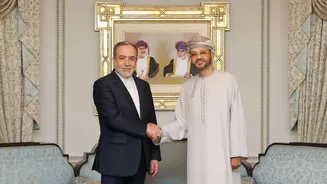
At the same time, Araqchi sought to underline Tehran’s long-standing position that it remains open to diplomacy if talks are conducted without coercion.
“At the same time,” Araqchi wrote, “Iran has always welcomed a mutually beneficial, fair and equitable NUCLEAR DEAL - on equal footing, and free from coercion, threats, and intimidation - which ensures Iran's rights to PEACEFUL nuclear technology, and guarantees NO NUCLEAR WEAPONS.”
Araqchi later said he had not communicated with US Middle East envoy Steve Witkoff in recent days and had not requested negotiations, according to Iranian state media.
Iran’s mission to the United Nations also reacted publicly to Trump’s comments, stating on X, “Iran stands ready for dialogue based on mutual respect and interests — BUT IF PUSHED, IT WILL DEFEND ITSELF AND RESPOND LIKE NEVER BEFORE!”
Speaking to journalists outside a cabinet meeting, Araqchi criticised Washington’s approach, saying, “Our position is exactly this: Applying diplomacy through military threats cannot be effective or constructive. If they want negotiations to take shape, they must abandon threats, excessive demands and the raising of illogical issues.”
How US military is expanding near Iran
Trump confirmed that a naval task force led by the aircraft carrier USS Abraham Lincoln was approaching Iran.
Two US officials told Reuters that the Lincoln and its accompanying warships had already arrived in the region earlier in the week after being redirected from the Asia-Pacific as tensions increased.
A carrier strike group represents one of the most powerful symbols of US military capability. The USS Abraham Lincoln carries an air wing of around 70 aircraft, including F-35 stealth fighter jets designed to evade radar detection.
The group also includes destroyers armed with Tomahawk land-attack cruise missiles and is typically accompanied by a nuclear-powered submarine equipped with the same weapons.
The Lincoln strike group joins two US destroyers already operating in the region. Trump summarised the deployment by saying, “We have a big flotilla going in that region and we'll see what happens.”
Open-source intelligence has tracked an increase in American military activity across West Asia in recent weeks. Surveillance aircraft, including drones and P-8 Poseidon spy planes, have been observed operating near Iranian airspace, according to data from FlightRadar24.
Transport aircraft believed to be carrying additional air defence systems have also been detected arriving in the region. Analysts say these movements indicate preparations to protect US personnel and allied infrastructure from potential Iranian retaliation.
The United States already maintains a substantial presence across the region, with up to 50,000 troops stationed in countries including Qatar, Bahrain, Saudi Arabia, the United Arab Emirates, Jordan and Oman.
Around 10,000 American personnel are based at al-Udeid Air Base in Qatar, the largest US military installation in the area.
Satellite imagery taken in recent days shows new structures appearing on the periphery of al-Udeid.
Experts who reviewed the images said they appear consistent with the installation of additional air defence systems. Last year, following US strikes on Iranian nuclear sites, Tehran fired missiles at the base.
Britain has also increased its military involvement, deploying a squadron of Typhoon fighter jets to the region “to boost regional security”.
Meanwhile, the US Air Force announced it was conducting a major exercise, Operation Agile Spartan, aimed at demonstrating the ability to deploy, disperse and sustain combat airpower across the U.S. Central Command’s area of responsibility.
What Washington has said
US Secretary of State Marco Rubio addressed Congress amid the rising tensions, offering a more measured assessment of the situation while defending the expanded military posture.
Rubio said the increased presence was designed “to defend against what could be an Iranian threat against our personnel,” adding that it was prudent to maintain the capability to respond swiftly if necessary.
“I think it’s wise and prudent to have a force posture within the region that could respond and ... if necessary, preemptively prevent the attack against thousands of American servicemen and other facilities in the region and our allies,” Rubio told lawmakers.
Rubio also described Iran’s leadership as “probably weaker than it has ever been,” pointing to economic collapse and social unrest. He predicted that protests would resume despite the recent crackdown.
However, according to two people familiar with the reports, while the economic pressures that triggered the protests remain unresolved, the upper ranks of Iran’s ruling establishment show no major signs of fragmentation.
A US official said this internal fragility, combined with the absence of elite fractures, makes it advantageous for Washington to push for denuclearisation talks rather than immediately resort to force.
How Iran has been faring after protests
The confrontation with the United States is unfolding as Iran experiences its most severe internal crisis in decades. Iran’s currency, the rial, plunged on Wednesday to a record low of 1.6 million to the dollar, according to local currency traders.
The rial’s value has been declining sharply since late last year and has collapsed from roughly 32,000 to the dollar a decade ago.
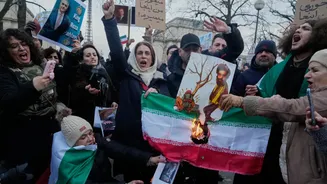
The currency crisis sparked protests that began on December 28, 2025, before spreading nationwide and evolving into a broader challenge to Iran’s clerical leadership.
Iranian authorities responded with a violent crackdown, including mass arrests, lethal force and widespread internet shutdowns. The country has experienced nearly three weeks of a near-total internet blackout, the most extensive in its history.
The US-based Human Rights Activists News Agency said that at least 6,373 people were killed during the unrest, including 5,993 protesters, 214 government-affiliated forces, 113 children and 53 civilians who were not participating in demonstrations.
The group said more than 42,450 people were arrested. The organisation said it verifies each death and arrest through a network of activists inside Iran.
Iran’s government has reported a significantly lower death toll of 3,117, saying 2,427 of those killed were civilians and security personnel, while describing the remainder as “terrorists”. In past periods of unrest, Iran’s leadership has been accused of underreporting fatalities.
The scale of the violence exceeds that of any previous protest movement in Iran in recent decades and has drawn comparisons to the turmoil surrounding the 1979 Islamic Revolution.
State-run media in Iran now routinely refers to protesters as “terrorists” and remains the primary source of information for many citizens following the internet blackout.
How regional powers have responded
Saudi Arabia and the United Arab Emirates both signalled that they would not allow their airspace or territory to be used for any military attack on Iran.
Saudi Crown Prince Mohammed bin Salman conveyed this message directly to Iranian President Masoud Pezeshkian, saying the kingdom would “not allow its airspace or territory to be used for any military actions against Iran or for any attacks from any party, regardless of their origin.”
The UAE made a similar commitment. Both countries host US military assets and personnel. Iranian officials have also contacted Qatar, which hosts a major US air base, as well as other regional players.
Egypt’s Foreign Ministry said its top diplomat, Badr Abdelatty, spoke separately with Iranian Foreign Minister Araqchi and US envoy Steve Witkoff in an effort to “work toward achieving calm, in order to avoid the region slipping into new cycles of instability.”
Turkey’s foreign minister also held talks with Araqchi, with Turkish officials warning that any military intervention could destabilise the region further or trigger a refugee crisis.
How Europe has responded
The European Union is preparing to add Iran’s Islamic Revolutionary Guard Corps to its list of terrorist organisations, following France’s announcement that it would support the move.
EU foreign ministers are scheduled to meet in Brussels to approve a new package of sanctions targeting Iran in response to its violent crackdown on protesters.
These measures would add to the growing international pressure on Tehran at a time when its economy is already under severe strain.
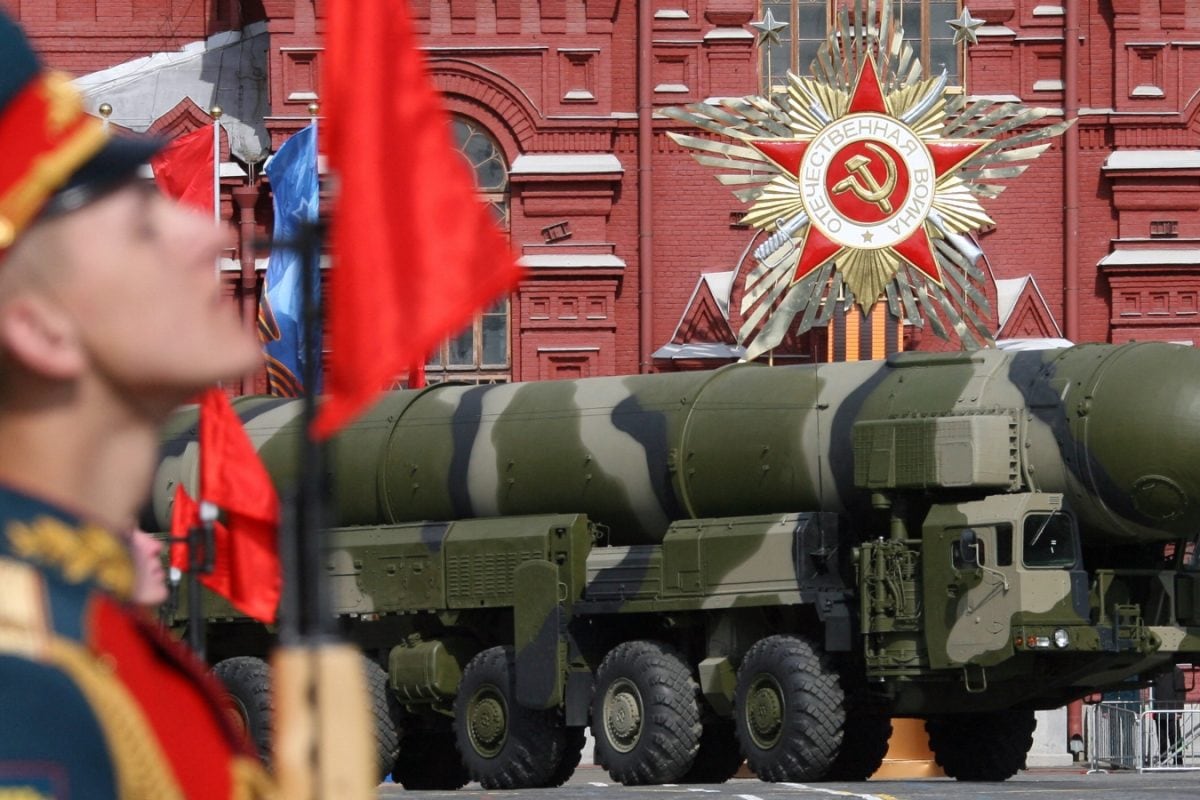
The United States has demonstrated its ability to strike Iran, most notably during Operation Midnight Hammer in June 2025, which involved more than 100 aircraft, including B-2 stealth bombers flying from the US mainland to deliver bunker-buster munitions on Iranian nuclear sites.
Iran, for its part, has made clear that it views any future attack as justification for immediate retaliation against US and allied targets.
With inputs from agencies