






What is the story about?
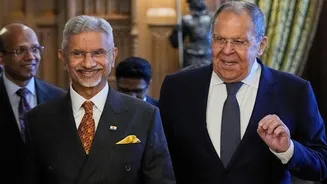
India and Russia signalled a deepening of their bilateral ties on Monday, with top diplomats from both nations delivering statements of mutual commitment at a conference focused on the future of the Russia-India relationship.
Russian Foreign Minister Sergey Lavrov, addressing participants of the Russia and India: Toward a New Bilateral Agenda conference via video, described strengthening ties with New Delhi as an 'unconditional foreign policy priority' for Moscow.
Lavrov praised India's long-standing policy of strategic autonomy, saying New Delhi 'deserves the deepest respect' for pursuing an independent foreign policy and 'consistently prioritising the national interest.' He added that India's influence in the emerging multipolar world order was 'steadily growing' as a 'great power of the 21st century.'
"The time-tested Russian-Indian friendship is a model of how interstate relations based on equality, mutual trust and respect can and should be built," Lavrov said.
India's External Affairs Minister S. Jaishankar, speaking at the same conference, also the growing strategic depth between India-Russia bilateral partnership.
He pointed to the December 2025 visit of Russian President Vladimir Putin to India as a milestone that 'broke new ground,' covering areas as diverse as the mobility of skilled professionals, maritime cooperation, fertilisers, customs, and academic and media cooperation.
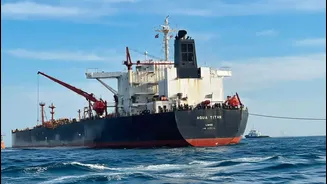
On trade, Jaishankar set out an ambitious target: growing annual bilateral trade from its current level of $68.7 billion to $100 billion by 2030, to be achieved 'in a balanced and sustainable manner', signaling India's desire to correct the current trade imbalance, heavily skewed toward Russian oil imports.
Jaishankar also underscored the strategic importance of Russia to India's energy future. "Russia is our foremost partner in civilian nuclear energy," he said, adding that Moscow would be "a crucial partner" as India pursues its goal of reaching 100 gigawatts of nuclear capacity by 2047.
The statements from both sides come at a time of a charged geopolitical moment. With the United States currently engaged militarily in West Asia and multilateral institutions under increasing strain, India has tried to carefully maintain its posture of strategic autonomy.
Both Lavrov and Jaishankar framed the relationship not as one of compulsion or convenience, but of genuine strategic alignment built on 'equality, mutual trust, and consideration of each other's interests.'
Russian Foreign Minister Sergey Lavrov, addressing participants of the Russia and India: Toward a New Bilateral Agenda conference via video, described strengthening ties with New Delhi as an 'unconditional foreign policy priority' for Moscow.
Lavrov praised India's long-standing policy of strategic autonomy, saying New Delhi 'deserves the deepest respect' for pursuing an independent foreign policy and 'consistently prioritising the national interest.' He added that India's influence in the emerging multipolar world order was 'steadily growing' as a 'great power of the 21st century.'
"The time-tested Russian-Indian friendship is a model of how interstate relations based on equality, mutual trust and respect can and should be built," Lavrov said.
Jaishankar outlines agenda for a new era
India's External Affairs Minister S. Jaishankar, speaking at the same conference, also the growing strategic depth between India-Russia bilateral partnership.
He pointed to the December 2025 visit of Russian President Vladimir Putin to India as a milestone that 'broke new ground,' covering areas as diverse as the mobility of skilled professionals, maritime cooperation, fertilisers, customs, and academic and media cooperation.
On trade, Jaishankar set out an ambitious target: growing annual bilateral trade from its current level of $68.7 billion to $100 billion by 2030, to be achieved 'in a balanced and sustainable manner', signaling India's desire to correct the current trade imbalance, heavily skewed toward Russian oil imports.
Jaishankar also underscored the strategic importance of Russia to India's energy future. "Russia is our foremost partner in civilian nuclear energy," he said, adding that Moscow would be "a crucial partner" as India pursues its goal of reaching 100 gigawatts of nuclear capacity by 2047.
The statements from both sides come at a time of a charged geopolitical moment. With the United States currently engaged militarily in West Asia and multilateral institutions under increasing strain, India has tried to carefully maintain its posture of strategic autonomy.
Both Lavrov and Jaishankar framed the relationship not as one of compulsion or convenience, but of genuine strategic alignment built on 'equality, mutual trust, and consideration of each other's interests.'