








What is the story about?
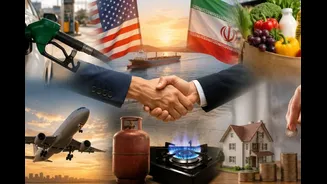
After over three months of hostilities that shook up the energy sector across the world, the United States and Iran have finally agreed upon a peace deal, with both sides expected to sign off on it in Switzerland on Friday (June 19).
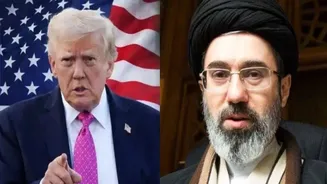
“The deal with the Islamic Republic of Iran is now complete,” US President Donald Trump posted Sunday on social media as he marked his 80th birthday. “Ships of the world, start your engines. Let the oil flow!”
The memorandum of understanding appears to be more than just a ceasefire but less than a full-fledged peace agreement. And while the details of the agreement seemed sketchy, the immediate impact of it could be seen across the world, including India, where markets surged, and the rupee rose against the dollar.
On Sunday, Day 107 of the US-Iran war, Pakistani Prime Minister Shehbaz Sharif, whose country has been mediating indirect talks between Tehran and Washington, broke the news on X that both nations had agreed to a pact that could end the fighting.
Sharif said that a “permanent termination of military operations on all fronts” had been agreed upon, including in Lebanon. Trump confirmed the news in a post on Truth Social shortly after, writing: “The Deal with the Islamic Republic of Iran is now complete”.
The agreement fully authorises “the toll-free opening of the Strait of Hormuz” and, simultaneously, “the immediate removal of the United States naval blockade”, he wrote.
While full details of the deal haven’t been released, Iran’s Mehr News has stated that there are 14 points in the deal.

It includes: a permanent and immediate cessation of hostilities on all fronts, including Lebanon; the complete lifting of the naval blockade within 30 days; a US commitment to withdraw its forces from around Iran; and the reopening of the Strait of Hormuz. The draft also mentions the suspension of sanctions on oil sales, reaching a final agreement on nuclear issues within 60 days of signing the deal, and the release of $24 billion in frozen Iranian assets during the 60-day negotiation period.
Mehr
also reported that final negotiations would not begin until half of Iran’s frozen assets had been released and restrictions affecting the Strait of Hormuz had been lifted.
The nuclear issue remains the most sensitive part of the US-Iran relationship and is likely to determine whether the framework evolves into a lasting agreement. Under the reported framework, Iran would commit not to pursue nuclear weapons, halt further uranium enrichment, and stop expanding nuclear facilities during the negotiating period. In return, both sides would enter a 60-day process aimed at negotiating a broader agreement covering inspections, sanctions relief, enrichment limits, and the future of Iran’s uranium stockpile.
Shortly after Trump’s announcement as well as Iran’s confirmation, the price of oil slipped to its lowest since March, providing relief across the world. Brent crude futures fell $4.08, or 4.7 per cent, to $83.25 a barrel, and US West Texas Intermediate was at $80.53, down $4.35, or 5.1 per cent. Both contracts fell to their lowest levels since March 10 on Monday.
Meanwhile, gold rose more than two per cent on Monday. News agency Reuters reported that spot gold climbed 2.5 per cent to $4,323.29 per ounce, hitting its highest level since June 9 and extending gains for a third straight session.
In India, too, the effects of the deal could be seen immediately. The rupee rose 58 paise against the greenback to 94.60 in early trade. Additionally, on the domestic market front, Sensex surged 1,112.70 points to 76,648.74 in early trade, while Nifty rose sharply by 335.55 points to 23,956.40.
Since the war between the US and Iran began on February 28, India has been quietly absorbing the cost of the war. The closure of the Strait of Hormuz saw India’s crude oil basket nearly doubling, the rupee hitting record lows, cooking gas prices jumping, and the government doing all in its power to keep
fuel flowing to 1.4 billion people.
Now, if a peace deal were signed, India would benefit from the reopening of the vital waterway. That’s because the Strait of Hormuz accounted for approximately 41 per cent of India’s crude oil imports, 55 per cent of its LNG imports, and 88 per cent of its LPG imports during the first nine months of FY2026. India imports 88 per cent of its crude oil, making it among the most exposed large economies globally.
In fact, the previous ceasefire agreed upon in April showed exactly how India would benefit from peace. At the time, the rupee strengthened to around 92.4 per dollar, oil prices plunged, and Asian currencies broadly rallied. That effect reversed when the ceasefire showed cracks.
According to economic think tank GTRI, the deal promises relief from high energy prices, pressure on the rupee, and inflation risks that intensified during the conflict. GTRI founder, Ajay Srivastava, told news agency PTI, “For India, the agreement brings immediate economic relief as the conflict has exposed India’s dependence on West Asia, from where it sources roughly 50 per cent of its crude oil imports, around 70 per cent of its LPG supplies and nearly 90 per cent of its LNG imports.”
Republic TV’s consulting editor Saurabh Shukla also noted that the US-Iran deal was a good day for India. “The moment the Strait of Hormuz opens up, there are ships that can pass through and carry oil and fertiliser to India,” he said.
An industry official also told PTI, “State-owned fuel retailers booked losses in one quarter that were equal to the profit they earned in the entire year. If the agreement holds, energy supplies will ease and so will the prices.”
This, in turn, will benefit sectors such as aviation, petrochemicals, fertilisers, shipping, and logistics.
According to the founder chairman of Technocraft Industries India, the impact of this peace deal goes beyond the energy sector. Sharad Kumar Saraf noted that it paves the way for the end of uncertainties, economic slowdown, and unwarranted hardships. “The end of war and hostilities will not only help in a quantum jump in India’s exports but will throw open a host of new business opportunities. The next two to three years will accelerate India’s efforts for a Viksit Bharat.”
Federation of Indian Export Organisations (FIEO) President S C Ralhan also concurred on the issue. “For India, this would reduce pressure on the import bill, normalise exports, support rupee stability, ease inflationary concerns, and create a more conducive environment for trade and economic growth,” he told news agency PTI.
News18 has also reported that there’s a chance that loans could also be cheaper in India. That’s because when oil falls, inflation tends to soften. That gives the Reserve Bank of India greater flexibility to maintain lower interest rates or consider rate cuts if economic conditions permit.
All in all, if the deal is signed on Friday, not only would it put an end to months of hostilities, but also help India heave a huge sigh of relief.
With inputs from agencies
“The deal with the Islamic Republic of Iran is now complete,” US President Donald Trump posted Sunday on social media as he marked his 80th birthday. “Ships of the world, start your engines. Let the oil flow!”
- Catch more updates on the US-Iran war here
The memorandum of understanding appears to be more than just a ceasefire but less than a full-fledged peace agreement. And while the details of the agreement seemed sketchy, the immediate impact of it could be seen across the world, including India, where markets surged, and the rupee rose against the dollar.
Inside the US-Iran agreement
On Sunday, Day 107 of the US-Iran war, Pakistani Prime Minister Shehbaz Sharif, whose country has been mediating indirect talks between Tehran and Washington, broke the news on X that both nations had agreed to a pact that could end the fighting.
Sharif said that a “permanent termination of military operations on all fronts” had been agreed upon, including in Lebanon. Trump confirmed the news in a post on Truth Social shortly after, writing: “The Deal with the Islamic Republic of Iran is now complete”.
The agreement fully authorises “the toll-free opening of the Strait of Hormuz” and, simultaneously, “the immediate removal of the United States naval blockade”, he wrote.
While full details of the deal haven’t been released, Iran’s Mehr News has stated that there are 14 points in the deal.
Displaced residents flash the V-sign as they cross the Bourj Rahal bridge on their way to their village in southern Lebanon after the United States and Iran said they reached a deal to end the war on all fronts. AFP
It includes: a permanent and immediate cessation of hostilities on all fronts, including Lebanon; the complete lifting of the naval blockade within 30 days; a US commitment to withdraw its forces from around Iran; and the reopening of the Strait of Hormuz. The draft also mentions the suspension of sanctions on oil sales, reaching a final agreement on nuclear issues within 60 days of signing the deal, and the release of $24 billion in frozen Iranian assets during the 60-day negotiation period.
The nuclear issue remains the most sensitive part of the US-Iran relationship and is likely to determine whether the framework evolves into a lasting agreement. Under the reported framework, Iran would commit not to pursue nuclear weapons, halt further uranium enrichment, and stop expanding nuclear facilities during the negotiating period. In return, both sides would enter a 60-day process aimed at negotiating a broader agreement covering inspections, sanctions relief, enrichment limits, and the future of Iran’s uranium stockpile.
Immediate impact of US-Iran peace deal
Shortly after Trump’s announcement as well as Iran’s confirmation, the price of oil slipped to its lowest since March, providing relief across the world. Brent crude futures fell $4.08, or 4.7 per cent, to $83.25 a barrel, and US West Texas Intermediate was at $80.53, down $4.35, or 5.1 per cent. Both contracts fell to their lowest levels since March 10 on Monday.
Meanwhile, gold rose more than two per cent on Monday. News agency Reuters reported that spot gold climbed 2.5 per cent to $4,323.29 per ounce, hitting its highest level since June 9 and extending gains for a third straight session.
In India, too, the effects of the deal could be seen immediately. The rupee rose 58 paise against the greenback to 94.60 in early trade. Additionally, on the domestic market front, Sensex surged 1,112.70 points to 76,648.74 in early trade, while Nifty rose sharply by 335.55 points to 23,956.40.
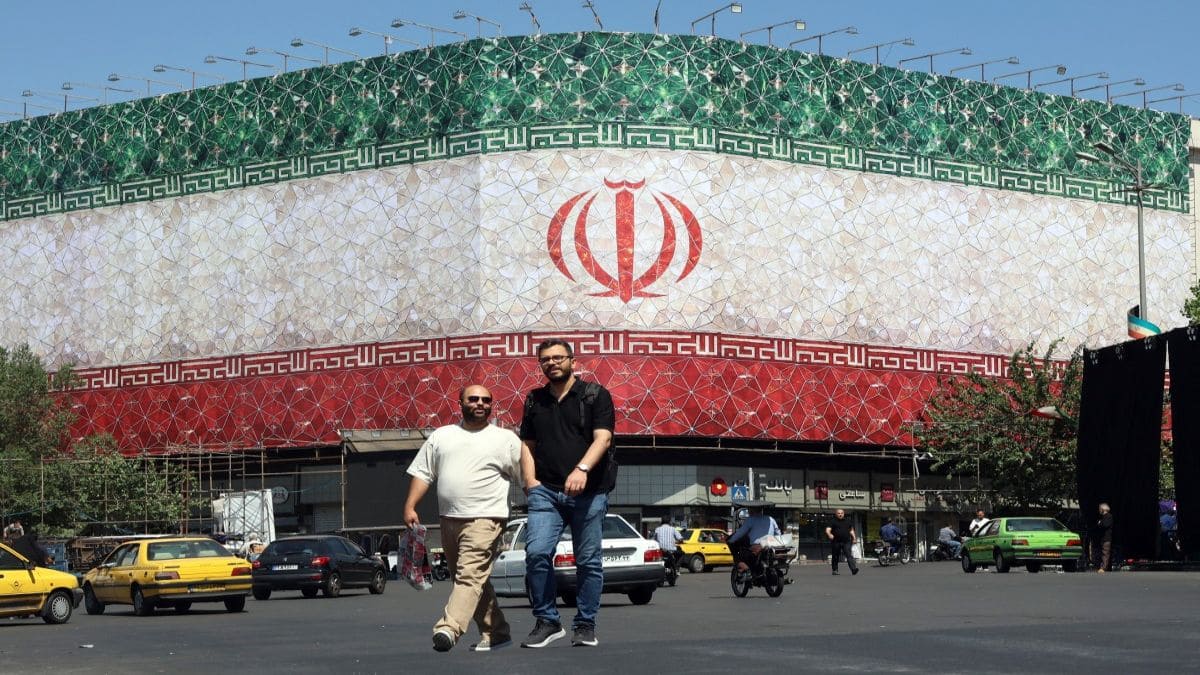
People walk at Enghelab Square in Tehran where the Iranian national flag is displayed. US President Donald Trump said that a deal with Iran to end the war has been agreed upon and will be signed on Friday (June 19). AFP
Long-term benefits for India from US-Iran peace deal
Since the war between the US and Iran began on February 28, India has been quietly absorbing the cost of the war. The closure of the Strait of Hormuz saw India’s crude oil basket nearly doubling, the rupee hitting record lows, cooking gas prices jumping, and the government doing all in its power to keep
Now, if a peace deal were signed, India would benefit from the reopening of the vital waterway. That’s because the Strait of Hormuz accounted for approximately 41 per cent of India’s crude oil imports, 55 per cent of its LNG imports, and 88 per cent of its LPG imports during the first nine months of FY2026. India imports 88 per cent of its crude oil, making it among the most exposed large economies globally.
In fact, the previous ceasefire agreed upon in April showed exactly how India would benefit from peace. At the time, the rupee strengthened to around 92.4 per dollar, oil prices plunged, and Asian currencies broadly rallied. That effect reversed when the ceasefire showed cracks.
According to economic think tank GTRI, the deal promises relief from high energy prices, pressure on the rupee, and inflation risks that intensified during the conflict. GTRI founder, Ajay Srivastava, told news agency PTI, “For India, the agreement brings immediate economic relief as the conflict has exposed India’s dependence on West Asia, from where it sources roughly 50 per cent of its crude oil imports, around 70 per cent of its LPG supplies and nearly 90 per cent of its LNG imports.”
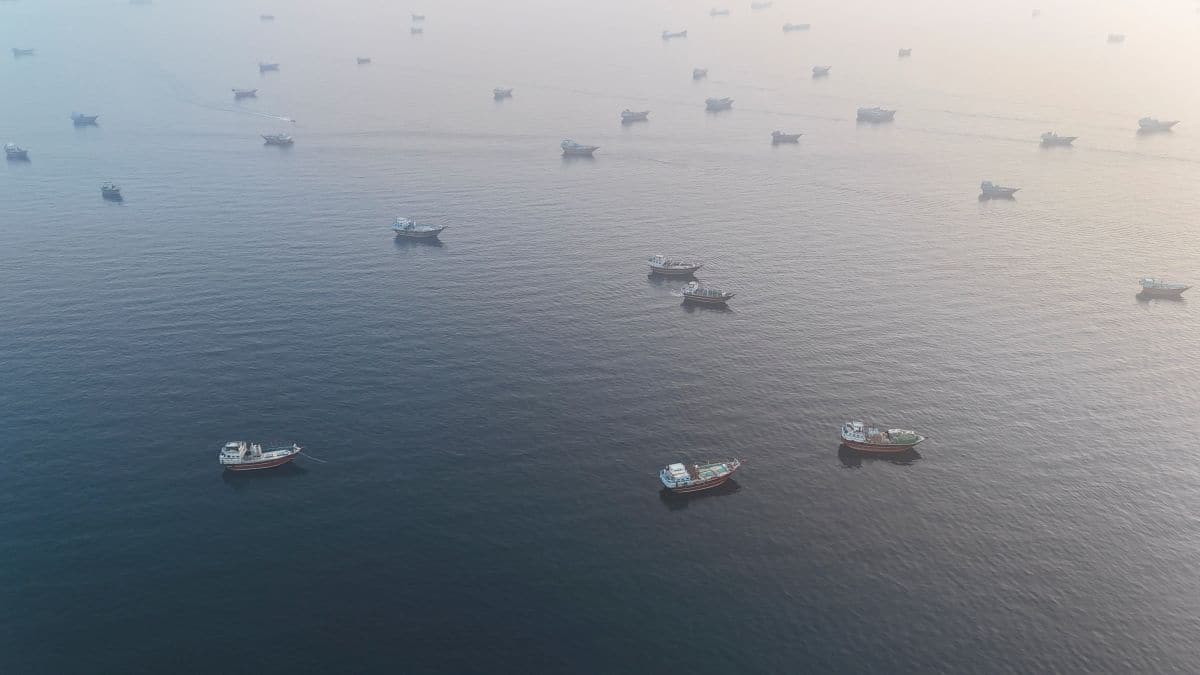
A drone view shows vessels in the Strait of Hormuz, as seen from Musandam, Oman. Reuters
Republic TV’s consulting editor Saurabh Shukla also noted that the US-Iran deal was a good day for India. “The moment the Strait of Hormuz opens up, there are ships that can pass through and carry oil and fertiliser to India,” he said.
An industry official also told PTI, “State-owned fuel retailers booked losses in one quarter that were equal to the profit they earned in the entire year. If the agreement holds, energy supplies will ease and so will the prices.”
This, in turn, will benefit sectors such as aviation, petrochemicals, fertilisers, shipping, and logistics.
According to the founder chairman of Technocraft Industries India, the impact of this peace deal goes beyond the energy sector. Sharad Kumar Saraf noted that it paves the way for the end of uncertainties, economic slowdown, and unwarranted hardships. “The end of war and hostilities will not only help in a quantum jump in India’s exports but will throw open a host of new business opportunities. The next two to three years will accelerate India’s efforts for a Viksit Bharat.”
Federation of Indian Export Organisations (FIEO) President S C Ralhan also concurred on the issue. “For India, this would reduce pressure on the import bill, normalise exports, support rupee stability, ease inflationary concerns, and create a more conducive environment for trade and economic growth,” he told news agency PTI.
News18 has also reported that there’s a chance that loans could also be cheaper in India. That’s because when oil falls, inflation tends to soften. That gives the Reserve Bank of India greater flexibility to maintain lower interest rates or consider rate cuts if economic conditions permit.
All in all, if the deal is signed on Friday, not only would it put an end to months of hostilities, but also help India heave a huge sigh of relief.
With inputs from agencies