







What is the story about?
India's HPV (Human Papillomavirus) vaccination drive has gathered good pace. With a strong start, around 3 lakh girls aged 14 were vaccinated within two weeks of the launch, according to a health ministry official. Madhya Pradesh, Andhra Pradesh, Tamil Nadu, Gujarat, Odisha, and Mizoram have emerged as frontrunners, recording the highest vaccination coverage so far.
The HPV vaccine helps prevent cervical cancer, which is also the second most common cancer among Indian women, after breast cancer.
On February 28, Prime Minister Narendra Modi launched a nationwide Human Papillomavirus (HPV) vaccination campaign for girls aged 14 during his visit to Ajmer, Rajasthan, with the key objective to prevent cervical cancer.
We take a look.
14-year-old girls were immunised within two weeks of the HPV vaccination programme rollout. The need for such a programme is highlighted by India’s heavy disease burden. India records over 80,000
cervical cancer cases annually, accounting for nearly one-third of the global total.
The vaccine is being provided voluntarily as a single-dose shot to 14-year-old girls, a group estimated at approximately 1.15 crore across the country. Eligible girls are required to book a slot at the government health centres using U-win, the vaccine management platform. Similar to the Covid-19 pandemic situation. Vaccinations will not end after the 90-day period.
The ruling government is providing the quadrivalent Gardasil vaccine free to girls aged 14 at government facilities nationwide, a step made possible through a partnership with Gavi, the vaccine alliance, the
Indian Express reported.
This is also aligned with the World Health Organisation’s (WHO) global strategy to eliminate cervical cancer by 2030 by ensuring that 90 per cent of girls are vaccinated before the age of 15. According to officials, the Central government may switch to the Serum Institute of India’s Cerevac, India’s first indigenously developed quadrivalent human papillomavirus (qHPV).
Despite clashing with the ongoing examinations in several regions, participation levels have remained strong. Authorities expect the vaccination drive to pick up speed more once exams are over, allowing for broader outreach and higher coverage in the weeks ahead.
Health authorities are closely coordinating with schools, local governance bodies, and healthcare workers to ensure seamless execution. The coordinated approach aims to streamline delivery without disruption.
The HPV vaccine immunes against genital warts and most cases of cervical cancer. The vaccine offers protection against cancers of the vagina, vulva, penis, and anus caused by HPV. It also helps prevent cancers of the mouth, throat, head, and neck associated with HPV.
One dose provides the body with a safe way to build immune system awareness of a few HPV strains, making it easier to clear those strains if a person catches them later,
Mayo Clinic explains.
Several studies have demonstrated that the vaccination is not only effective at reducing HPV infection, but also lowers the risk of cancer.
Published in 2020, a study evaluating the real-world consequences of the vaccine in Sweden found that the risk of cervical cancer was 88 per cent lower in women vaccinated before age 17, the Indian Express reported, citing the study.
The HPV vaccine should not be taken during pregnancy. If one had faced an allergic reaction after taking the first HPV shot, then it's recommended to avoid the HPV vaccine.
People who are moderately or severely ill should not receive the HPV vaccine until they feel better. Those who are sexually active need to consult their healthcare team regarding the benefits of getting an HPV vaccine.
Most people contract HPV shortly after becoming sexually active. However, even if someone has one strain of the virus, the vaccine can still be beneficial, as it protects against other strains they may not yet have.
HPV is a widespread sexually transmitted infection, though only certain strains of the virus can progress into cancer.
According to the Centres for Disease Control and Prevention (CDC), the body’s immune system clears most HPV infections naturally within about two years. However, in a small number of cases, the virus can persist and gradually cause normal cells to become abnormal, eventually leading to cancer.
There are at least 14 types of HPV known to have cancer-causing potential. Among these, HPV types 16 and 18 are considered to lead to tumour development, responsible for around 70 per cent of cervical cancer cases worldwide. The vaccines help prevent infection by targeting two, four, or nine of the most common strains of the virus.
“The most common misconception about HPV is that if you do not have a cervix, you are safe. Scientifically, this is far from the truth. A landmark study published in The Lancet Global Health (September 2023) found that at least one in three men over the age of 15 is infected with at least one genital HPV type," a news outlet quoted Dr Rohit Raghunath Ranade, clinical lead, Gynaecologic Oncology, Narayana Health City, Bengaluru, as saying.
With inputs from agencies
The HPV vaccine helps prevent cervical cancer, which is also the second most common cancer among Indian women, after breast cancer.
On February 28, Prime Minister Narendra Modi launched a nationwide Human Papillomavirus (HPV) vaccination campaign for girls aged 14 during his visit to Ajmer, Rajasthan, with the key objective to prevent cervical cancer.
We take a look.
How is India scaling up HPV vaccination?
14-year-old girls were immunised within two weeks of the HPV vaccination programme rollout. The need for such a programme is highlighted by India’s heavy disease burden. India records over 80,000
The vaccine is being provided voluntarily as a single-dose shot to 14-year-old girls, a group estimated at approximately 1.15 crore across the country. Eligible girls are required to book a slot at the government health centres using U-win, the vaccine management platform. Similar to the Covid-19 pandemic situation. Vaccinations will not end after the 90-day period.
The ruling government is providing the quadrivalent Gardasil vaccine free to girls aged 14 at government facilities nationwide, a step made possible through a partnership with Gavi, the vaccine alliance, the
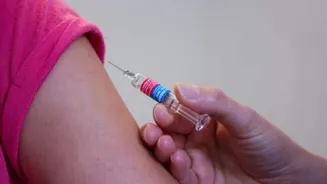
The HPV vaccines should not be taken during pregnancy, according to experts. Image courtesy: Pixabay
This is also aligned with the World Health Organisation’s (WHO) global strategy to eliminate cervical cancer by 2030 by ensuring that 90 per cent of girls are vaccinated before the age of 15. According to officials, the Central government may switch to the Serum Institute of India’s Cerevac, India’s first indigenously developed quadrivalent human papillomavirus (qHPV).
Despite clashing with the ongoing examinations in several regions, participation levels have remained strong. Authorities expect the vaccination drive to pick up speed more once exams are over, allowing for broader outreach and higher coverage in the weeks ahead.
Health authorities are closely coordinating with schools, local governance bodies, and healthcare workers to ensure seamless execution. The coordinated approach aims to streamline delivery without disruption.
What's the significance of HPV vaccination?
The HPV vaccine immunes against genital warts and most cases of cervical cancer. The vaccine offers protection against cancers of the vagina, vulva, penis, and anus caused by HPV. It also helps prevent cancers of the mouth, throat, head, and neck associated with HPV.
One dose provides the body with a safe way to build immune system awareness of a few HPV strains, making it easier to clear those strains if a person catches them later,
Several studies have demonstrated that the vaccination is not only effective at reducing HPV infection, but also lowers the risk of cancer.
Published in 2020, a study evaluating the real-world consequences of the vaccine in Sweden found that the risk of cervical cancer was 88 per cent lower in women vaccinated before age 17, the Indian Express reported, citing the study.
Who should not get the HPV vaccine?
The HPV vaccine should not be taken during pregnancy. If one had faced an allergic reaction after taking the first HPV shot, then it's recommended to avoid the HPV vaccine.
People who are moderately or severely ill should not receive the HPV vaccine until they feel better. Those who are sexually active need to consult their healthcare team regarding the benefits of getting an HPV vaccine.
Most people contract HPV shortly after becoming sexually active. However, even if someone has one strain of the virus, the vaccine can still be beneficial, as it protects against other strains they may not yet have.
However, HPV vaccines cannot treat an existing infection. The vaccines only protect against specific strains of the virus that one does not have yet.
What is the Human Papillomavirus?
HPV is a widespread sexually transmitted infection, though only certain strains of the virus can progress into cancer.
According to the Centres for Disease Control and Prevention (CDC), the body’s immune system clears most HPV infections naturally within about two years. However, in a small number of cases, the virus can persist and gradually cause normal cells to become abnormal, eventually leading to cancer.
There are at least 14 types of HPV known to have cancer-causing potential. Among these, HPV types 16 and 18 are considered to lead to tumour development, responsible for around 70 per cent of cervical cancer cases worldwide. The vaccines help prevent infection by targeting two, four, or nine of the most common strains of the virus.
“The most common misconception about HPV is that if you do not have a cervix, you are safe. Scientifically, this is far from the truth. A landmark study published in The Lancet Global Health (September 2023) found that at least one in three men over the age of 15 is infected with at least one genital HPV type," a news outlet quoted Dr Rohit Raghunath Ranade, clinical lead, Gynaecologic Oncology, Narayana Health City, Bengaluru, as saying.
With inputs from agencies