








What is the story about?
After US President Donald Trump and Prime Minister Narendra Modi's announcements, Revenue Secretary Arvind Shrivastava on Tuesday said the India-US trade deal will create more opportunities for labour-intensive sectors and give impetus to mutually-beneficial high-tech collaboration.
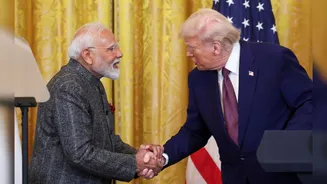
After a phone call with Modi, Trump announced last evening that they had reached a trade deal and he would reduce 50 per cent tariffs on India to 18 per cent in exchange for India reducing tariffs on the United States to zero.
"India-US trade deal will further expand and deepen trade between two of the largest economies of the world. It will create more opportunities for our labour-intensive and manufacturing sectors in the US market and give impetus to mutually-beneficial collaboration in high and advanced technology sectors," said Shrivastava.
In a post on X, Modi said that he was "delighted that Made in India products will now have a reduced tariff of 18 per cent".
"When two large economies and the world’s largest democracies work together, it benefits our people and unlocks immense opportunities for mutually beneficial cooperation," said Modi.
Trump said that, as part of the India-US trade deal, he would reduce 50 per cent tariffs on India to 18 per cent in exchange for India reducing tariffs on the United States to zero. He further said Modi had agreed to stop buying Russian oil. Instead, he said Modi had agreed to buy American goods worth $500 billion, including energy, tech, and agricultural products.
While Modi did not go into the specifics in his statement, Union Commerce Minister Piyush Goyal on Tuesday separately said that the India-US trade deal would safeguard sensitive sectors like agriculture and dairy — the two sectors have been out of India's recent trade deals and have been red lines for the government.
Goyal further said, “I believe that through this deal, our MSMEs, our engineering sector, all the players in our engineering sector, whether they manufacture auto components, electrical parts, or work on selling various types of engineering goods in America, or plan to do so in the future, our textile sector, our gems and jewelry sector, our leather goods sector, our marine goods sector, will all get numerous opportunities through this deal.”
After a phone call with Modi, Trump announced last evening that they had reached a trade deal and he would reduce 50 per cent tariffs on India to 18 per cent in exchange for India reducing tariffs on the United States to zero.
"India-US trade deal will further expand and deepen trade between two of the largest economies of the world. It will create more opportunities for our labour-intensive and manufacturing sectors in the US market and give impetus to mutually-beneficial collaboration in high and advanced technology sectors," said Shrivastava.
In a post on X, Modi said that he was "delighted that Made in India products will now have a reduced tariff of 18 per cent".
"When two large economies and the world’s largest democracies work together, it benefits our people and unlocks immense opportunities for mutually beneficial cooperation," said Modi.
Trump said that, as part of the India-US trade deal, he would reduce 50 per cent tariffs on India to 18 per cent in exchange for India reducing tariffs on the United States to zero. He further said Modi had agreed to stop buying Russian oil. Instead, he said Modi had agreed to buy American goods worth $500 billion, including energy, tech, and agricultural products.
While Modi did not go into the specifics in his statement, Union Commerce Minister Piyush Goyal on Tuesday separately said that the India-US trade deal would safeguard sensitive sectors like agriculture and dairy — the two sectors have been out of India's recent trade deals and have been red lines for the government.
Goyal further said, “I believe that through this deal, our MSMEs, our engineering sector, all the players in our engineering sector, whether they manufacture auto components, electrical parts, or work on selling various types of engineering goods in America, or plan to do so in the future, our textile sector, our gems and jewelry sector, our leather goods sector, our marine goods sector, will all get numerous opportunities through this deal.”