






What is the story about?
Davos is arguably the centre of the world right now.
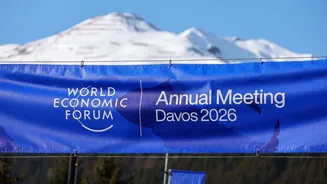
The Swiss city is hosting the World Economic Forum (WEF), with world leaders, tech titans and billionaires descending on the ski resort to debate the biggest global issues.
Little surprise, then, that scammers have followed in their wake.
Let’s take a closer look.
Scammers have been selling fake VIP tickets and access passes to the “USA House” at the WEF event. According to Business Insider, USA House is a privately funded American celebration site set up in a historic church just outside Davos’s high-security zone. It has been established to mark 250 years of American history and promote themes such as innovation, opportunity, collaboration and democratic values.
A string of high-profile speakers, including CEOs and Trump Cabinet officials, are scheduled to appear and speak at USA House. These include Treasury Secretary Scott Bessent, White House AI and crypto czar David Sacks, former Google CEO Eric Schmidt, and Microsoft President Brad Smith. US President Donald Trump’s speech to the WEF will also be broadcast live at the venue.
The fake passes were marketed online by unauthorised third parties as exclusive opportunities for wealthy attendees to gain entry to receptions, panels and events featuring senior US political figures and officials.
Organisers have issued public warnings against buying tickets from unauthorised sellers. Despite being labelled “VIP”, these passes did not grant access to the events or spaces advertised.
“Caveat Billionaires. It has been brought to our attention that, again this year, external parties are selling ‘VIP access to USA House’ and other Stromback Global venues in Davos,” the USA House team said in a post. “The volume of inbound queries this year suggests that these fake VIP passes may be the fastest-selling fiction about Davos since Thomas Mann’s Magic Mountain.”
The team has posted a warning message on its website reiterating the same.
The irony is hard to miss. Cyber-enabled fraud — scams conducted using digital tools or exploiting online platforms — is itself being highlighted by the WEF’s 2026 report as a major global risk. The Forum’s Global Cybersecurity Outlook 2026 has found that fraud, including online scams, has overtaken ransomware as the top concern for business leaders this year.
USA House organisers have warned that anyone who purchased these fake passes will be denied entry to the venue and its events.
“We will not give access to people who purchased such packages. Our sympathies to those who fell victim to these scams,” the statement said. They reiterated that they do not work with external resellers
and urged visitors to rely only on official event information.
Because demand for exclusive access at Davos is immense. It is widely understood that face-to-face meetings remain the most effective way to get the attention of presidents, ministers and top decision-makers.
Amanda Estiverne, a fintech consultant, told Business Insider that USA House was “very hard to get into”.
Many prestigious events at Davos are invitation-only or closed to the public, pushing some attendees to seek entry through backchannels or third parties.
“At the end of the day, it’s the investors and billionaires at Davos who have his attention, not the families struggling to afford their bills,” said Alex Jacquez, chief of policy and advocacy at Groundwork Collaborative.
Scammers have exploited this demand by creating fake tickets and websites that mimic official branding and use plausible event names, making the fraud harder to detect at first glance.
With inputs from agencies
The Swiss city is hosting the World Economic Forum (WEF), with world leaders, tech titans and billionaires descending on the ski resort to debate the biggest global issues.
Little surprise, then, that scammers have followed in their wake.
Let’s take a closer look.
Fake VIP tickets to USA House
Scammers have been selling fake VIP tickets and access passes to the “USA House” at the WEF event. According to Business Insider, USA House is a privately funded American celebration site set up in a historic church just outside Davos’s high-security zone. It has been established to mark 250 years of American history and promote themes such as innovation, opportunity, collaboration and democratic values.
A string of high-profile speakers, including CEOs and Trump Cabinet officials, are scheduled to appear and speak at USA House. These include Treasury Secretary Scott Bessent, White House AI and crypto czar David Sacks, former Google CEO Eric Schmidt, and Microsoft President Brad Smith. US President Donald Trump’s speech to the WEF will also be broadcast live at the venue.
The fake passes were marketed online by unauthorised third parties as exclusive opportunities for wealthy attendees to gain entry to receptions, panels and events featuring senior US political figures and officials.
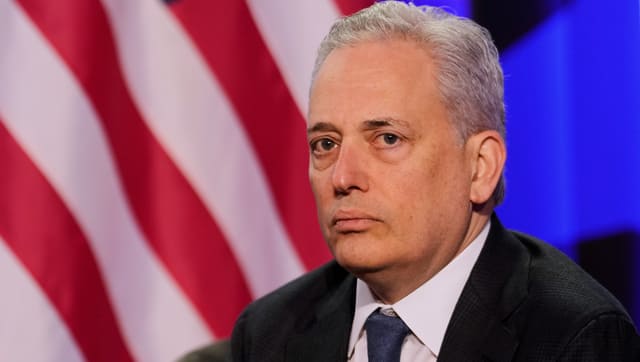
David Sacks, Chairman of the President's Council of Advisors on Science and Technology is seen during the Annual Meeting of the World Economic Forum in Davos, Switzerland, Wednesday, Jan. 21, 2026. AP
Organisers have issued public warnings against buying tickets from unauthorised sellers. Despite being labelled “VIP”, these passes did not grant access to the events or spaces advertised.
“Caveat Billionaires. It has been brought to our attention that, again this year, external parties are selling ‘VIP access to USA House’ and other Stromback Global venues in Davos,” the USA House team said in a post. “The volume of inbound queries this year suggests that these fake VIP passes may be the fastest-selling fiction about Davos since Thomas Mann’s Magic Mountain.”
The team has posted a warning message on its website reiterating the same.
The irony is hard to miss. Cyber-enabled fraud — scams conducted using digital tools or exploiting online platforms — is itself being highlighted by the WEF’s 2026 report as a major global risk. The Forum’s Global Cybersecurity Outlook 2026 has found that fraud, including online scams, has overtaken ransomware as the top concern for business leaders this year.
USA House organisers have warned that anyone who purchased these fake passes will be denied entry to the venue and its events.
“We will not give access to people who purchased such packages. Our sympathies to those who fell victim to these scams,” the statement said. They reiterated that they do not work with external resellers
Why did this work?
Because demand for exclusive access at Davos is immense. It is widely understood that face-to-face meetings remain the most effective way to get the attention of presidents, ministers and top decision-makers.
Amanda Estiverne, a fintech consultant, told Business Insider that USA House was “very hard to get into”.
Many prestigious events at Davos are invitation-only or closed to the public, pushing some attendees to seek entry through backchannels or third parties.
“At the end of the day, it’s the investors and billionaires at Davos who have his attention, not the families struggling to afford their bills,” said Alex Jacquez, chief of policy and advocacy at Groundwork Collaborative.
Scammers have exploited this demand by creating fake tickets and websites that mimic official branding and use plausible event names, making the fraud harder to detect at first glance.
With inputs from agencies